
Fully Automatic Barrelled Purified Water Production Line
A turnkey, fully automated production line for purified water in barrels — engineered for stability, regulatory compliance, and long-term maintainability. Designed and manufactured in Huizhou since 2008.
Highlights
- Huizhou-manufactured since 2008 — focused exclusively on water treatment and filling systems
- End-to-end automation: reduces manual handling, minimizes contamination risk, improves repeatability
- Stable water quality: dual RO + UF + dual disinfection ensures consistent compliance with GB 19298-2014
- Truly non-standard: configured per actual water source, site constraints, capacity targets, and budget
Specifications
- Standard barrel sizes
- 18.9L, 11.3L, 5L (customizable)
- Capacity range
- 200–1800 barrels/hour (modular, field-adjustable)
- Core purification
- Multi-media + activated carbon + softening → dual-stage RO → UF → ozone + UV
- Control system
- PLC + touchscreen HMI; ≥3-year data retention; remote diagnostics enabled
- Material standard
- Food-grade 304 stainless steel (GB 4806.9-2016); food-grade silicone seals
End-to-End Barrelled Water Production — Engineered for Real-World Operations
Huizhou Chuxin Mingwei Industrial Co., Ltd. designs and delivers custom fully automatic barrelled purified water production lines — from raw water intake to finished product conveyance. Each system is built around your specific water source quality, target output (200–1800 barrels/hour), packaging format (e.g., 18.9L, 11.3L, 5L), facility layout, and operational priorities.
Core Process Integration
- Multi-stage purification: Pre-filtration (multi-media + activated carbon + softening) → dual-stage reverse osmosis (RO) → ultrafiltration (UF) → ozone + UV sterilization — consistently meeting GB 19298-2014 standards.
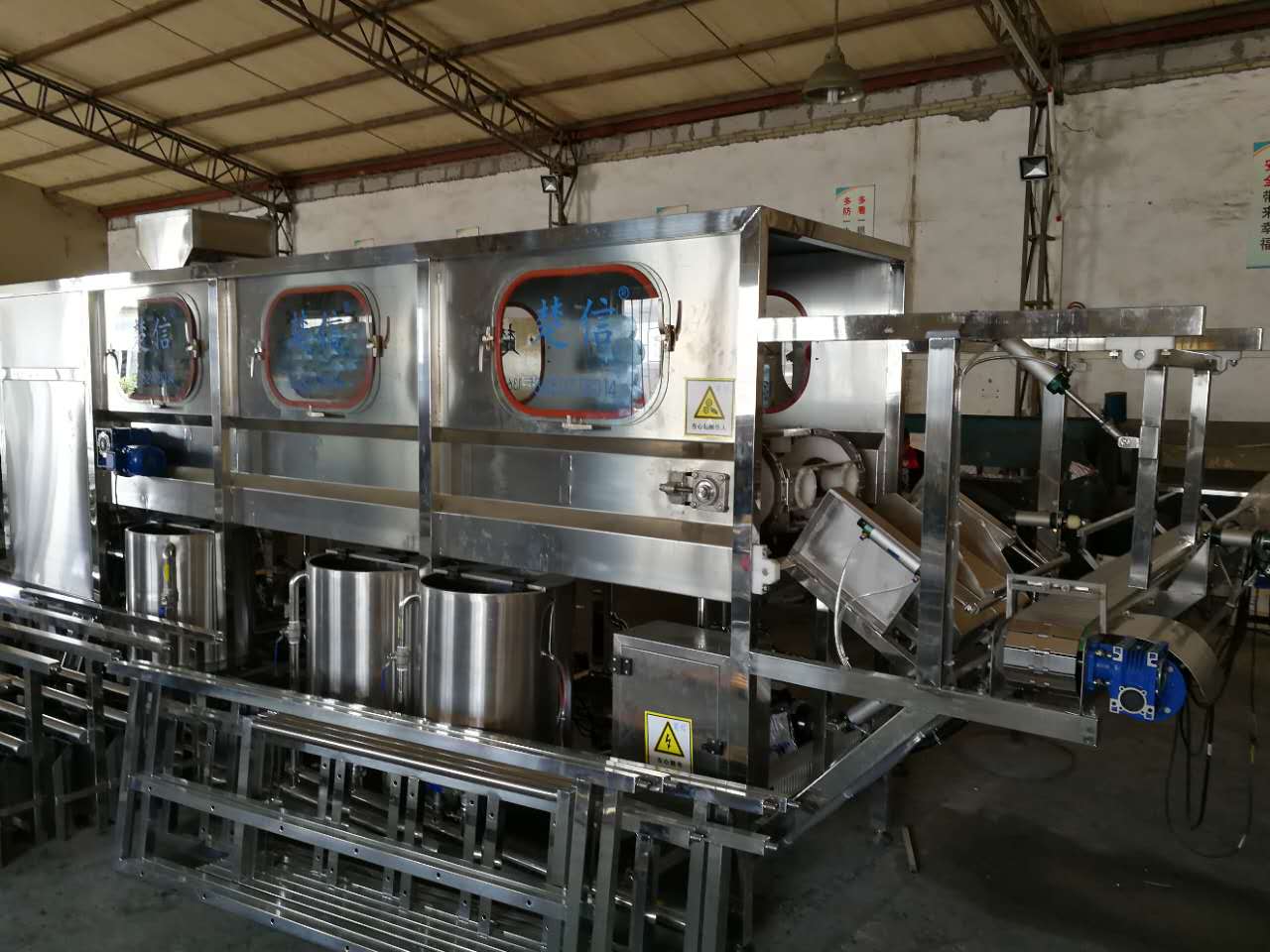
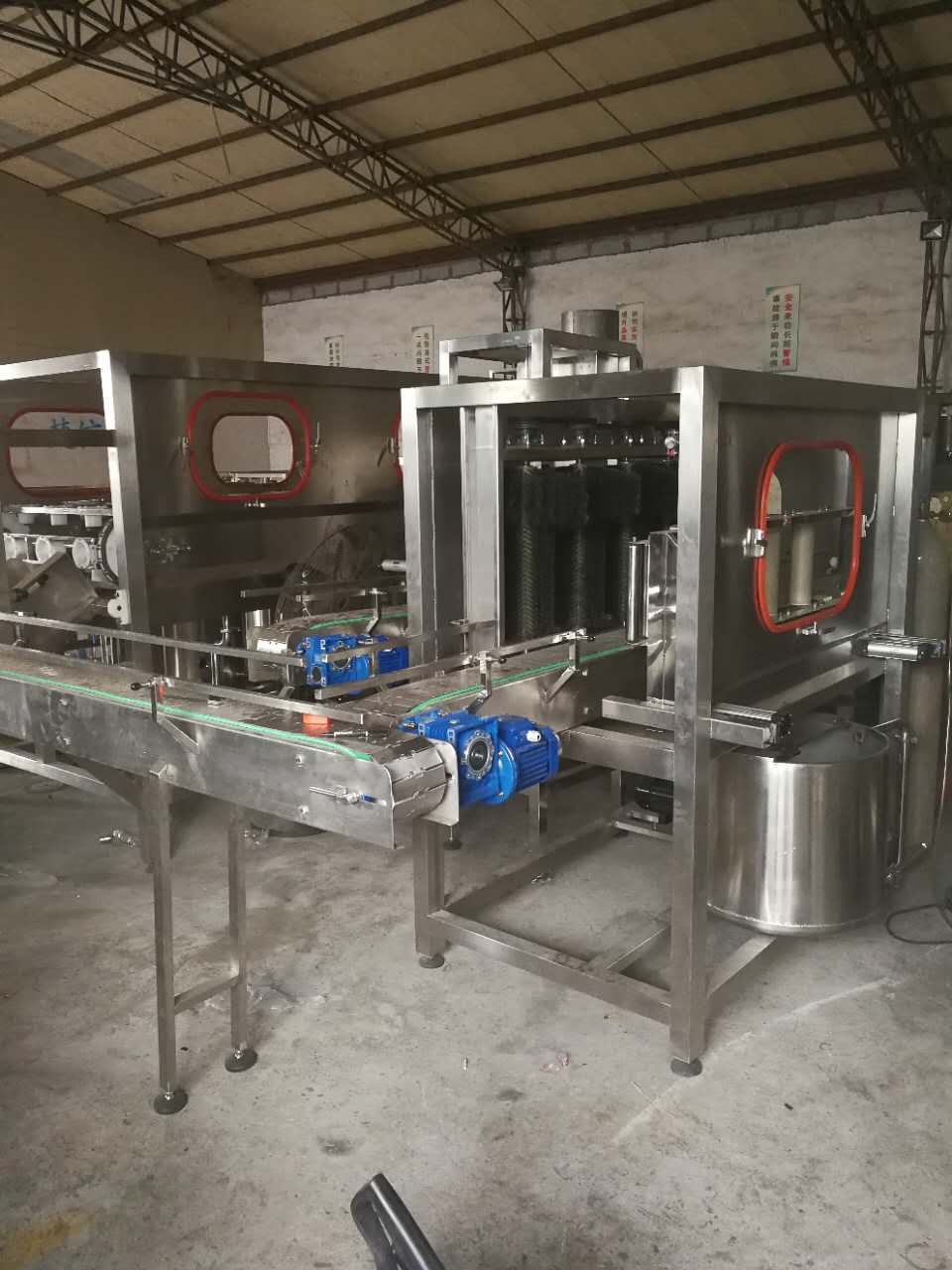
- Intelligent barrel cleaning: High-pressure spray + internal brush scrubbing + food-grade disinfectant rinse + clean water flush + hot-air drying — ≥6 cleaning cycles per barrel; surface hygiene compliant with food-contact requirements.
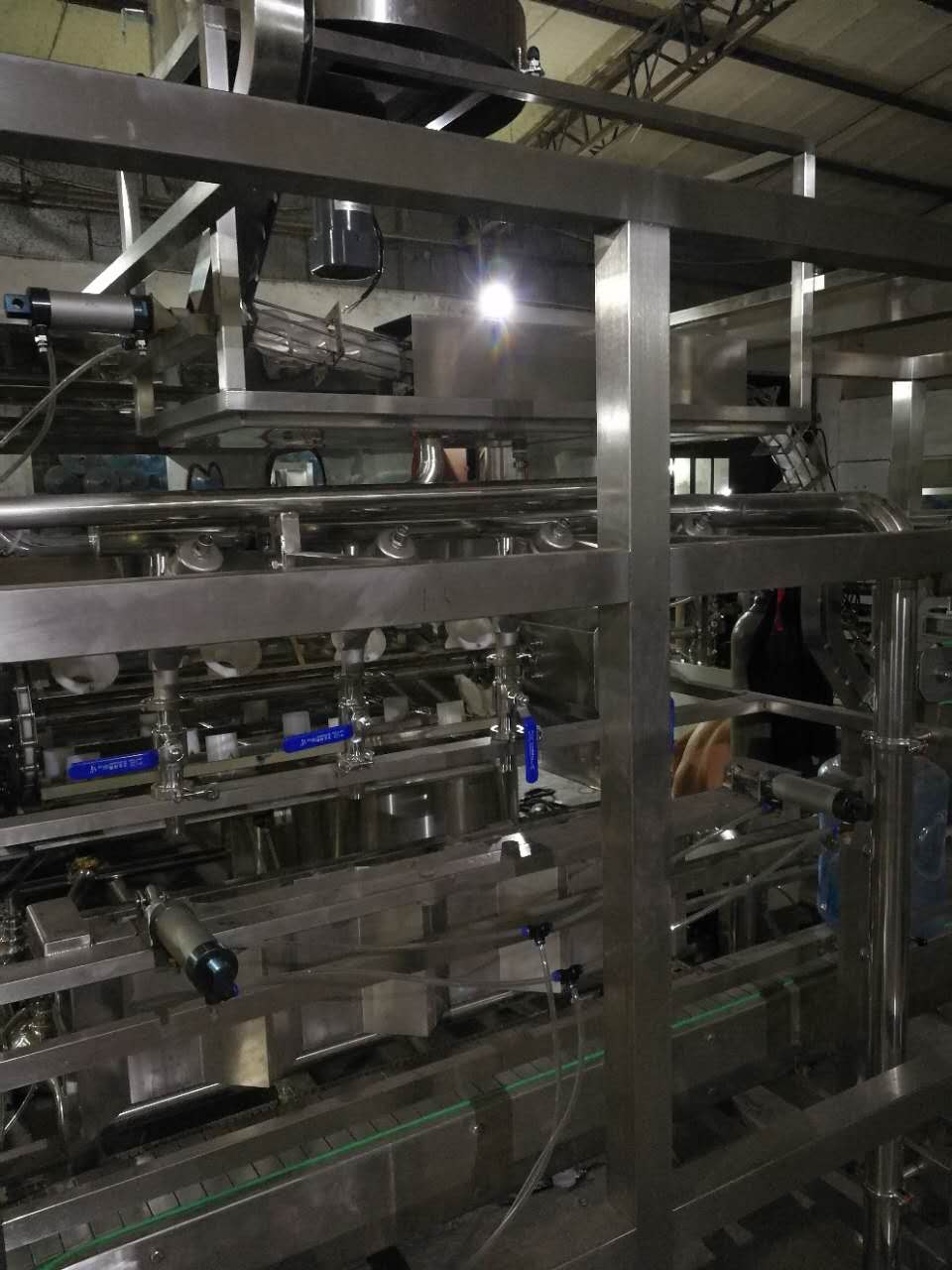
- Precision filling & sealing: Volumetric dosing accuracy ≤±2%; automatic capping or pressing; seal integrity rate ≥99.7%; full aseptic zone control throughout filling.
- Smart monitoring: PLC + HMI interface with real-time display of conductivity, flow, pressure, equipment status, and batch counts; data logging ≥3 years; fault alerts and remote diagnostics support.
Key Technical Adaptations
| Parameter | Specification |
|---|---|
| Barrel compatibility | 18.9L (standard 5-gallon), 11.3L, 5L; supports handle-equipped and disposable PET barrels; barrel diameter: 280–320 mm; height: 450–520 mm |
| Production capacity | 200–1800 barrels/hour — modular configuration scalable to site-specific demand and growth roadmap |
| Material compliance | All wetted parts: food-grade 304 stainless steel (GB 4806.9-2016); seals: food-grade silicone — no leaching or odor transfer |
| Energy efficiency | RO recovery rate ≥75%; barrel wash-water reuse ≥90%; overall energy consumption reduced by 6–10% vs. conventional lines |
Why This Solution Fits Your Project
- Site-specific engineering: Not off-the-shelf — we start with your raw water test report, floor plan, power supply specs, and future expansion plans to optimize layout, component selection, and automation level.
- Full-service delivery: Includes on-site water analysis, process design, local manufacturing, factory acceptance testing (FAT), installation supervision, operator training, and annual maintenance planning — all managed by our Huizhou-based technical team.
- Proven reliability: Core components sourced from trusted global suppliers (e.g., Dow RO membranes, Mitsubishi PLCs, SEW servo drives); full-line continuous load testing ≥300 hours; annual system availability ≥95%.
- Compliance acceleration: Supports SC license application documentation, cleanroom foundation guidance, stainless-steel pipe passivation, and basic in-house water quality verification tools.
Typical Use Cases
This line serves diverse operational models: new bottled water plants, automation retrofits for legacy facilities, regional distribution hubs scaling up output, institutional projects (universities, hospitals), and emerging branded water startups requiring flexible, low-footprint production.