Enterprise
Water Treatment Technologies

Practical guidance for better product and service decisions.

Turnkey Drinking Water Plant Equipment Working Principle: Core Structure, Treatment Logic & Application Scenarios

Published: 2026-07-25

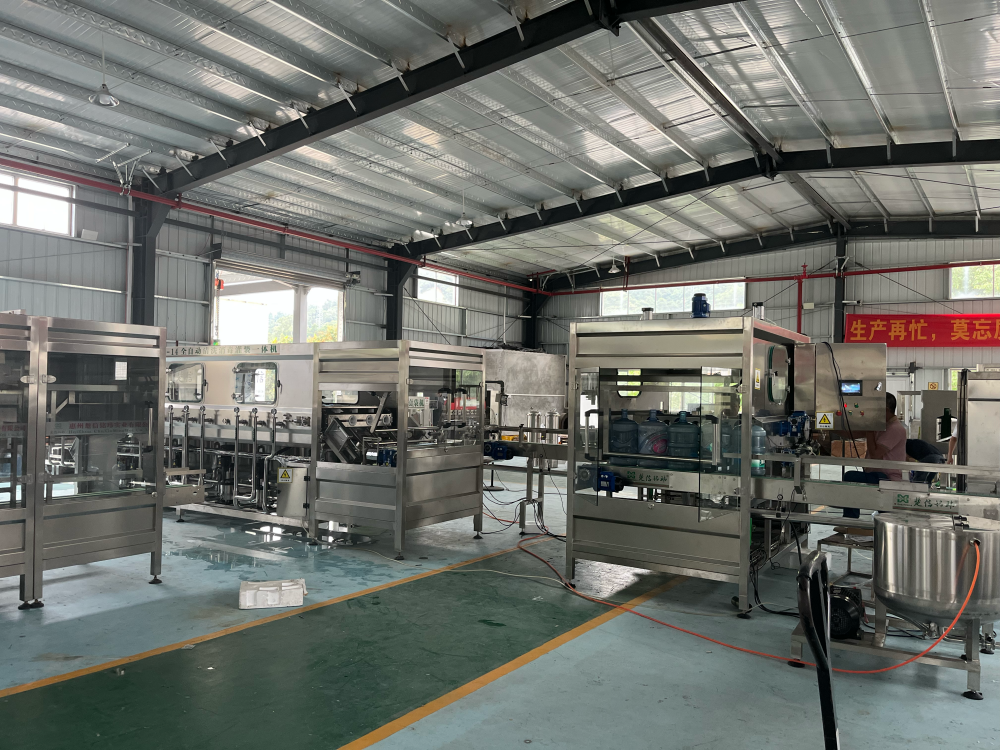
Turnkey Drinking Water Plant Equipment Working Principle: Core Structure, Treatment Logic & Application Scenarios \\![Hero Image](http://rpidj9qp.saas.cookeji.com/uploads/images/20260714/202607141643293e6060045.jpg) \\[Image Caption: Custom Water Treatment & Filling Solutions Engineered for Your Needs] \\[Chuxin Mingwei provides comprehensive turnkey solutions for water treatment and filling, tailored to meet specific requirements in various industries.]\\n
Turnkey Drinking Water Plant Equipment Working Principle: Core Structure, Treatment Logic & Application Scenarios

Introduction \\[Turnkey drinking water plant equipment is designed to provide a complete, end-to-end solution for water treatment and bottling. This article will delve into the working principles, core structure, and treatment logic of such systems, helping procurement managers, operations leads, and digital project teams in beverage, food, pharmaceutical, electronics, and other industries make informed decisions.]\\n

Core Structure and Key Components \\[A turnkey drinking water plant typically consists of several key components, each playing a crucial role in the overall process. Here are the main elements:]\\n

1. Water Intake and Pre-Treatment \\[The first step involves taking in raw water and pre-treating it to remove large particles, sediments, and other impurities. Common pre-treatment methods include:]\\n- Sand Filtration: Removes larger particles and sediments. \\[Source: `JR-WATER-01` (A)]\\n- Activated Carbon Filtration: Reduces organic compounds, chlorine, and other contaminants. \\[Source: `JR-WATER-01` (A)]\\n- Softening: Reduces hardness by removing calcium and magnesium ions. \\[Source: `JR-WATER-01` (A)]\\n

2. Primary Treatment \\[The primary treatment stage further purifies the water using advanced technologies:]\\n- Reverse Osmosis (RO): Removes dissolved solids, bacteria, and viruses. \\[Source: `ART-A02` (A)]\\n- Ultrafiltration (UF): Filters out smaller particles and microorganisms. \\[Source: `ART-A04` (A)]\\n

3. Secondary Treatment \\[For higher purity requirements, secondary treatment may be necessary:]\\n- Electrodeionization (EDI): Further reduces ionized impurities. \\[Source: `ART-A02` (A)]\\n- Ozone and UV Disinfection: Ensures microbial safety. \\[Source: `JR-BARREL-01` (A)]\\n

4. Filling and Packaging \\[Once the water is treated, it is ready for filling and packaging. The key components include:]\\n- Bottle Washing, Filling, and Capping Machines: Integrated units that handle the entire process from washing to capping. \\[Source: `JR-WATER-01` (A)]\\n- Automated Barrel Wrapping Machines: For precise and efficient wrapping of barrels. \\[Source: `JR-COMBI-01` (A)]\\n

Treatment Logic and Operational Processes \\[The treatment logic and operational processes of a turnkey drinking water plant are designed to ensure consistent water quality and efficient production. Here’s how it works:]\\n

1. Raw Water Intake and Pre-Treatment \\[Raw water is taken in and passed through a series of filters to remove large particles and impurities. This step ensures that the water entering the primary treatment stage is as clean as possible.]\\n

2. Primary Treatment \\[The pre-treated water is then subjected to primary treatment, which typically involves reverse osmosis (RO) or ultrafiltration (UF). These processes remove dissolved solids, bacteria, and other contaminants, ensuring the water meets the required standards.]\\n

3. Secondary Treatment \\[For applications requiring higher purity, secondary treatment methods such as electrodeionization (EDI) and ozone/UV disinfection are used. These steps further reduce impurities and ensure microbial safety.]\\n

4. Filling and Packaging \\[The treated water is then ready for filling and packaging. The integrated bottle washing, filling, and capping machines ensure that the bottles are cleaned, filled, and sealed with high precision. Automated barrel wrapping machines handle the wrapping of barrels, ensuring a seamless and efficient process.]\\n

Application Scenarios \\[Turnkey drinking water plant equipment is suitable for a wide range of applications, including:]\\n- Beverage Industry: Production of bottled and barrelled water, juices, and other beverages. \\[Source: `JR-JUICE-01` (A)]\\n- Pharmaceutical Industry: High-purity water for manufacturing and processing. \\[Source: `ART-A02` (A)]\\n- Electronics Industry: Ultra-pure water for semiconductor and electronic component manufacturing. \\[Source: `ART-A02` (A)]\\n- Food Industry: Water for food processing and packaging. \\[Source: `JR-WATER-01` (A)]\\n

Evaluation Criteria and Risks \\[When evaluating turnkey drinking water plant equipment, consider the following criteria:]\\n

1. Water Quality Requirements \\[Determine the specific water quality standards required for your application. This will guide the selection of appropriate treatment technologies.]\\n

2. Production Capacity \\[Assess the required production capacity in terms of bottles or barrels per hour. This will help in selecting the right size and configuration of the equipment.]\\n

3. Automation and Efficiency \\[Consider the level of automation and efficiency of the equipment. Fully automated systems can reduce manual labor, minimize contamination risks, and improve repeatability.]\\n

4. Maintenance and Support \\[Evaluate the availability of maintenance and support services. Long-term maintainability and reliable after-sales support are crucial for the smooth operation of the plant.]\\n

5. Budget and Cost \\[Factor in the initial investment, operating costs, and long-term maintenance expenses. A cost-benefit analysis will help in making an informed decision.]\\n

6. Regulatory Compliance \\[Ensure that the equipment complies with local and international regulations. This includes meeting standards for water quality, safety, and environmental impact.]\\n

7. Site-Specific Constraints \\[Consider the physical constraints of the site, such as space, power supply, and drainage. The equipment should be designed to fit within these constraints.]\\n

Practical Examples \\[Here are some practical examples of turnkey drinking water plant equipment in action:]\\n

Example 1: Bottled Spring Water Filling Line \\[Chuxin Mingwei’s fully automatic bottled spring water filling line is engineered for the natural characteristics of spring water. It includes dual-membrane NF + UF processes, integrated bottle washing-filling-capping units, and PLC-based intelligent control systems.]\\n

Example 2: Purified Water Filling Line \\[The fully automatic bottled purified water filling line uses a two-stage RO reverse osmosis deep purification process. It integrates full-process operations, including bottle washing, filling, capping, and inspection, with minimal manual intervention.]\\n

Example 3: Clean Air Purification Systems \\[Custom-engineered air purification systems for water bottling and barrelled water filling cleanrooms. These systems meet ISO Class 8 (100,000) and higher standards, ensuring a clean and controlled environment.]\\n

Conclusion \\[Turnkey drinking water plant equipment offers a comprehensive solution for water treatment and bottling. By understanding the core structure, treatment logic, and operational processes, you can make informed decisions that meet your specific requirements. Consider the evaluation criteria and potential risks to ensure a successful implementation.]\\n

Next Steps \\[Ready to get started with your turnkey drinking water plant project? Share your water source, target quality, capacity, packaging format, and facility details with us, and we’ll propose a tailored solution. Contact Chuxin Mingwei today to schedule a consultation.]\\n