
Calculating Total Cost of Ownership for Barrelled Water Lines Beyond Initial Equipment Investment
Calculating Total Cost of Ownership for Barrelled Water Lines Beyond Initial Equipment Investment
For procurement managers and operations leads in the beverage, food, pharmaceutical, and electronics sectors, the decision to replace or upgrade a barrelled water production line is rarely driven by equipment failure alone. It is often a strategic response to rising operational costs, inconsistent product quality, or the need to accommodate new hygiene standards. When evaluating barrelled water line total cost, the initial purchase price represents only a fraction of the financial commitment. The true economic impact is determined by the system's ability to handle specific source water characteristics, maintain sterility during the filling process, and minimize downtime through robust engineering.
Defining the Scope: New vs. Recycled Barrel Processing
A critical factor in calculating lifecycle costs is the distinction between processing new barrels versus recycled ones. This decision dictates the complexity of the cleaning and sterilization modules required, directly impacting utility consumption (water, electricity, chemicals) and labor hours.
According to industry technical specifications, recycled barrels undergo significant contamination risks from transport and previous use. Consequently, they require a more rigorous workflow compared to new barrels. This includes:
- External Inspection and Cap Removal:*
- Automated systems must verify barrel integrity before processing. Unlike new barrels, recycled units require cap removal and external brushing to address surface contaminants.
- Multi-Stage Cleaning:*
- A sequence involving internal washing, disinfection, and rinsing is mandatory to remove biological and particulate contaminants. The specific number of stations depends on whether the line handles 3-gallon, 5-gallon, or 18.9L containers.
- Sterilization Protocols:*
- Recycled units often require ozone or UV treatment at multiple stages to ensure compliance with safety standards. New barrels also require treatment but follow a different protocol that does not necessarily include the full decontamination cycle needed for returns.
If a facility upgrades a line designed for new barrels to handle recycled barrels without adjusting the cleaning module, the risk of product rejection increases, leading to hidden costs in waste disposal and brand reputation damage. Conversely, over-engineering a line for new barrels that never handles returns results in unnecessary capital expenditure on complex washing stations.
The Hidden Costs of Sterilization and Air Quality
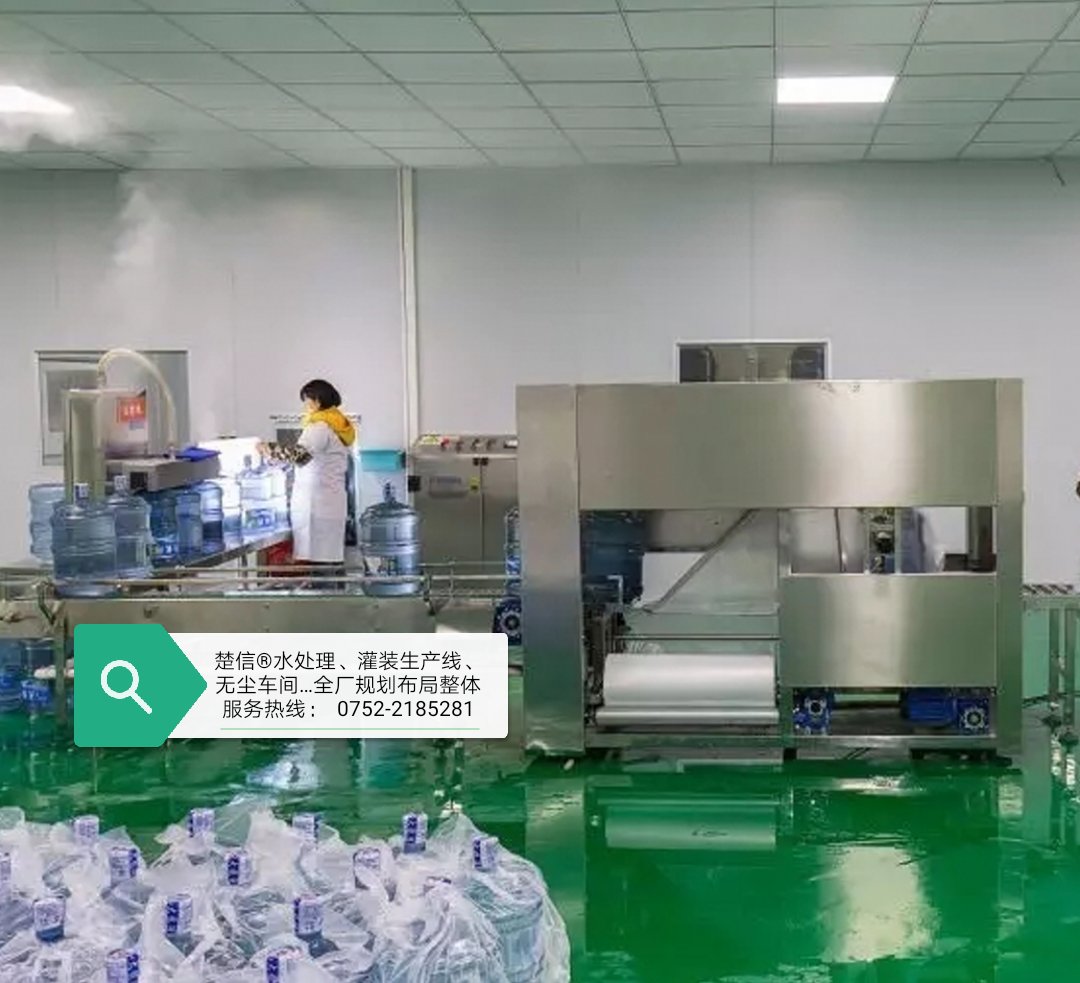
The "Total Cost of Ownership" extends significantly into the post-filling environment. For barrelled water, the filling process occurs in a controlled cleanroom environment where air quality is as critical as water purity.
Chuxin Mingwei's engineering approach integrates Clean Air Purification Systems directly with the filling line. These systems are not merely add-ons but essential components for maintaining ISO Class 8 (100,000) standards, which can be upgraded to Class 7 (10,000) depending on the application.
Key cost drivers in this phase include:
- Filtration Efficiency:*
- The use of H13 HEPA filters ensures high-efficiency particulate removal, reducing the frequency of filter replacements and the associated downtime.
- Energy Consumption:*
- Systems with airflow ranges tailored to project-specific needs require careful sizing. Oversized systems increase energy bills, while undersized systems fail to maintain positive pressure, risking contamination.
- Control Integration:*
- PLC-based control systems with real-time diagnostics allow for predictive maintenance, preventing costly emergency repairs.
Ignoring the integration of air purification during the initial selection phase often leads to retrofitting costs later. Retrofitting an existing cleanroom to meet modern hygiene standards is significantly more expensive than designing the airflow and duct routing correctly during the initial installation.
Implementation Boundaries and Process Verification
When planning a replacement project, it is vital to understand the boundaries of what constitutes a complete solution. A common pitfall in procurement is assuming that a "filling machine" includes all necessary upstream and downstream support.
A standard Bottled Spring Water Filling Production Line or Purified Water Filling Line typically integrates:
- Water Treatment:*
- Dual-membrane NF + UF processes for spring water to balance purification efficiency with mineral retention, or dual-stage RO deep purification combined with ozone and UV sterilization for purified water.
- Filling Accuracy:*
- Precision filling with tolerances of ≤ ±2 mL and capping pass rates ≥99.6%.
- Capacity:*
- Rated outputs ranging from 200 to 1,800 bottles/hour (for 18.9L barrels), customizable based on facility constraints.
However, the scope often excludes site-specific civil works, such as foundation pouring or major electrical grid upgrades. Furthermore, the compatibility of the line with existing bottle types (e.g., switching between 18.9L and 11.3L) requires verification of mechanical adjustments. While some lines offer flexibility, rapid changeovers may necessitate specific component swaps, which should be factored into the operational timeline and spare parts budget.
It is crucial to note that capacity calculations cannot simply convert bottles per hour into finished water volume. One must account for rinse water usage, CIP cleaning cycles, equipment flushing, blending losses, peak buffering, and planned operating time. Final calculations should be confirmed by project material balances.
Strategic Selection Criteria for Decision Makers
To optimize the lifecycle value of your investment, procurement teams should prioritize the following criteria during the shortlisting phase:
- Source Water Compatibility: Does the water treatment module match your specific raw water quality? For spring water, the system must balance purification with mineral retention (NF + UF). For purified water, deep RO processes are non-negotiable.
- Hygiene Architecture: Is the cleaning protocol explicitly designed for your target barrel type (new vs. recycled)? Verify the number of washing stations and the inclusion of automated cap removal.
- Air System Integration: Does the supplier offer a unified design for water treatment and clean air systems? Integrated designs reduce interface errors and simplify commissioning.
- Support Boundaries: Clarify the after-sales support scope. Does the contract include operator training, remote diagnostics, and defined response times for critical failures?
Conclusion
Evaluating a barrelled water filling line requires a shift from viewing the equipment as a standalone asset to understanding it as a complex, integrated system. The lowest initial bid often correlates with higher long-term costs due to inefficiencies in water usage, energy consumption, and increased maintenance requirements. By focusing on the specific needs of your production scenario—whether handling recycled barrels or maintaining strict ISO air standards—you can select a solution that delivers stability and long-term maintainability.
At Chuxin Mingwei, we engineer non-standard, site-specific solutions that align with your actual source water quality, production capacity, and facility constraints. Our focus remains on delivery execution and sustained post-installation support, ensuring your investment delivers value throughout its entire lifecycle.
Next Steps
Ready to assess your current line's efficiency or plan a strategic upgrade? Contact our engineering team to discuss your specific water quality reports, production targets, and facility layout. We will provide a preliminary feasibility analysis and a detailed scope of work tailored to your operational needs.
[Contact Our Engineering Team for a Custom Feasibility Study]
Key Points Summary
- Lifecycle Focus:*
- True cost includes water, energy, chemicals, and maintenance, not just the machine price.
- Process Specificity:*
- Recycling barrels requires distinct, multi-stage cleaning and disinfection protocols compared to new barrels.
- Air Quality Integration:*
- Clean air systems (ISO Class 8/7) with H13 HEPA filters are critical for sterility and must be designed alongside the filling line.
- Custom Engineering:*
- Solutions must be tailored to source water quality (Spring vs. Purified) and specific barrel dimensions (18.9L, 11.3L).
- Service Boundaries:*
- Clear definition of installation, training, and after-sales support is essential for accurate budgeting.
Conclusion
Selecting a barrelled water line is a strategic decision that impacts operational stability for years. By prioritizing process matching, hygiene architecture, and integrated support, procurement managers can avoid hidden costs and ensure a reliable, efficient production environment. Chuxin Mingwei offers the expertise to navigate these complexities, delivering engineered solutions that stand the test of time.
Recommended
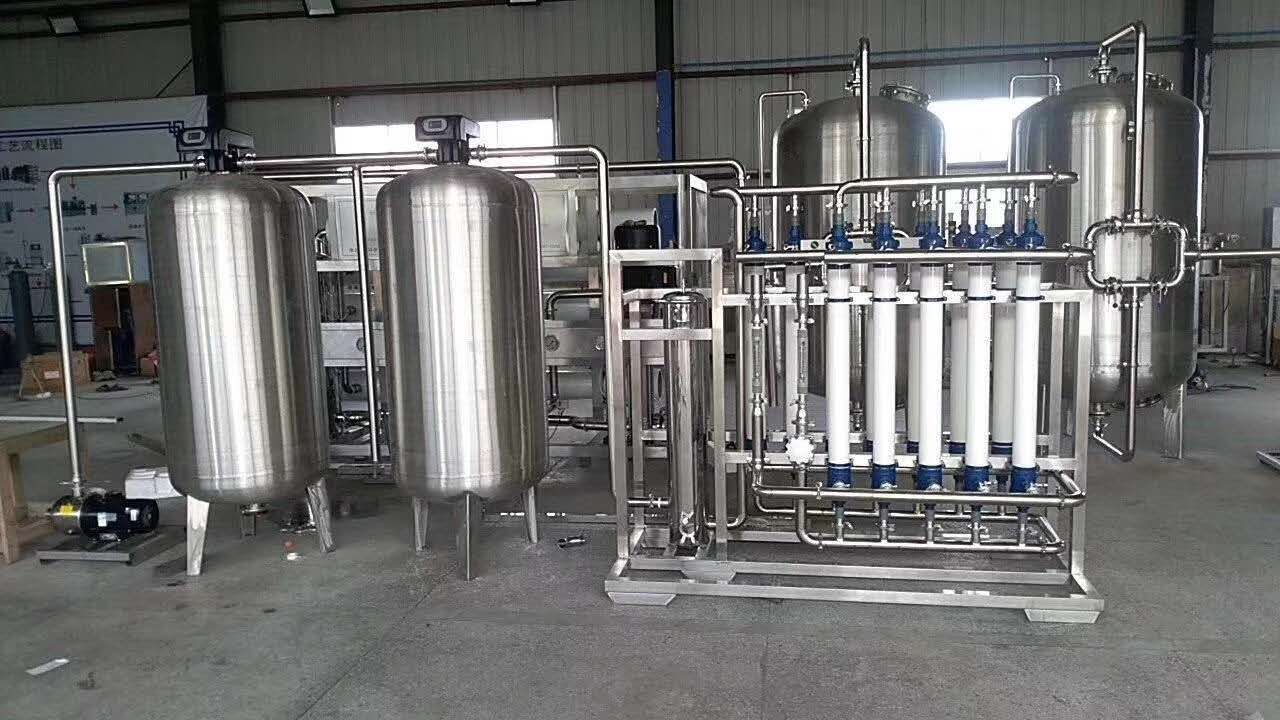
Bottled Spring Water Filling Production Line
Chuxin Mingwei’s customized bottled spring water filling production line is specifically...
Clean Air Purification Systems
Custom-engineered air purification systems for water bottling and barrelled water fillin...
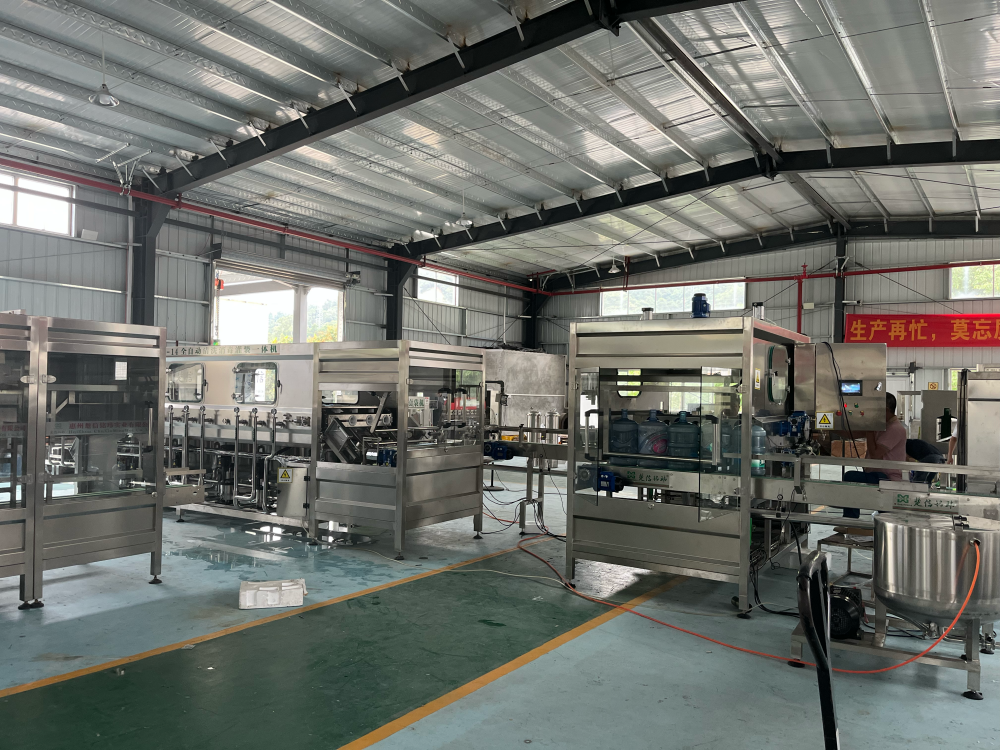
Fully Automatic Barrel Filling Line (Wash-Fill-Seal Integrated System)
A fully automatic, integrated wash-fill-seal system engineered for high-efficiency, SC-c...