
Hidden Facility Requirements for Integrating Barrel-Wrap Machines into Existing Lines
Hidden Facility Requirements for Integrating Barrel-Wrap Machines into Existing Lines
The Operational Challenge: Retrofitting Without Disruption
For procurement managers and operations leads in the beverage, food, and pharmaceutical sectors, adding an automatic barrel-wrap packaging unit is rarely a simple "plug-and-play" task. It represents a critical junction between production output and logistics readiness. When integrating a wrapping machine into an existing line—whether for 3-gallon (11.3 L) or 5-gallon (18.9 L) barrels—the primary risk lies not in the machine's speed, but in the mismatch between the new equipment's physical demands and the facility's current layout.
This guide addresses the specific implementation barriers faced by technical evaluation teams preparing for cross-team collaboration or site-specific upgrades. We focus on the tangible constraints that determine whether a project succeeds or requires costly re-engineering.
Step 1: Physical Space and Conveyor Alignment
The most common failure point in retrofitting is insufficient floor space or misaligned conveyor paths. An automatic wrap machine introduces a new mechanical footprint that must accommodate the barrel's rotation, the film carriage movement, and the necessary safety clearance for operators.
Critical Spatial Requirements
- Footprint Verification:*
- Unlike standard bottle lines where bottles are compact, 5-gallon barrels require significant lateral clearance for the wrapping mechanism to rotate around the container without collision. You must measure the available width beyond the existing discharge conveyor.
- Conveyor Height and Leveling:*
- The transfer point from your filling line (e.g., a QGF series washer-filler-capper) to the wrapper must be perfectly level. Even minor height discrepancies can cause barrels to tip during transfer, leading to jams or product damage. Ensure the conveyor chain height matches the wrapper's input roller bed within millimeter tolerances.
- Maintenance Clearance:*
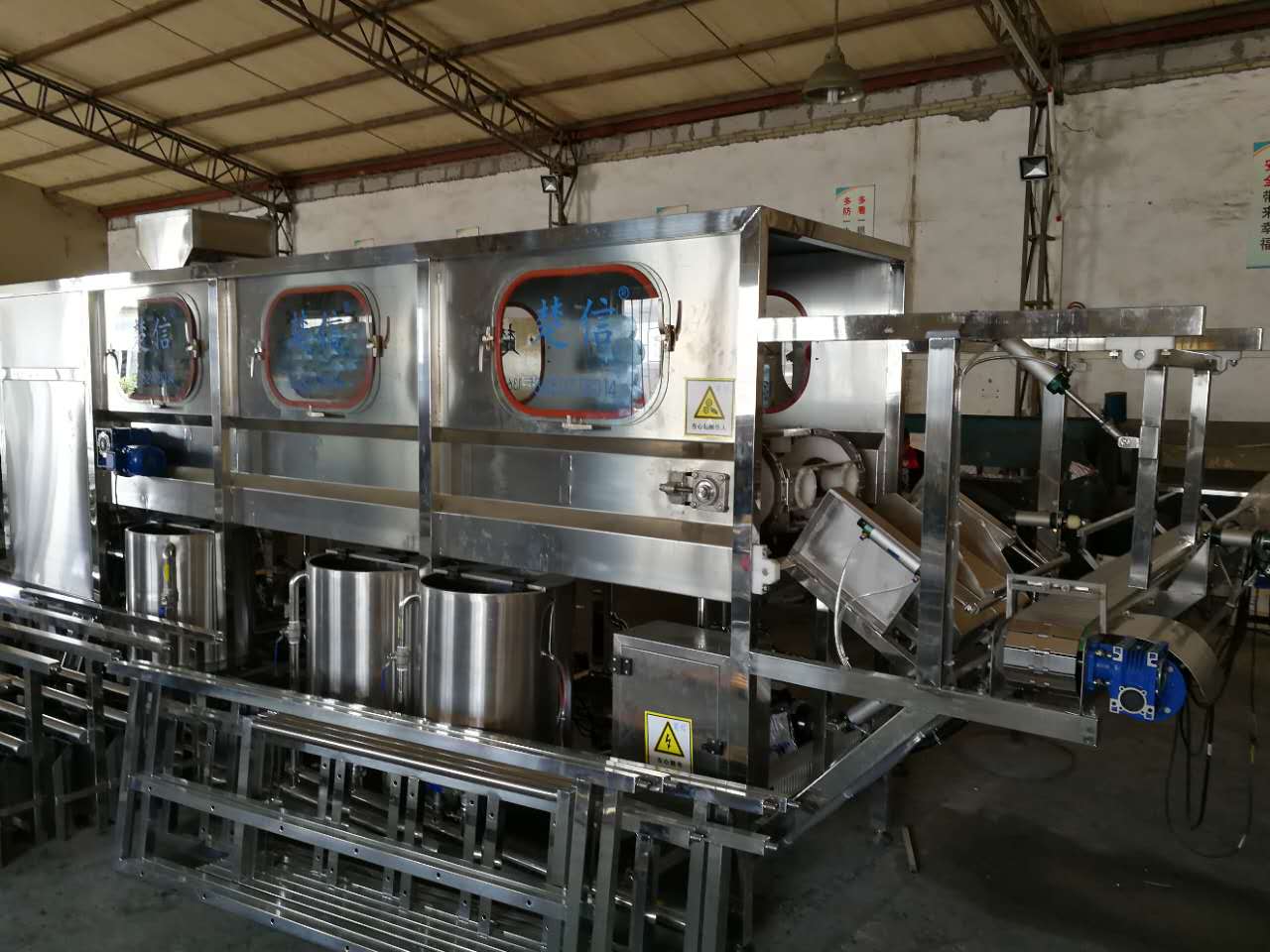
- Do not design the layout based solely on the machine's static dimensions. You must reserve sufficient clearance on all sides for routine maintenance, such as replacing film rolls, cleaning sensors, or accessing drive motors. This aligns with Chuxin Mingwei's emphasis on long-term maintainability and operational stability.
Step 2: Utility Capacity and Power Integration
Technical teams often overlook the auxiliary power and air requirements when planning for automated packaging. While the main motor draws significant power, the control systems and pneumatic actuators have specific needs that must be integrated into the facility's electrical plan.
Power and Air Specifications
- Electrical Load:*
- Verify that the local distribution panel can support the peak load of the wrapping motor plus any additional lighting or HMI (Human-Machine Interface) stations required for remote monitoring. If the line includes PLC-based intelligent control systems, ensure the voltage stability meets the manufacturer's specifications to prevent sensor errors.
- Compressed Air Supply:*
- Many automated wrappers utilize pneumatic clamps or film tensioners. Confirm that your plant's compressed air system provides sufficient pressure and flow rate. A drop in air pressure during operation can cause inconsistent wrapping tension, leading to loose films or material waste.
- Grounding and Safety:*
- As with all industrial automation, proper grounding is essential to protect sensitive electronic components from static discharge, especially in environments handling plastic film.
Step 3: Workflow Compatibility and Process Boundaries
Integrating a wrapper requires more than just mechanical connection; it demands a synchronized workflow. The wrapper cannot operate faster than the upstream filling line, nor should it create a bottleneck that forces the filler to stop.
Defining the Handoff Protocol
- Throughput Balancing:*
- Avoid promising specific throughput numbers before a site survey. The actual capacity depends on the barrel type (new vs. recycled), the film thickness, and the required wrap pattern. For instance, if your line processes 3-gallon and 5-gallon barrels interchangeably, the changeover time for the wrapper must be factored into your shift planning.
- Barrel Orientation and Stability:*
- Ensure the upstream conveyor stabilizes the barrel before it enters the wrapper. Unstable barrels entering the wrapping zone can cause the film to tear or the machine to trigger emergency stops. This is particularly relevant for recycled barrels which may have slight dimensional variations compared to new ones.
- Integration with Clean Air Systems:*
- If your facility utilizes ISO Class 8 cleanrooms (as supported by Chuxin Mingwei's clean air solutions), the wrapper must be positioned to maintain positive pressure zones. The introduction of moving machinery can disrupt airflow patterns; therefore, duct routing and pressure zoning must be re-evaluated during installation.
Step 4: Acceptance Criteria and Commissioning
Before signing off on the integration, technical teams must validate the system against defined acceptance criteria. This ensures the equipment performs as expected under real-world conditions.
Validation Checklist
- Run-in Test: Operate the integrated line at a target speed to identify heat buildup or mechanical drift.
- Film Integrity Check: Inspect wrapped barrels for consistent tension, seal integrity, and absence of wrinkles. Verify that the film does not interfere with palletizing or storage.
- Safety Interlock Test: Confirm that all emergency stops, light curtains, and access gates function correctly to halt the entire line immediately upon activation.
- Operator Training: Ensure that local operators are trained on film loading, fault clearing, and basic troubleshooting. Documentation should be provided in the local language.
Conclusion: Planning for Long-Term Stability
Successfully integrating an automatic barrel-wrap packaging machine hinges on rigorous pre-installation planning rather than post-installation fixes. By addressing spatial constraints, utility capacity, and workflow synchronization early in the process, organizations can avoid downtime and ensure the new equipment delivers the stability and efficiency promised by modern industrial standards.
Chuxin Mingwei designs these systems with a focus on non-standard, site-specific engineering. We prioritize matching equipment capabilities to your actual source water quality, production capacity, and facility constraints. Whether you are upgrading a spring water line or expanding a purified water facility, our team provides end-to-end engineering services—from design and manufacturing to commissioning and operator training.
Next Steps
To proceed with your implementation plan, we recommend initiating a preliminary site assessment. Our engineering team will review your current layout, utility maps, and production targets to provide a tailored feasibility report.
Contact Chuxin Mingwei today to schedule a consultation with our technical specialists. Let us help you define the precise scope for your barrel-wrapping integration and ensure a seamless transition to automated packaging.
Key Implementation Points
- Space & Alignment:*
- Verify lateral clearance for barrel rotation and ensure conveyor height levels match the wrapper's input bed to prevent tipping.
- Utilities:*
- Confirm electrical load capacity and compressed air supply for pneumatic actuators and control systems.
- Workflow Sync:*
- Balance throughput rates between the filler and wrapper; account for changeover times if switching between 3-gallon and 5-gallon barrels.
- Cleanroom Compliance:*
- Re-evaluate airflow and pressure zoning if integrating into ISO Class 8 or higher clean environments.
- Maintenance Access:*
- Reserve sufficient clearance around the machine for film replacement and motor servicing.
Technical Scope Note
All specifications regarding space, power, and alignment are project-specific. Final parameters depend on the exact model selected, the barrel dimensions (11.3 L vs. 18.9 L), and the facility's existing infrastructure. Please consult with our engineering team for a detailed calculation based on your site data.
Recommended
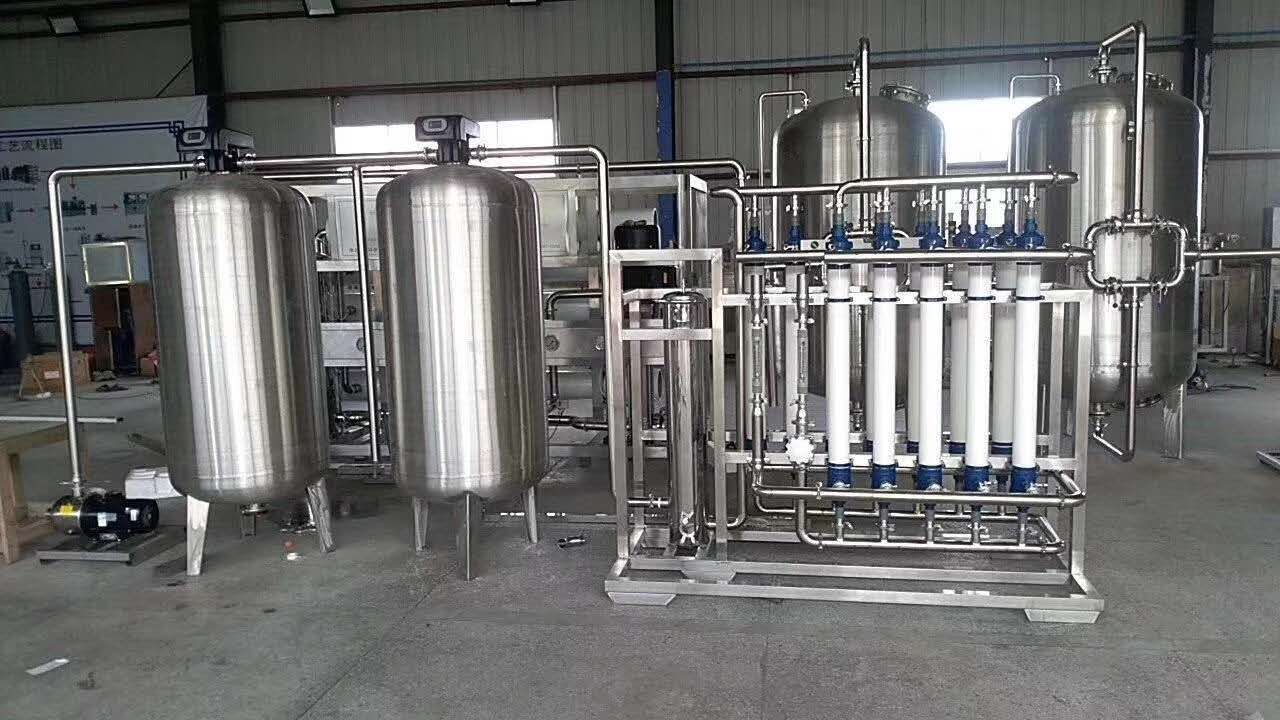
Bottled Spring Water Filling Production Line
Chuxin Mingwei’s customized bottled spring water filling production line is specifically...
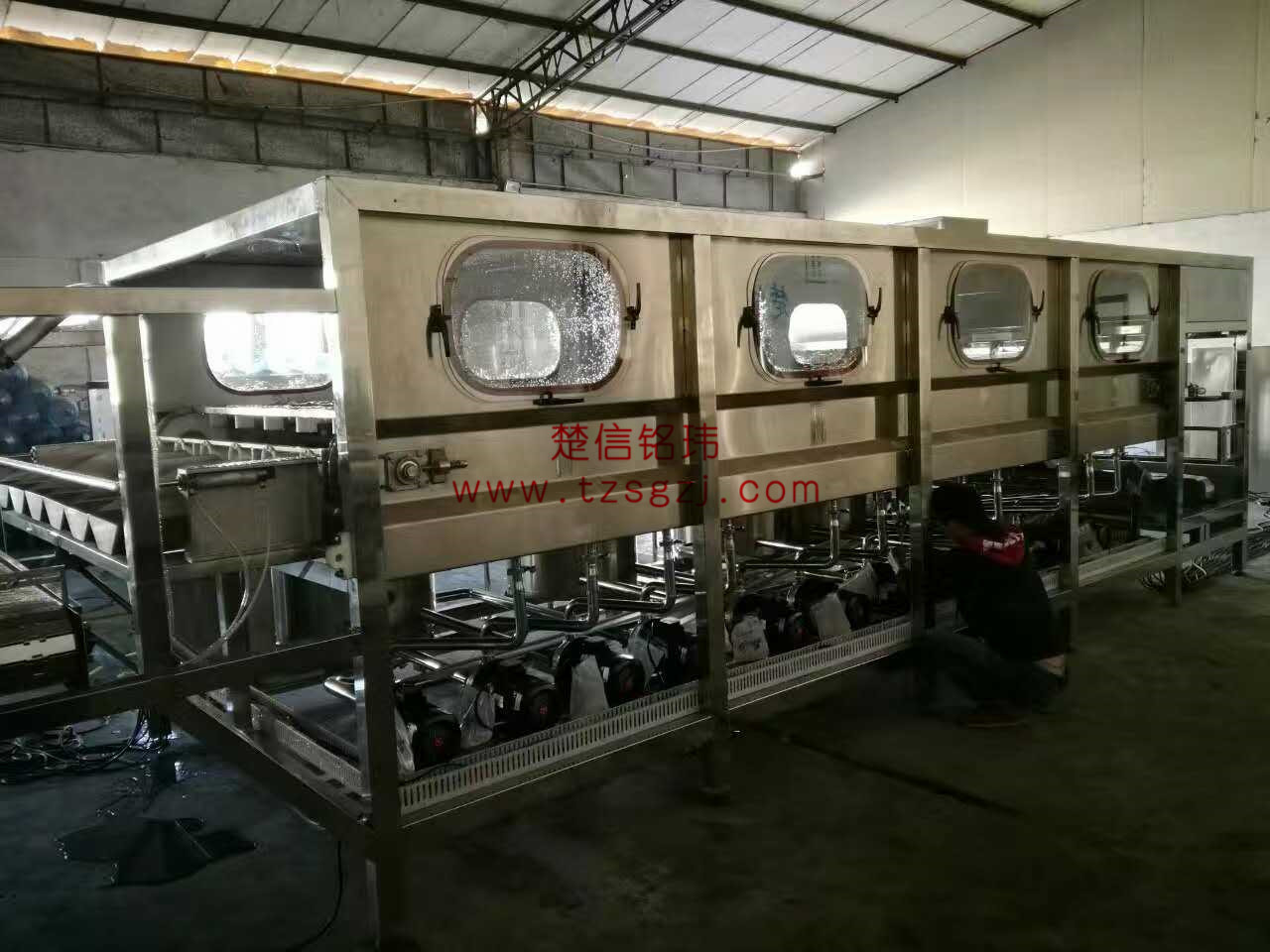
Fully Automatic Bottled Purified Water Filling Production Line
Chuxin Mingwei’s customized fully automatic bottled purified water filling production li...
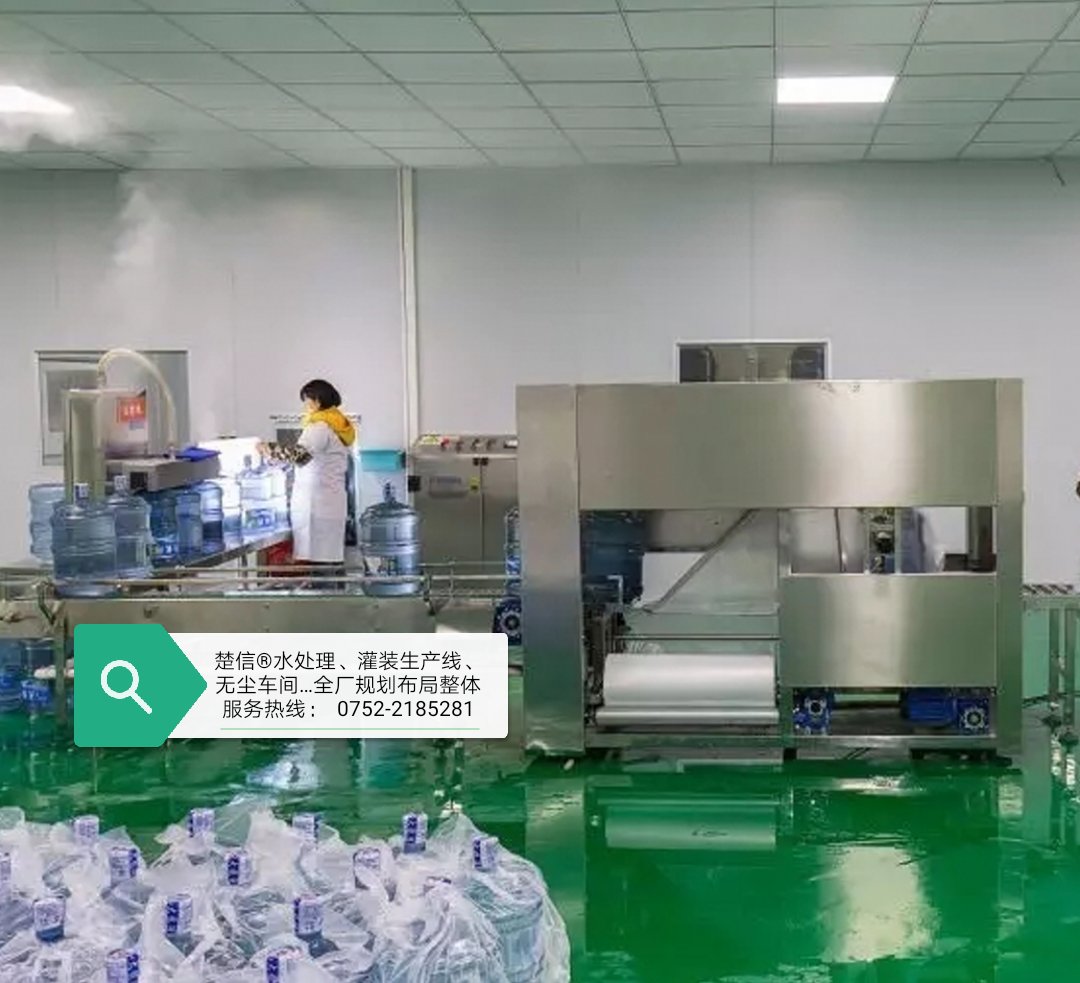
Clean Air Purification Systems
Custom-engineered air purification systems for water bottling and barrelled water fillin...