
Diagnosing Instability in Fully Automatic Bottled Spring Water Lines: A Guide for Compliance and Operations
Diagnosing Instability in Fully Automatic Bottled Spring Water Lines: A Guide for Compliance and Operations
Target Audience: Procurement Managers, Operations Leads, and Digital Project Teams in the beverage and food sectors.
When a fully automatic bottled spring water filling line experiences performance drift—such as fluctuating output, inconsistent mineral content, or rising rejection rates—the immediate reaction is often to suspect mechanical failure. However, for compliance and operations leaders, the root cause frequently lies in the alignment between the source water characteristics and the engineered purification process. This diagnostic guide addresses the specific lifecycle challenges of Chuxin Mingwei’s Bottled Spring Water Filling Production Line, focusing on upgrade readiness, anomaly resolution, and operational boundaries.
Symptom Analysis: What Signals Process Mismatch?
In a spring water environment, stability is defined not just by throughput but by the preservation of natural minerals while meeting safety standards. Common symptoms indicating a need for intervention include:
- Variable Mineral Retention:*
- The final product shows inconsistent Total Dissolved Solids (TDS) levels, suggesting the purification process is either stripping too many beneficial minerals or failing to remove contaminants effectively.
- Capping Pass Rate Fluctuation:*
- The pass rate drops below the design threshold of ≥99.6%, leading to increased waste and potential compliance issues regarding seal integrity.
- Filling Accuracy Drift:*
- Fill volumes deviate beyond the ±2 mL tolerance, causing overfilling (cost loss) or underfilling (regulatory non-compliance).
- Capacity Variance:*
- The line fails to sustain the rated output of 200–1,800 bottles/hour (based on 18.9 L bottles), often due to upstream bottlenecks rather than the filler itself.
Root Cause Diagnosis: The Dual-Membrane Balance
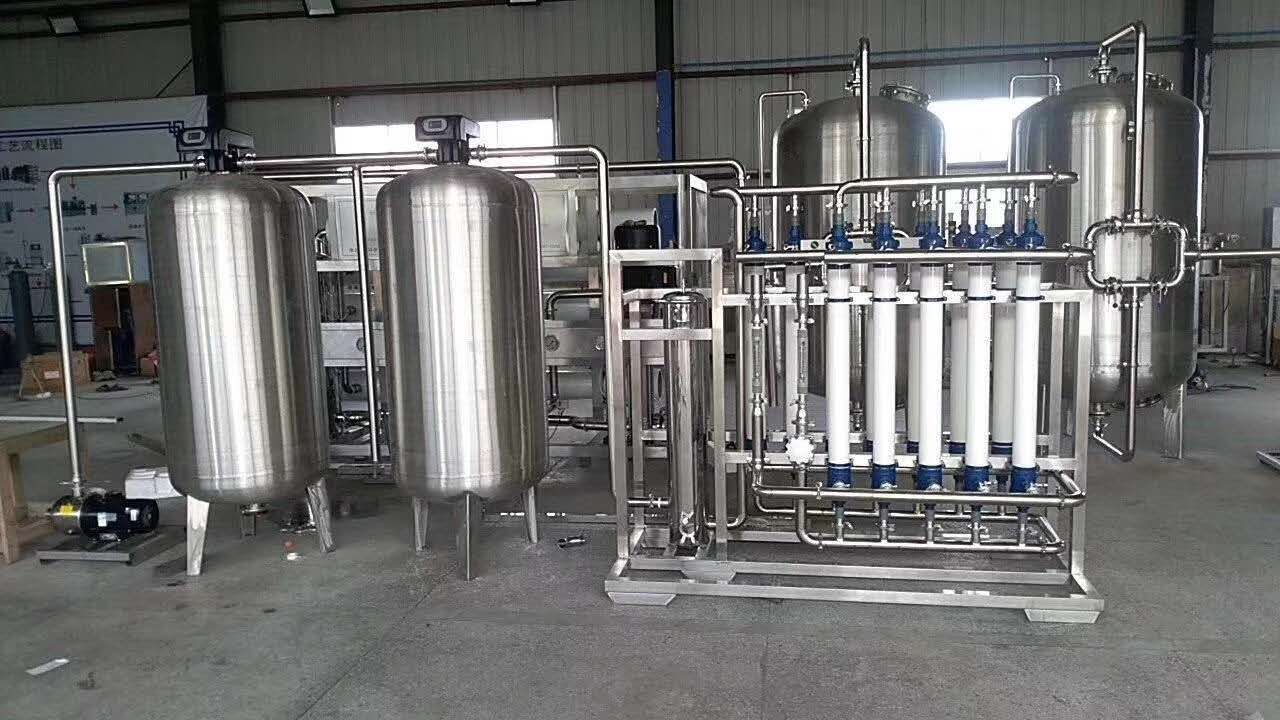
The core differentiator of a spring water line is its ability to treat raw water without destroying its natural profile. Unlike purified water lines that rely on deep Reverse Osmosis (RO) to strip all ions, spring water lines utilize a Dual-membrane NF (Nanofiltration) + UF (Ultrafiltration) process.
1. Membrane Selection and Source Water Quality
Instability often arises when the NF membrane selection does not match the seasonal variability of the source water. If the raw water TDS spikes during rainy seasons, a standard NF setting may allow excessive salts through. Conversely, if the water quality improves, the same setting might over-filter, reducing mineral content.
- Diagnostic Check:*
- Verify the raw water analysis report against the current NF membrane specification. Ensure the system includes online monitoring to adjust flux or pressure dynamically.
2. Integrated Unit Synchronization
The integrated bottle washing-filling-capping unit is designed for high precision. If the capping pass rate falls below 99.6%, it is rarely a single machine fault. It is often a synchronization issue between the bottle washing stage and the filling stage.
- Diagnostic Check:*
- Inspect the PLC-based intelligent control system logs for timing discrepancies. Check if empty bottle handling (conveyor speed vs. indexing) matches the filling valve cycle time.
Implementation Boundaries and Verification Steps
For compliance officers preparing for upgrades or troubleshooting, understanding the boundaries of the equipment is critical. The following steps outline a verified approach to resolving instability without compromising the engineering integrity of the line.
Step 1: Validate the Purification Protocol
Confirm that the Dual-membrane NF + UF process is configured correctly for the specific spring source. Do not apply a "purified water" RO protocol to a spring water line; this will alter the product identity and violate labeling regulations.
- Fact Check:
- Ensure the system is set to retain minerals while removing suspended solids and pathogens via UF.
Step 2: Audit Bottle Compatibility and Handling
The line supports 18.9 L, 11.3 L, 5 L, and other standard drinking water bottles. Instability often occurs during changeovers or when using bottles outside the specified diameter range.
- Action:
- Verify that the bottle mold and conveyor guides are adjusted for the specific batch. Misaligned bottles can cause filling errors exceeding the ±2 mL limit.
Step 3: Review Capacity Planning vs. Actual Output
Rated capacity (200–1,800 bottles/hour) is based on ideal conditions. Real-world output depends on the efficiency of the upstream water treatment and the downstream packaging (labeling, strapping).
- Calculation:
- Do not equate bottle count directly with water volume. Account for rinse water usage, CIP cleaning cycles, and buffer tank levels. If the line stops frequently, check if the raw water storage or pretreatment is the bottleneck.
Escalation Boundary: When to Engage Engineering Support
While routine adjustments can be handled by site operators, certain anomalies require manufacturer-level intervention to prevent permanent damage or non-compliance:
- Persistent Membrane Fouling:*
- If backwashing and chemical cleaning do not restore flux within the expected timeframe, the membrane module may require replacement or re-engineering.
- PLC Logic Errors:*
- If the intelligent control system shows unexplained logic conflicts or sensor failures that cannot be reset locally.
- Structural Leaks or Pressure Loss:*
- Any deviation in the clean air support system or piping integrity that affects the ISO Class 8 environment.
Strategic Recommendations for Upgrade and Expansion
For teams planning to expand capacity or upgrade existing lines:
- Source Water Re-evaluation: Before upgrading, conduct a new seasonal water quality test. The NF/UF configuration must be adaptable to these changes.
- Modular Scalability: Consider adding parallel purification modules rather than replacing the entire line. This allows for maintenance without full shutdowns.
- Operator Training: Ensure staff are trained on the specific nuances of spring water processing, distinguishing it from standard purified water workflows.
Conclusion
Instability in a Fully Automatic Bottled Spring Water Filling Production Line is rarely a simple mechanical fault. It is typically a symptom of a mismatch between the source water dynamics and the engineered NF + UF purification process, or a synchronization error in the integrated washing-filling-capping unit. By rigorously checking the dual-membrane balance, verifying bottle compatibility, and respecting the operational boundaries of the 200–1,800 bottles/hour capacity, compliance and operations leaders can ensure long-term stability and product quality.
Chuxin Mingwei’s engineering approach prioritizes site-specific solutions. If your line exhibits persistent anomalies despite standard troubleshooting, engage our technical team to review your specific source water data and facility constraints.
Key Points Summary
- Core Technology:*
- Relies on a Dual-membrane NF + UF process to balance purification with mineral retention, distinct from standard RO systems.
- Performance Metrics:*
- Designed for filling accuracy of ≤ ±2 mL and a capping pass rate of ≥99.6%.
- Capacity Range:*
- Rated output of 200–1,800 bottles/hour (based on 18.9 L bottles), dependent on upstream water treatment efficiency.
- Diagnostic Focus:*
- Investigate source water variability, bottle handling synchronization, and PLC logic before assuming hardware failure.
- Service Scope:*
- Includes end-to-end engineering, from design based on actual water quality to operator training and after-sales support.
Next Steps
If you are experiencing capacity drops, fill inaccuracies, or mineral retention issues, contact Chuxin Mingwei for a site-specific diagnostic review. We provide custom engineering services tailored to your source water quality and production goals.
[Contact Our Engineering Team for a Site Assessment]
Recommended
Bottled Spring Water Filling Production Line
Chuxin Mingwei’s customized bottled spring water filling production line is specifically...
Fully Automatic Bottled Purified Water Filling Production Line
Chuxin Mingwei’s customized fully automatic bottled purified water filling production li...
Clean Air Purification Systems
Custom-engineered air purification systems for water bottling and barrelled water fillin...