Barrel Filling and Wrapping Integration: Critical Airflow and Sync Factors for Long-Term Uptime
Barrel Filling and Wrapping Integration: Critical Airflow and Sync Factors for Long-Term Uptime
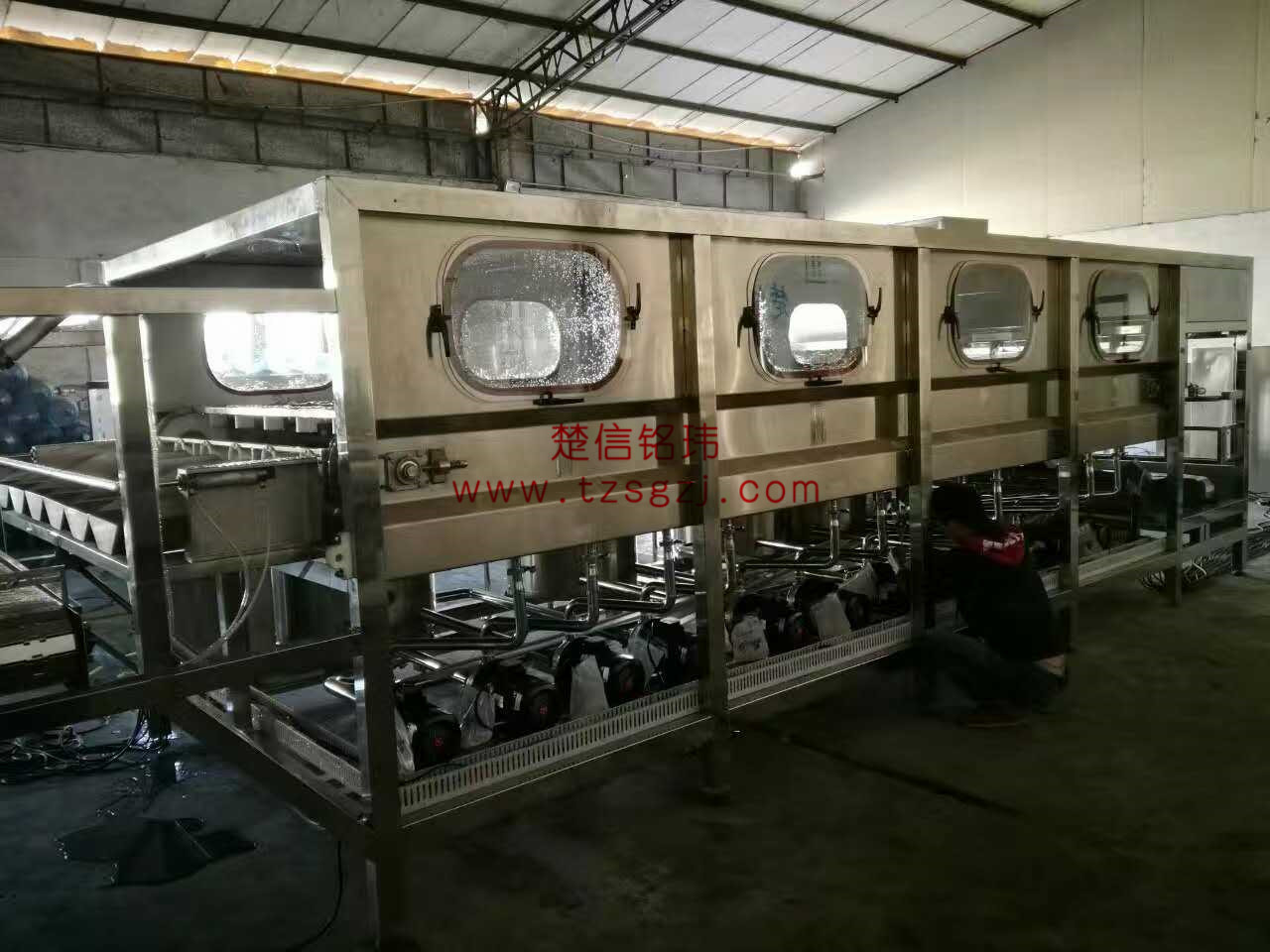
For procurement managers and operations leads managing bottled spring water production lines and 18.9L bottled water equipment, the barrel wrapping station is frequently viewed as a standalone piece of equipment. However, in high-volume production environments, this unit is the final critical link in a complex chain. When uptime drops, the root cause is rarely a mechanical fault within the wrapper itself; it is almost always a systemic issue involving Industrial Clean Air Solutions, conveyor synchronization, or process integration.
This diagnosis focuses on the specific conditions where wrapping stations disrupt long-term operational stability, drawing on Chuxin Mingwei's engineering principles for end-to-end water treatment and filling lines.
Myth vs. Fact: The Airflow Boundary
Myth: "The wrapping machine has its own motor; if the air system works elsewhere in the factory, the wrapper will be fine."
Fact: In ISO Class 8 (100,000) compliant environments, the wrapping station requires precise airflow zoning that matches the upstream filling line.
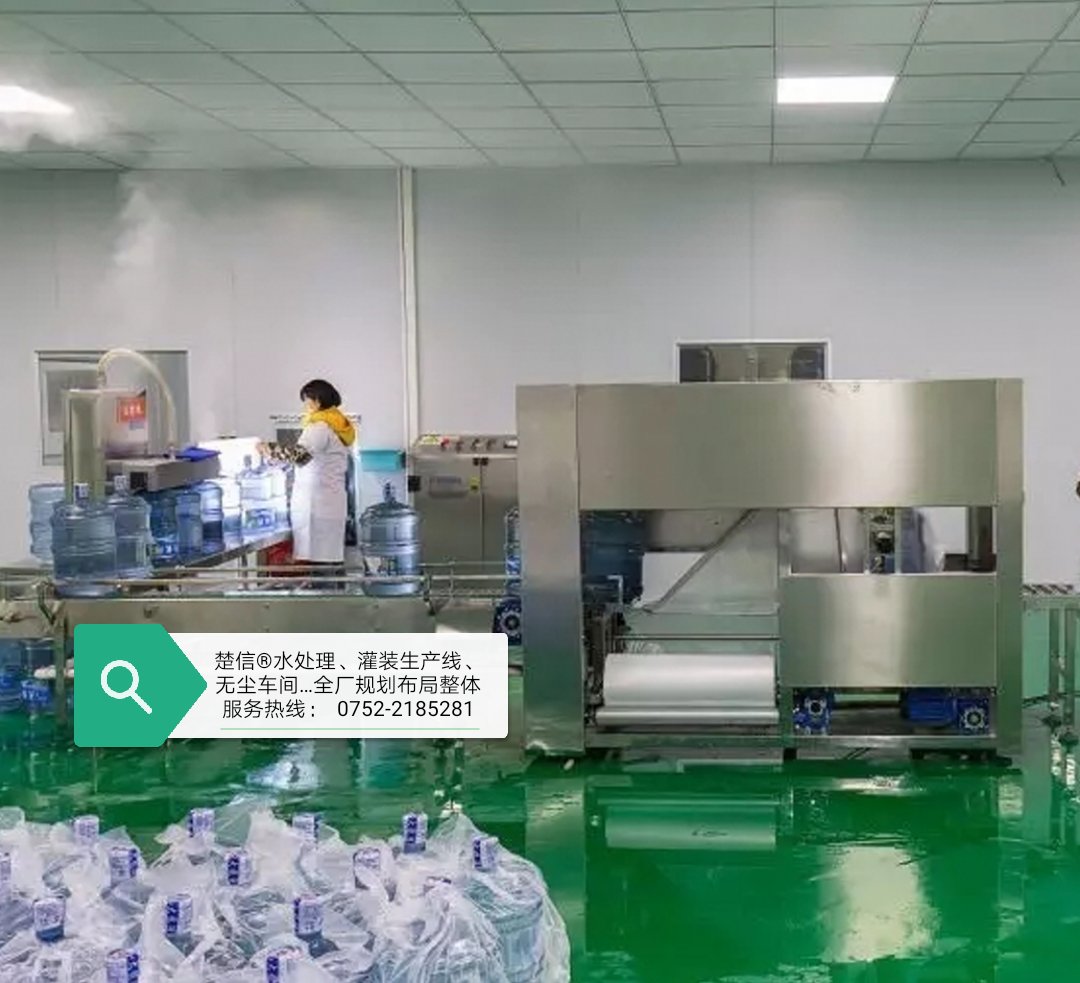
Chuxin Mingwei's Clean Air Purification Systems are engineered specifically to meet ISO Class 8 standards, with options to upgrade to Class 7 (10,000). These systems are not generic; they are designed based on site-specific airflow, duct routing, and pressure zoning. If the wrapping station is located downstream of a filling line without dedicated pressure zoning, positive pressure can be lost, allowing dust to settle on bottles before sealing. Conversely, negative pressure can pull contaminants from the warehouse into the clean zone.
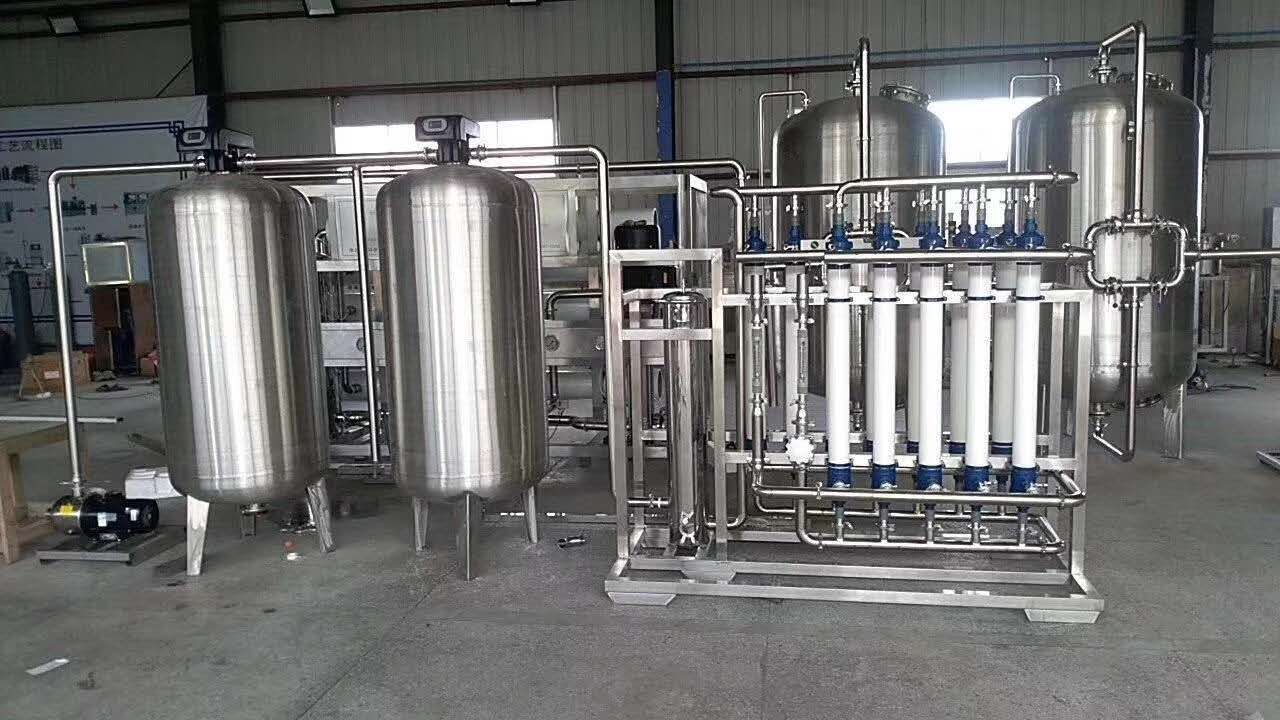
Condition & Exception: While standard wrappers may operate in ambient air, any facility targeting pharmaceutical-grade or premium bottled spring water must integrate the wrapper into the main cleanroom HVAC loop. Failure to do so compromises the sterility achieved by the upstream Dual-membrane NF + UF process or Dual-stage RO deep purification.
Myth vs. Fact: Conveyor Sync and Throughput
Myth: "As long as the filling line runs at capacity, the wrapper will keep up automatically."
Fact: Mismatched speeds between the filling line and the wrapping station create bottlenecks that lead to product damage and downtime.
In our Bottled Spring Water Filling Production Line and Fully Automatic Bottled Purified Water Filling Production Line, the rated output ranges from 200 to 2,500 bottles per hour depending on bottle size (e.g., 18.9 L, 11.3 L, 5 L). The wrapping station must be synchronized to handle this exact throughput. If the filler produces 1,800 bottles/hour but the wrapper is rated for 1,200, the buffer zone fills up, forcing the filler to stop or causing bottles to tip over during transfer.
Furthermore, the PLC-based intelligent control system used in Chuxin Mingwei's lines ensures that bottle washing, filling, capping, and inspection are synchronized. The wrapping station must interface seamlessly with this logic. Without proper integration, the wrapper cannot detect jams or speed variations in real-time, leading to sleeve misalignment or crushed barrels.
Condition & Exception: For facilities running mixed formats (e.g., switching between 18.9L and 5L), the wrapper must support rapid changeover. If the changeover time exceeds the planned maintenance window, the entire line efficiency drops. Technical agreements must specify the maximum changeover time and required component swaps.
Myth vs. Fact: Integration and Service Scope
Myth: "We can buy the wrapper from one vendor and the filling line from another; they will work together."
Fact: Non-standard, site-specific solutions require a single point of accountability for design, installation, and commissioning.
Chuxin Mingwei delivers end-to-end engineering services including design, manufacturing, installation, commissioning, operator training, and after-sales support. Our value proposition prioritizes stability and long-term maintainability by ensuring that the clean air support systems and automated packaging equipment are designed as a unified whole.
When components are sourced separately, interface gaps often appear:
- Physical Interface:*
- Conveyor height mismatches cause barrel tipping.
- Control Interface:*
- Different PLC protocols prevent the wrapper from signaling the filler to pause during a jam.
- Air Interface:*
- Lack of coordinated filtration leads to inconsistent hygiene levels.
Condition & Exception: While third-party integration is technically possible, it shifts the risk of performance failure to the client. For projects requiring strict adherence to ISO standards or specific water quality retention (e.g., mineral balance in spring water), a unified engineering approach is mandatory.
Implementation Boundaries and Risk Assessment
When optimizing your wrapping station, consider these verified boundaries:
- Filtration Efficiency: Ensure the air supply to the wrapping zone uses H13 HEPA filters. Lower grades may allow particulates to adhere to the shrink film, creating visual defects or contamination risks.
- Airflow Range: The system must support an airflow range of 1,500 – 20,000 m³/h based on project-specific selection. Undersized units cannot maintain pressure differentials during high-speed operation.
- Real-Time Diagnostics: The system should feature a PLC + HMI control with real-time diagnostics. Operators need immediate visibility into airflow status and mechanical faults to prevent cascading failures.
- Post-Installation Support: Long-term uptime depends on sustained post-installation support. Equipment that is installed but not commissioned with proper operator training will degrade faster.
Next Steps for Optimization
To diagnose and resolve uptime issues in your current setup:
- Audit Airflow Zoning: Verify if the wrapping station maintains positive pressure relative to the surrounding area. Check for leaks in ducting near the wrapper.
- Review Synchronization Logs: Analyze PLC logs to identify frequency of speed mismatches between the filler and wrapper.
- Evaluate Integration: Assess whether your current wrapper interfaces correctly with your existing water treatment and filling line controls.
If you are planning a new installation or retrofit, engage with a manufacturer capable of delivering custom water treatment systems and automated packaging equipment as a cohesive solution. This ensures that every parameter—from source water quality to final packaging—is optimized for your specific facility constraints.
Conclusion
Long-term uptime for barrel-wrapping stations is not determined by the machine alone but by how well it integrates with Industrial Clean Air Solutions, conveyor systems, and upstream filling processes. By addressing airflow zoning, synchronization, and service scope early, operators can avoid costly downtime and ensure consistent product quality.
Ready to optimize your production line? Contact Chuxin Mingwei for a site-specific assessment of your water treatment and filling infrastructure. We provide custom engineering, installation, and long-term support tailored to your capacity and layout requirements.
[Contact Us Today]
Recommended
Bottled Spring Water Filling Production Line
Chuxin Mingwei’s customized bottled spring water filling production line is specifically...
Clean Air Purification Systems
Custom-engineered air purification systems for water bottling and barrelled water fillin...
Fully Automatic Bottled Purified Water Filling Production Line
Chuxin Mingwei’s customized fully automatic bottled purified water filling production li...