
Validating Spring Water Retention: NF+UF Configuration vs. Standard RO for Bottled Lines
Validating Spring Water Retention: NF+UF Configuration vs. Standard RO for Bottled Lines
Procurement managers and operations leads in the beverage sector frequently face a critical technical conflict when launching new spring water brands: how to ensure microbiological safety without stripping the natural mineral profile that defines the product's market value. Standard deep purification systems, particularly those relying solely on two-stage Reverse Osmosis (RO), are highly effective at removing contaminants but often result in over-purification, producing water that lacks the specific taste and mineral composition required for "spring water" classification.
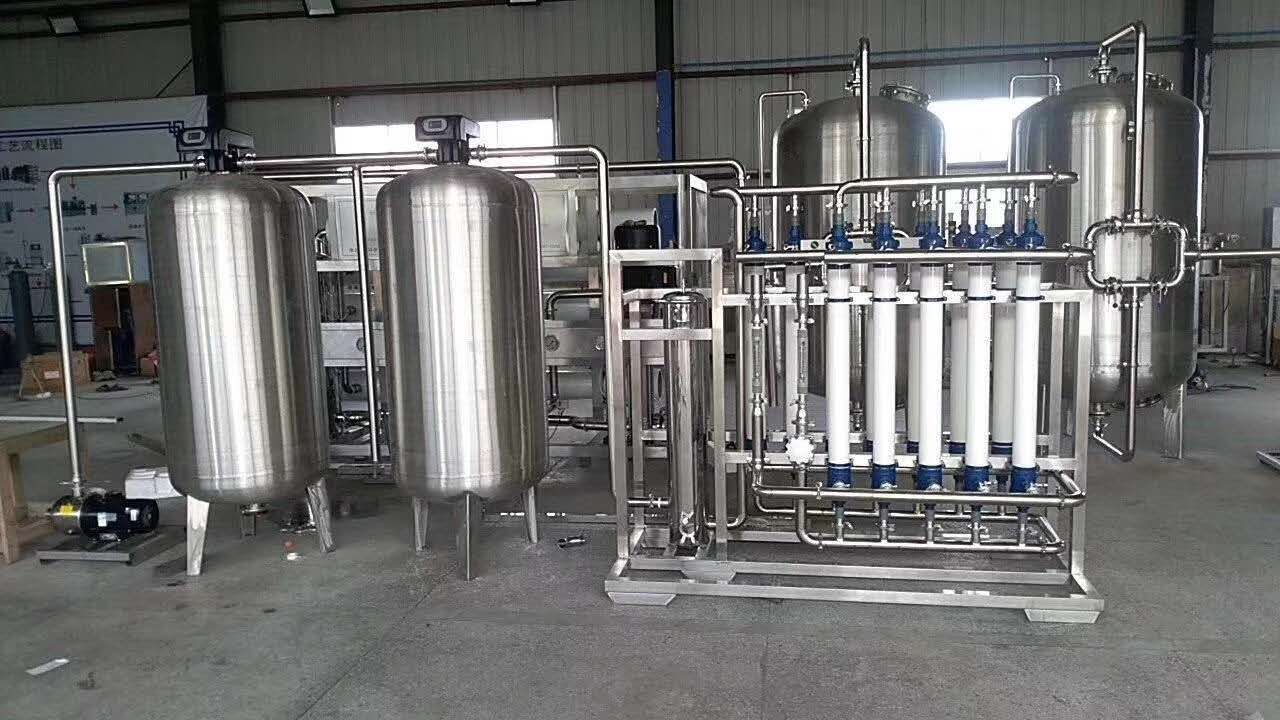
At Chuxin Mingwei, we address this specific challenge through engineered Bottled Spring Water Filling Production Lines that utilize a Dual-Membrane NF (Nanofiltration) + UF (Ultrafiltration) process. Unlike generic off-the-shelf solutions, this configuration is selected based on actual source water quality reports and target output standards, ensuring stability and applicability for facilities producing 18.9L, 11.3L, and 5L bottled formats.
The Core Technical Distinction: Mineral Retention vs. Total Purification
The primary decision point in spring water line design is the purification core.
- Standard RO Systems:*
- Typically achieve near-total demineralization. While suitable for purified drinking water, this process removes calcium, magnesium, and potassium, fundamentally changing the water's identity. Using a standard RO line for spring water often requires costly and complex remineralization steps post-filtration to meet labeling claims.
- Chuxin Mingwei NF+UF Approach:*
- Our engineered solution employs Nanofiltration to selectively remove harmful organics, heavy metals, and bacteria while retaining beneficial divalent ions (minerals). This is followed by Ultrafiltration for final polishing. This balance allows producers to maintain the natural sensory attributes of the source water while meeting strict hygiene standards, eliminating the need for artificial remineralization.
This distinction is not merely theoretical; it dictates the entire downstream equipment selection, including sterilization methods and filling environments.
Integrated Line Performance: From Source to Sealed Bottle
A spring water line is only as effective as its weakest link. Chuxin Mingwei delivers end-to-end engineering where the purification module is synchronized with the filling execution.
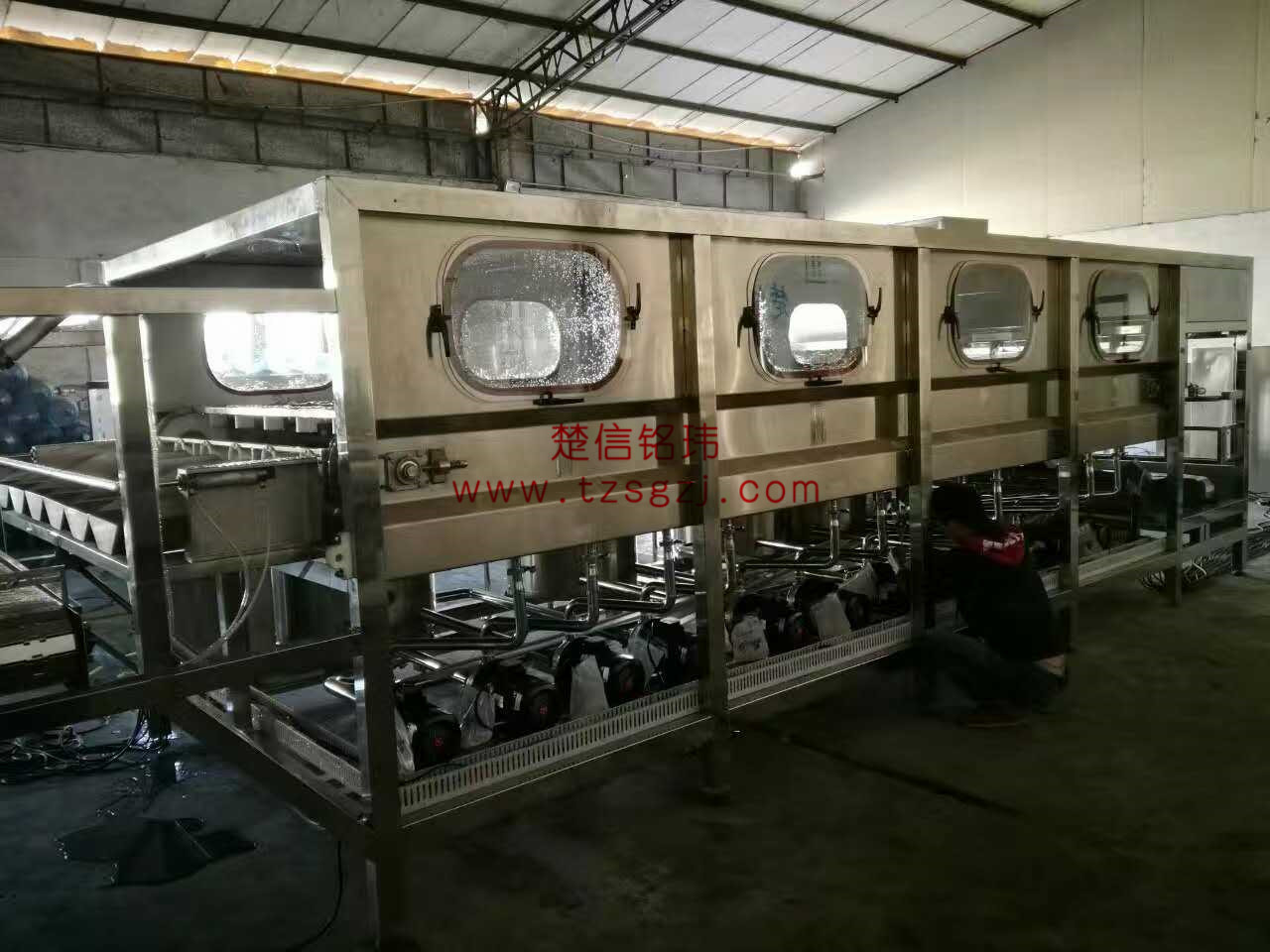
Precision Filling and Capping
Once treated, the water enters our integrated bottle washing-filling-capping unit. For spring water applications, maintaining integrity during transfer is vital to prevent re-contamination. Our systems feature:
- Filling Accuracy:*
- Controlled within ≤ ±2 mL, crucial for compliance with net content regulations across different bottle sizes (5L to 18.9L).
- Capping Reliability:*
- A pass rate of ≥99.6%, ensuring hermetic seals that preserve the water's quality throughout its shelf life.
- Intelligent Control:*
- A PLC-based system manages the synchronization between the NF+UF output pressure and the filling valve operation, preventing turbulence that could introduce air or compromise sterility.
Capacity and Scalability
Our production lines are designed for flexibility. Depending on the facility's layout and demand forecasts, we configure rated output capacities ranging from 200 to 1,800 bottles per hour (based on standard 18.9L barrels). This range supports both regional distribution centers and larger national supply hubs. The system accommodates various standard drinking water bottles, allowing operators to switch between 18.9L, 11.3L, and 5L formats with defined changeover procedures.
Implementation Boundaries and Risk Factors
When validating a spring water project, decision-makers must recognize specific boundaries where generic assumptions fail:
- Source Water Variability: An NF+UF system is not a "one-size-fits-all" fix. Its effectiveness depends entirely on the raw water's baseline TDS (Total Dissolved Solids) and specific ion composition. A system designed for high-calcium spring water may underperform if the source shifts to high-sodium content without pre-treatment adjustments.
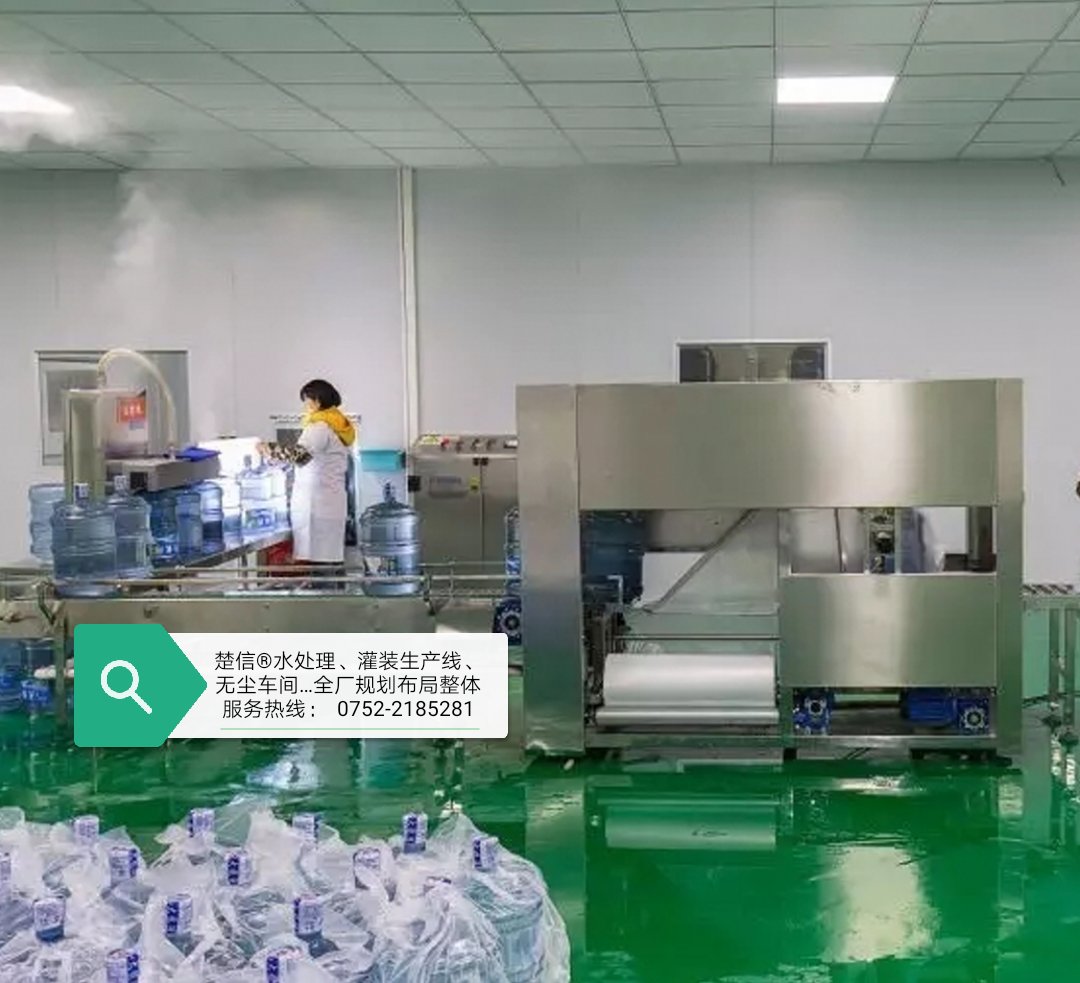
- Clean Air Requirements: Even with perfect water treatment, the filling environment poses a risk. Our solutions integrate Clean Air Purification Systems compliant with ISO Class 8 (100,000) standards (upgradable to Class 7). Without this controlled environment, airborne particulates can compromise the sterile fill immediately after the NF+UF process.
- Regulatory Classification: Misidentifying the process can lead to labeling violations. If the filtration removes too many minerals, the product legally becomes "purified water," not "spring water." Our engineering team validates the expected output quality against local food safety standards before manufacturing begins.
Next Steps for Project Validation
Selecting the right configuration requires more than reviewing brochures; it demands a data-driven analysis of your specific constraints.
- Submit Source Water Analysis: Provide a recent comprehensive water quality report. This is the mandatory first step to determine if NF+UF is the optimal path or if hybrid pre-treatment is needed.
- Define Packaging Format & Capacity: Confirm your primary bottle sizes (e.g., 18.9L vs. 5L mix) and target hourly throughput. This drives the mechanical design of the filling line and conveyor logic.
- Facility Constraint Review: Share your plant layout dimensions and utility availability (power, compressed air, drainage). Our team assesses site-specific engineering needs for airflow ducting and pressure zoning.
Chuxin Mingwei specializes in non-standard, site-specific solutions where long-term maintainability and product-scenario matching take precedence over generic specifications. We do not offer fixed-price catalog units for spring water projects because every source water profile is unique.
Contact our engineering team today to initiate a technical feasibility review based on your raw water data and production goals.
Recommended
Bottled Spring Water Filling Production Line
Chuxin Mingwei’s customized bottled spring water filling production line is specifically...
Fully Automatic Bottled Purified Water Filling Production Line
Chuxin Mingwei’s customized fully automatic bottled purified water filling production li...
Clean Air Purification Systems
Custom-engineered air purification systems for water bottling and barrelled water fillin...