
Why Your Bottled Spring Water Filling Line Underperforms After Installation
Industrial buyers in the beverage and food sectors often select bottled spring water filling lines based on catalog claims — only to encounter operational issues months after installation. Common problems include variable fill volumes, frequent capping jams, or changes in mineral profile that affect taste or compliance. These are rarely caused by faulty manufacturing. They result from design assumptions that do not match real-world conditions.
Chuxin Mingwei’s approach begins with source water analysis. Spring water varies widely in mineral content, turbidity, and microbial load. A dual-membrane NF + UF process is selected not to remove all minerals, but to balance pathogen removal with retention of naturally occurring elements. Over-purification can lead to consumer dissatisfaction or regulatory concerns, even if microbiological standards are met.
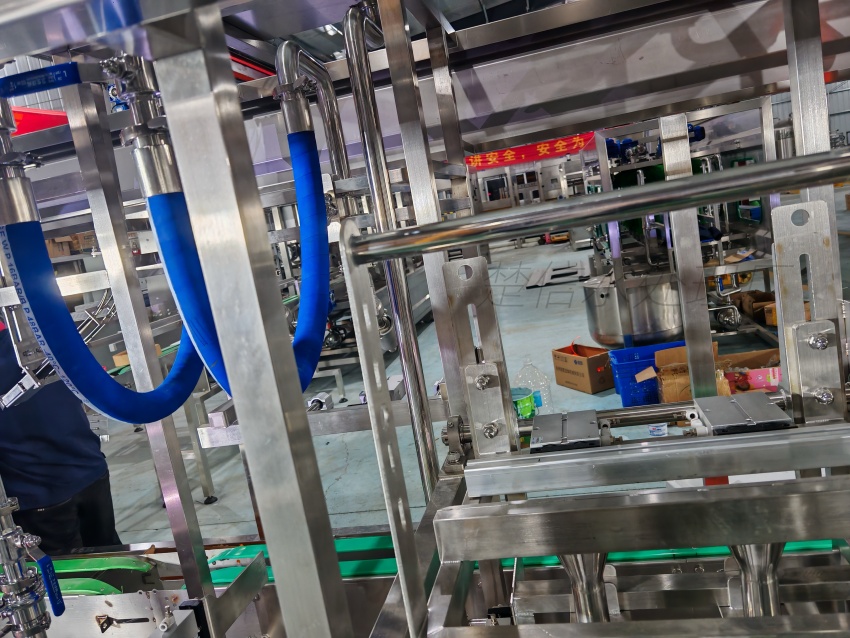
Integration is another critical factor. An integrated washing-filling-capping unit requires precise alignment between bottle dimensions and machine tooling. A change in bottle size — such as switching from 18.9L to 5L — without adjusting grippers, nozzles, or conveyor spacing will cause misalignment, spillage, or bottle damage. The system’s performance depends on exact compatibility, not generic "compatibility" claims.
Facility conditions are frequently underestimated. The rated output range of 200–1,800 bottles per hour (based on 18.9L bottles) assumes consistent bottle supply, stable compressed air pressure, and proper drainage. If air pressure fluctuates below 6 bar, or if floor slope affects bottle stability during transport, the line will produce rejects or stall. Site layout, utility capacity, and logistics flow must be reviewed before equipment configuration is finalized.
Systems designed for purified water (e.g., RO-based) cannot be repurposed for spring water without revalidation. Similarly, a line rated for higher output may be unsuitable if your bottle supply chain cannot deliver consistent volumes. Procurement decisions must be grounded in operational reality, not marketing specifications.
To reduce risk:
- Provide your source water analysis to the supplier before signing any agreement.
- Confirm the exact bottle sizes you will use — including neck finish and diameter — not just "compatible" ranges.
- Require a detailed workflow diagram showing how each module connects to your air supply, drainage, and bottle handling system.
Chuxin Mingwei does not offer standardized equipment. Every system is configured around your specific water profile, bottle type, and facility constraints. If your supplier cannot demonstrate how their design responds to your actual conditions, the system is likely to underperform.
The most reliable systems are not the most feature-rich — they are the ones built to match your operation.