
Selecting the Right Barrel Water Final Disinfection Method: UV vs. Ozone for Storage Loops
Selecting the Right Barrel Water Final Disinfection Method: UV vs. Ozone for Storage Loops
When engineering a Custom Barrelled Water Filling Line, determining the optimal barrel water final disinfection method is a pivotal decision that directly impacts product safety, shelf-life, and regulatory compliance. For procurement managers and operations leads, this choice is not about selecting a generic component but integrating a sterilization strategy that aligns with your specific source water characteristics and facility constraints.
At Chuxin Mingwei, our Fully Automatic Bottled Purified Water Filling Production Line and Bottled Spring Water Filling Production Line are designed around actual water quality data and target standards. This analysis provides the technical framework to decide between ultraviolet (UV) irradiation and ozone injection for your storage loop.
Core Decision Criteria: Chemistry and Contact Time
The failure of final disinfection often stems from a mismatch between the method chosen and the operational reality of the plant. The two primary factors driving this decision are the chemical composition of the water and the required contact time within the storage system.
1. Ozone Injection: Residual Protection for Storage Loops
Ozone acts as a powerful oxidant capable of destroying microbial cell walls. Its primary advantage in a bottled purified water equipment setup is the ability to maintain a disinfectant residual throughout the storage tank and distribution piping.
- Ideal Scenario:*
- Best suited for Dual-stage RO deep purification processes where the goal is producing pure H2O. In these systems, the lack of natural minerals reduces the risk of unwanted chemical reactions with ozone.
- Operational Mechanism:*
- As implemented in our high-capacity lines (200–2,500 bottles/hour), ozone dissolves into the water, providing continuous protection against biofilm formation in large buffer tanks and long pipe runs leading to the filler.
- Critical Constraint:*
- Ozone leaves a residual taste if not managed correctly. It requires precise off-gassing or catalytic decomposition before the filling nozzle if the product standard demands zero residual ozone. This necessitates rigorous monitoring via PLC-based intelligent control systems to balance sterility with sensory quality.
2. UV Irradiation: Non-Chemical Integrity for Mineral Retention
UV disinfection utilizes germicidal wavelengths to disrupt microbial DNA instantly without introducing chemicals into the water.
- Ideal Scenario:*
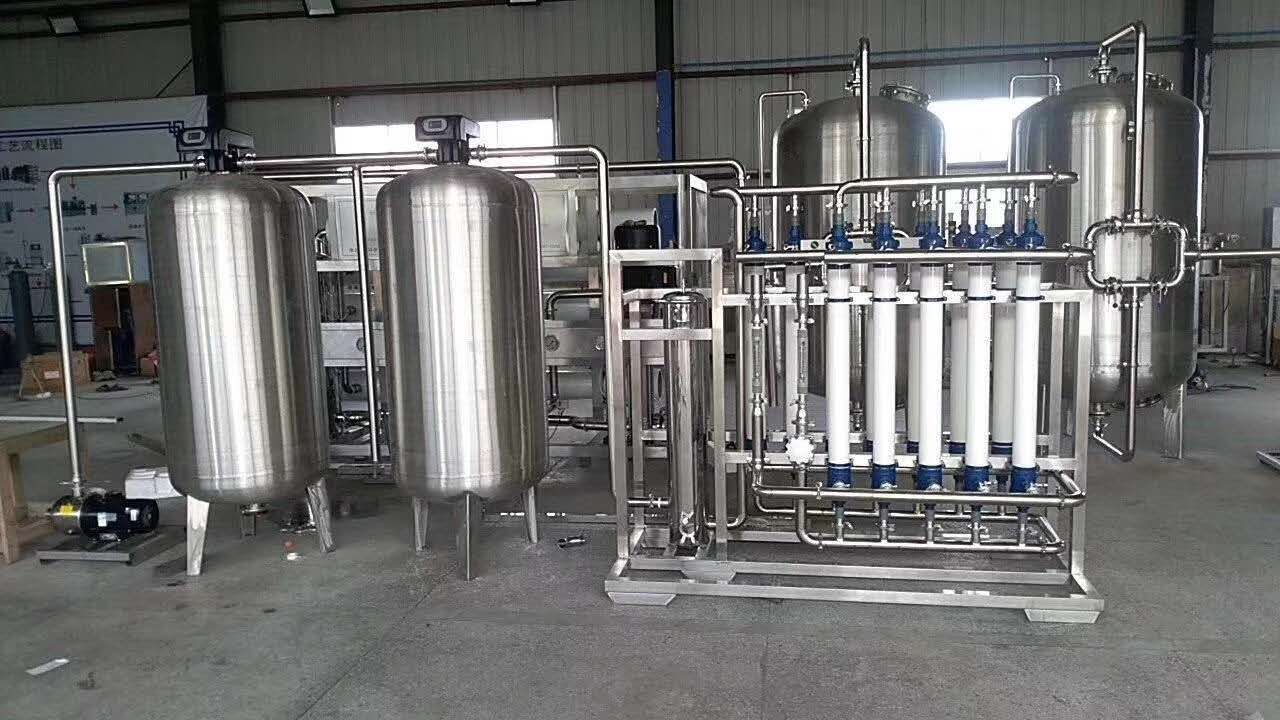
- Essential for Bottled Spring Water Filling Production Lines utilizing a Dual-membrane NF + UF process. Since spring water production aims to retain beneficial minerals and natural characteristics, introducing strong oxidants like ozone could alter the chemical profile or create byproducts.
- Operational Mechanism:*
- UV provides an immediate "kill step" as water passes through the chamber right before the filling valve. It ensures the water entering the bottle is sterile at that exact moment.
- Critical Constraint:*
- UV offers no residual protection. Once water leaves the UV chamber and enters the storage tank or filling valve, it is vulnerable to re-contamination if the downstream hardware (tanks, pipes, valves) is not perfectly sanitized. This method relies entirely on the hygiene of the post-treatment hardware and is best for systems with minimal storage time.
Implementation Checklist: Matching Method to Your Project
To select the correct barrel water final disinfection method, evaluate your project against these three technical checks:
Check 1: Source Water Characteristics
- High Mineral/Organic Content:*
- If your source requires NF + UF to retain minerals (spring water), UV is generally preferred to avoid chemical reactions with organics that could form disinfection byproducts.
- Deep Purification Target:*
- If your goal is pure water via Multi-media + activated carbon + Dual-stage RO, ozone is often superior for maintaining sterility throughout the large-volume storage required for high-speed lines.
Check 2: Storage Loop Dynamics
- Large Buffer Tanks:*
- If your production capacity targets 200–2,500 bottles/hour (compatible with 5 L, 11.3 L, 18.9 L formats), water may reside in tanks for extended periods. Ozone's residual effect is critical here to prevent regrowth in static zones.
- Direct Flow:*
- If the system is designed for minimal storage with immediate filling, UV may suffice, provided the piping is short and constructed from sanitary materials.
Check 3: Regulatory and Taste Requirements
- Verify local and export market standards regarding permissible residual ozone levels.
- Conduct sensory trials: Some markets are highly sensitive to even trace oxidative changes, favoring UV for spring water products to preserve the natural taste.
Engineered Integration Solutions
Chuxin Mingwei resolves this dilemma by integrating the disinfection method into a broader end-to-end engineering service.
- For Purified Water Lines:*
- We typically recommend a hybrid approach: Dual-stage RO deep purification combined with ozone and UV (254 nm) dual sterilization. This ensures both immediate microbial kill (UV) and continuous loop protection (Ozone), managed by a PLC-based intelligent control system that monitors dosage and intensity in real-time.
- For Spring Water Lines:*
- The focus shifts to preserving water character. Here, the Dual-membrane NF + UF process is paired with high-intensity UV at the filling point, ensuring safety without compromising the natural mineral profile.
When to Escalate to Custom Engineering
Standard configurations work for typical municipal or well sources. However, you must escalate to a custom engineering consultation if:
- Your source water has fluctuating seasonal quality (e.g., turbidity spikes) affecting UV transmittance or ozone demand.
- You require certification for specific international markets with divergent disinfection byproduct rules.
- Your facility layout imposes unique constraints on tank placement or pipe routing, affecting the contact time required for effective disinfection.
In these scenarios, a generic off-the-shelf solution risks stability. Our team performs site-specific engineering, analyzing airflow, duct routing, and pressure zoning alongside the water treatment logic to ensure the clean air support systems and water lines work in harmony.
Next Steps for Technical Evaluators
Selecting between UV and ozone is a function of your total system design. To move from evaluation to specification:
- Submit Source Water Report: Provide a full chemical and microbiological analysis of your raw water.
- Define Capacity & Format: Confirm your target output (e.g., bottles/hour) and bottle sizes (5 L, 11.3 L, 18.9 L).
- Request a Process Flow Diagram (PFD): Our engineers will map the disinfection step within the full washing-filling-capping workflow.
Contact Chuxin Mingwei to initiate a technical assessment. We deliver non-standard, site-specific solutions prioritizing stability, applicability, and long-term maintainability for your beverage, food, or pharmaceutical project.
Recommended
Bottled Spring Water Filling Production Line
Chuxin Mingwei’s customized bottled spring water filling production line is specifically...
Fully Automatic Bottled Purified Water Filling Production Line
Chuxin Mingwei’s customized fully automatic bottled purified water filling production li...
Clean Air Purification Systems
Custom-engineered air purification systems for water bottling and barrelled water fillin...