
How to Calculate Real-World Output Capacity for Your Bottled Spring Water Filling Line — A Step-by-Step Guide for Plant
Who This Guide Is For
Procurement managers, operations leads, and plant owners evaluating or scaling a bottled spring water filling production line, especially those sourcing from natural springs with variable raw water quality and targeting ISO-compliant cleanroom integration.
The Core Problem: Why "200–1,800 bottles/hour" Isn’t Your Real Output
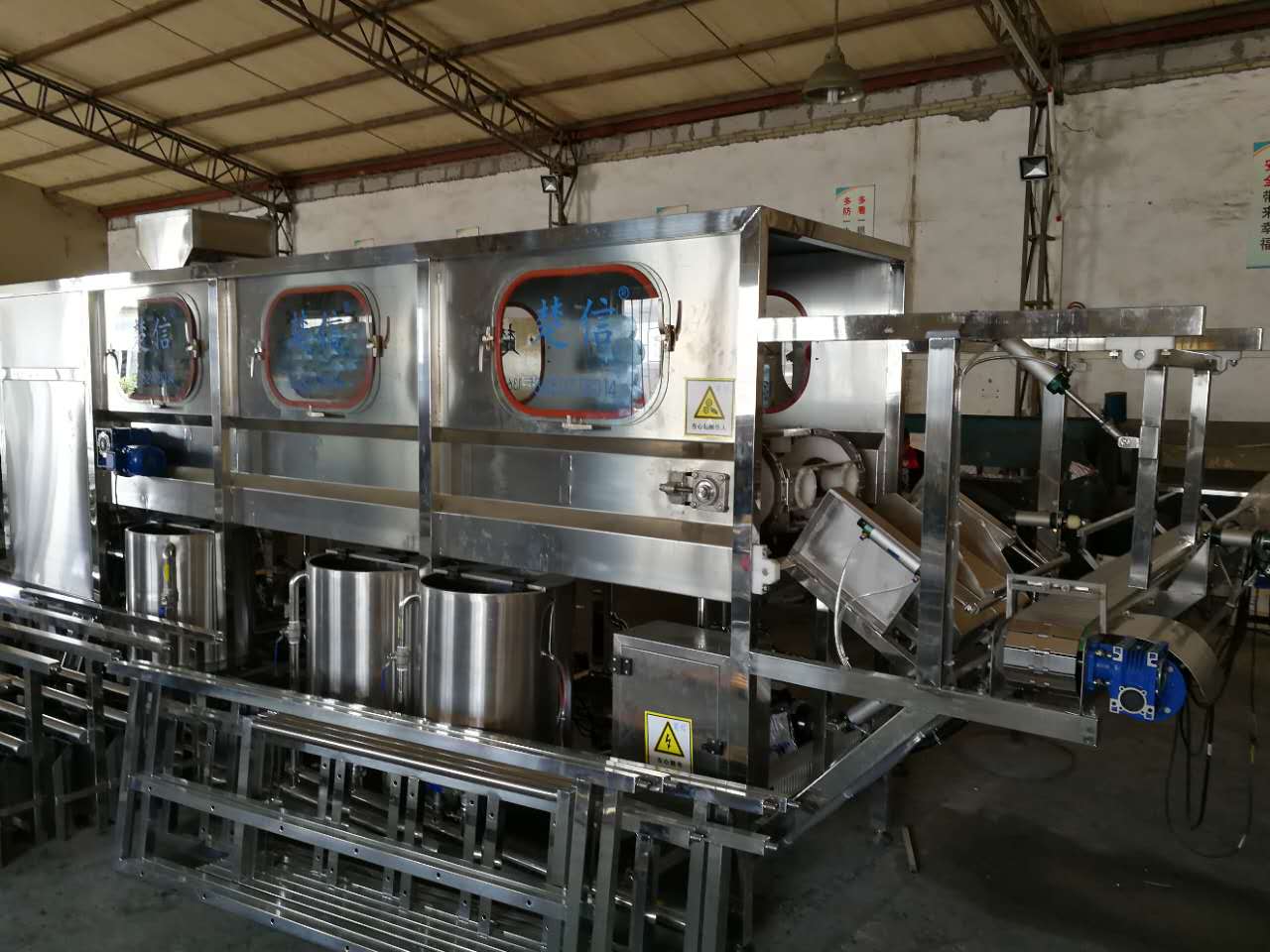
Chuxin Mingwei’s Fully Automatic Bottled Spring Water Filling Line (Product ID 60) is engineered for stability and mineral retention — using a dual-membrane NF + UF process and integrated bottle washing-filling-capping unit with ≤ ±2 mL filling accuracy. Its rated capacity — 200–1,800 bottles/hour (based on 18.9 L bottles) — reflects mechanical throughput under ideal lab conditions. But real-world output depends on how well the entire system balances water, time, and hygiene constraints across your facility.
Relying solely on this figure risks:
- Under-sizing raw water storage or finished water tanks,
- Overloading utility systems (e.g., compressed air, cooling water),
- Missing peak demand buffers during shift changes or maintenance windows,
- Misaligning packaging or logistics planning downstream.
As confirmed in verified technical guidance, “You cannot convert bottle/hour into final product volume without accounting for rinse water, CIP cleaning cycles, equipment rinse losses, blending and adjustment margins, peak-load buffers, and scheduled operating time.”
6 Must-Validate Factors in Your Capacity Calculation
Use this checklist before finalizing layout, tank sizing, or procurement scope:
- Rinse Water Consumption per Bottle
Each 18.9 L PET bottle requires high-purity rinse water before filling. This volume is drawn from your purified water loop and must be included in total water demand — not just the fill volume.
- CIP & Sanitary Rinse Downtime
Full Clean-in-Place cycles occur at intervals determined by spring water turbidity and microbial load. Each cycle consumes time and purified water, reducing net operational time. Chuxin Mingwei’s PLC-based control system supports automated scheduling, but runtime loss remains a fixed constraint tied to your source water profile.
- Process Water Losses During Start-up/Shutdown & Flushing
Equipment flushing before first run and after last batch adds cumulative water loss per shift — especially critical when using NF membranes sensitive to particulate fouling.
- Mineral Retention Buffer & Product Adjustment Margin
Unlike purified water lines, spring water lines require post-treatment mineral balancing to maintain consistent TDS and taste profile. This step introduces volumetric adjustment — not reflected in mechanical throughput.
- Peak Load Buffer for Shift Transitions & Changeovers
Real production rarely runs at steady state. Allow buffer capacity to absorb delays from bottle supply interruptions, cap feed adjustments, or operator handover gaps.
- Scheduled Operating Time vs. Mechanical Availability
Rated capacity assumes continuous operation. Most clients operate within defined shifts. Final output = (Rated capacity × Net operating hours) × (1 − downtime %). Net availability must be confirmed against your proposed maintenance plan and spare parts lead time.
Where to Anchor Your Calculation
Your final output must be validated by a project-level material balance, not theoretical formulas. Chuxin Mingwei’s end-to-end engineering service includes this as part of design phase deliverables — mapping water inflow (raw source), purification yield (NF + UF recovery rate), rinse & CIP demand, and finished water outflow against your target daily output (e.g., 12,000 × 18.9 L bottles/day).
This ensures alignment between your water treatment system (e.g., multi-media + activated carbon pre-filtration), filling line (ID 60), and clean air support (e.g., ISO Class 8 HEPA system, ID 58), avoiding bottlenecks at interfaces.
Next Steps for Accurate Planning
- Request a preliminary material balance worksheet during quotation — specify your spring water test report, target shift schedule, and packaging format (e.g., 18.9 L PET with aluminum cap).
- Confirm whether your scope includes full CIP integration, compressed air drying, and real-time flow monitoring — all impact usable uptime.
- Do not finalize tank sizes or utility upgrades before reviewing the integrated balance sheet.
For plant owners scaling up or launching a new spring water brand, accurate capacity modeling isn’t optional — it’s the foundation of stable, compliant, and maintainable operations.
Get a bottled water production line quotation tailored to your spring source and facility layout.