
Drinking Water Production Equipment Cost Per Set: Configuration Factors & Budget Planning Guide
Understanding Drinking Water Production Equipment Cost Per Set
For procurement managers and operations leads planning a new water plant or upgrading an existing line, the question "What is the cost per set?" rarely has a single answer. Unlike off-the-shelf consumer goods, industrial drinking water production equipment is engineered to specific site conditions. At Chuxin Mingwei, we have observed that final investment figures fluctuate based on four primary variables: source water quality, production capacity, packaging format, and automation depth.
This guide breaks down these cost drivers to help you build a realistic budget and avoid under-specifying critical components.
1. Source Water Quality: The Foundation of Pre-Treatment Costs
The condition of your raw water (groundwater, municipal tap, or surface water) dictates the complexity of the pre-treatment and purification stages. This is often the most variable cost factor.
- Low TDS Municipal Water:*
- If your source is stable tap water with low Total Dissolved Solids (TDS), a standard configuration involving multi-media filtration, activated carbon, and a single-stage Reverse Osmosis (RO) system may suffice. This keeps the "cost per set" lower.
- High Hardness or High TDS Groundwater:*
- Sources with high hardness, iron, manganese, or saline content require robust pre-treatment. You may need water softeners, specialized iron removal filters, or a dual-stage RO process. For instance, our Fully Automatic Bottled Purified Water Filling Production Line utilizes a two-stage RO deep purification process combined with ozone and UV sterilization to ensure stability. Adding a second RO stage and advanced monitoring instruments increases the initial equipment cost but significantly reduces long-term membrane replacement risks and ensures consistent product quality.
- Mineral Water (Spring Water):*
- If you are producing natural spring water where mineral retention is required, the process shifts from RO to Ultrafiltration (UF). Our Bottled Spring Water Filling Production Line employs a Dual-membrane NF + UF process. While this preserves beneficial minerals, the membrane selection and pressure control systems differ from standard purified water lines, affecting the overall price structure.
2. Production Capacity and Line Configuration
Capacity is not just about "how many bottles"; it defines the scale of every component from pumps to conveyors.
- Small to Medium Scale (200–600 units/hour):*
- Suitable for local distribution or niche markets. These lines often feature semi-automatic or compact automatic designs. For example, a Barrelled Water Filling Line with a capacity of 200–1,800 barrels/hour can be configured with a 4-head or 6-head filler. Lower head counts reduce the footprint and motor power requirements, lowering the entry cost.
- High-Speed Production (1,000–2,500+ units/hour):*
- High-volume lines require synchronized systems. A Fully Automatic Bottled Purified Water Filling Production Line rated for 2,500 bottles/hour demands high-precision servo motors, larger diameter piping, high-flow pumps, and extensive conveyor systems to prevent bottlenecks. The cost per set rises non-linearly here due to the engineering required to maintain stability at high speeds.
3. Packaging Format: Barrel vs. Bottle vs. Bag
The container type determines the mechanical complexity of the filling and packaging section.
- Barrelled Water (18.9L/5-Gallon):*
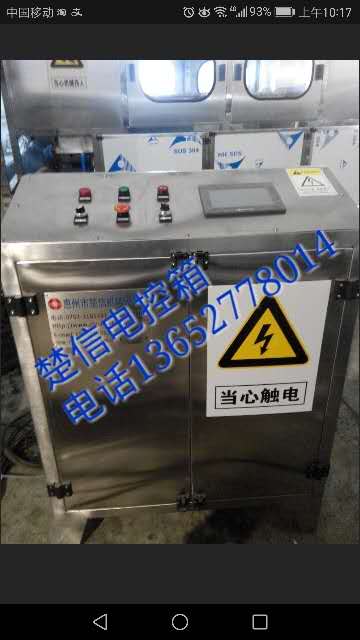
- This segment requires heavy-duty handling equipment. Key cost drivers include the Barrel Wash-Fill-Seal Line components: automatic cap removers, external/internal brushers, and multi-station rinsing units. If you require a Barrel-Wrap Packaging Machine for food-grade PE sleeving (compatible with 18.9L/11.3L/5L barrels), this adds a distinct module to the total set cost. The robustness needed to handle heavy, reusable PC/PET barrels makes this segment capital-intensive regarding mechanical structures.
- Bottled Water (350mL – 10L):*
- Small bottle lines often integrate blowing, filling, and labeling. If you purchase a complete line including a blow molding machine, the cost per set increases significantly compared to a filling-only line. However, integrating these steps reduces labor and logistics costs. Our systems support various bottle sizes (5L, 11.3L, 18.9L) with quick-change parts, but the initial tooling and mold costs must be factored into the budget.
4. Automation Level and Cleanroom Standards
Labor costs and hygiene regulations heavily influence the choice between semi-automatic and fully automatic solutions.
- Manual vs. Automatic:*
- A semi-automatic line reduces upfront equipment costs but increases long-term labor expenses and contamination risks. A fully automatic Wash-Fill-Seal Integrated System minimizes manual intervention, offering better repeatability and SC-compliant documentation.
- Clean Air Support:*
- For pharmaceutical or high-end beverage applications, the filling zone must meet specific air cleanliness standards. Our Clean Air Purification Systems are engineered to meet ISO Class 8 (100,000) standards, with options to upgrade to Class 7. Integrating HVAC, HEPA filtration (H13 efficiency), and pressure zoning into your equipment package adds to the initial investment but is essential for regulatory compliance and product safety.
Budget Planning: Hidden Costs to Consider
When evaluating the "cost per set," prudent buyers look beyond the ex-works price. A comprehensive budget should include:
- Site Adaptation: Piping, electrical cabling, and foundation work specific to your facility layout.
- Installation & Commissioning: Professional setup to ensure the PLC-based intelligent control system is calibrated correctly for your water source.
- Spare Parts & Consumables: Initial stock of RO membranes, UV lamps, ozone generators, and sealing rings.
- Training: Operator training is critical. Our service process includes acceptance training and documentation handover to ensure your team can manage daily operations and basic maintenance.
Conclusion: Defining Your Specific Investment
The cost of drinking water production equipment is a function of your specific operational requirements. A line designed for 500 barrels/hour using deep well water will have a vastly different price profile than a 2,000-bottle/hour line using municipal water.
At Chuxin Mingwei, we do not offer generic "price lists" because every project begins with Requirement Confirmation—analyzing your water quality report, capacity goals, and facility constraints. By mapping equipment capabilities to your real-world context, we ensure that your investment prioritizes stability, applicability, and long-term maintainability.
Next Steps for Your Project
To receive an accurate configuration proposal and budget estimate:
- Prepare your water quality report (or arrange for testing).
- Define your target capacity (bottles/barrels per hour) and packaging specifications.
- Share your facility layout or available floor space dimensions.
Contact our engineering team to discuss your specific scenario. We will provide a tailored solution design that aligns with your production goals and budget constraints.