
How Semiconductor-Grade Ultrapure Water Systems Work: Core Process Stages, Equipment Selection & Practical Limits
Why Semiconductor Manufacturing Needs Ultrapure Water
In semiconductor fabrication, water is used for wafer rinsing, chemical dilution, and equipment cleaning. Even trace contaminants—particles, bacteria, dissolved solids, or organic compounds—can cause defects in sub-micron circuits. This is why the industry demands ultrapure water (UPW) with resistivity typically above 18.2 MΩ·cm, total organic carbon (TOC) below 5 ppb, and particle counts at the sub-micron level.
If you are a procurement manager or operations lead evaluating a new or upgraded UPW system, understanding how each stage works—and the practical boundaries of each technology—helps you ask the right questions when comparing suppliers.
Core Process: From Raw Water to the Point of Use
A semiconductor-grade UPW system is not a single machine but a sequence of treatment stages, each designed to remove specific classes of contaminants. The typical configuration includes:
1. Pretreatment
Raw water (municipal or groundwater) first passes through multimedia filtration, activated carbon, and water softening. This removes suspended solids, chlorine, and hardness to protect downstream membranes. Without proper pretreatment, reverse osmosis (RO) membranes can foul quickly, reducing system life and increasing operating costs.
2. Reverse Osmosis (RO)
RO membranes remove 95–99% of dissolved salts, organic molecules, and bacteria. Single-pass or double-pass RO is used depending on feed water quality. For semiconductor applications, double-pass RO is common because it lowers the load on the polishing stage. However, RO alone cannot meet the 18 MΩ·cm target—it typically produces water with resistivity around 0.1–1 MΩ·cm.
3. Electrodeionization (EDI)
EDI uses ion-exchange membranes and an electric field to continuously remove remaining ions without chemical regeneration. It can achieve resistivity up to 18 MΩ·cm under ideal conditions. But EDI has operational boundaries: feed water must have low hardness, low CO₂, and limited silica. If the pretreatment or RO stage fails to meet these conditions, EDI performance drops and maintenance becomes frequent.
4. Polishing – Mixed-Bed Ion Exchange + UV + Final Filtration
To reach the final 18.2 MΩ·cm specification, the water passes through:
- Mixed-bed ion exchange (MB) – Removes trace ions not captured by EDI. This is a consumable step that requires periodic resin regeneration or replacement.
- UV oxidation (185 nm + 254 nm) – Breaks down organic compounds and disinfects. TOC is reduced to <5 ppb.
- Final filtration (0.1 μm or ultrafiltration) – Removes particles and bacterial fragments.
5. Distribution Loop
Ultrapure water is stored in a pressurized tank and circulated through a closed-loop piping system to keep it fresh. The loop is continuously polished with UV and ion exchange to maintain quality at each point of use.
Key Equipment Selection Criteria
When specifying a UPW system, the following factors determine equipment configuration:
| Factor | Impact on Design |
|---|---|
| Feed water quality (TDS, hardness, alkalinity, silica) | Determines pretreatment depth and RO pass count |
| Required flow rate (L/min or m³/h) | Affects membrane array size, EDI stack count, and polishing capacity |
| Target resistivity and TOC | Drives whether EDI + MB or only MB is needed; UV wavelength choice |
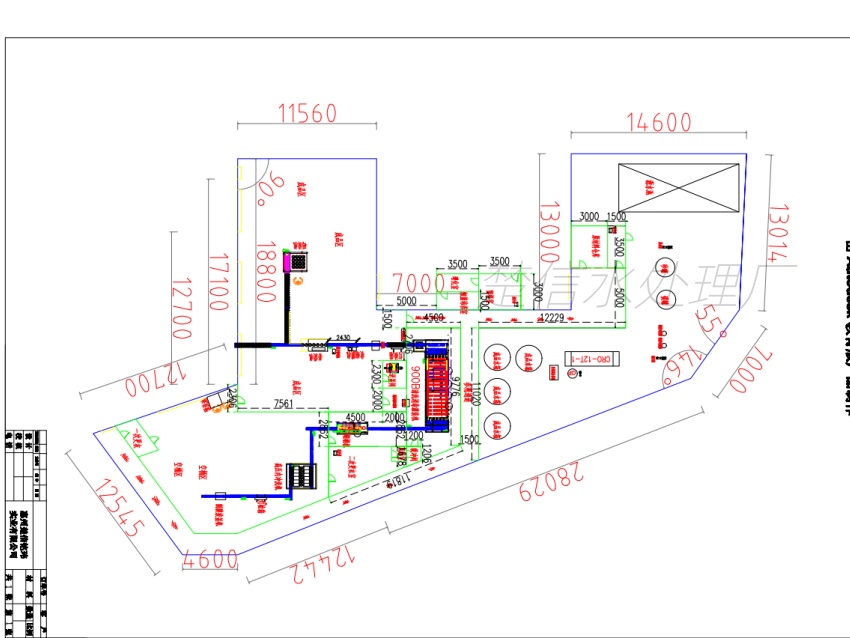
| Space and layout | Influences equipment footprint and piping routing |
| Operating budget (energy, chemicals, resin replacement) | Trade-off between RO, EDI, and MB stages |
Operational Boundaries and Risks
No single technology can deliver semiconductor-grade UPW alone. The entire system must be designed as an integrated train. Key boundaries to be aware of:
- RO membranes degrade over time – Flux decline and salt passage increase. A periodic cleaning schedule and replacement plan are essential.
- EDI units require stable inlet water – Fluctuations in feed conductivity or hardness can cause scaling or poor performance. Real-time monitoring and clean-in-place (CIP) capability should be specified.
- Mixed-bed resins have finite capacity – Exhaustion leads to a sudden resistivity drop. Bypass or automatic regeneration is needed for continuous operation.
- UV lamps lose intensity – Annual replacement is typical. Without replacement, TOC control degrades.
- Distribution loop dead legs – Areas where water stagnates can breed bacteria, causing contamination. Design must avoid dead legs and maintain flow velocity >1.5 m/s.
Practical Steps for Buyers Evaluating a UPW System
- Define your exact water quality target – Don’t just say “UPW.” Specify resistivity, TOC, particle count, and bacteria level. Different semiconductor processes (e.g., wafer cleaning vs. CMP) have different requirements.
- Provide a detailed feed water analysis – A one-time sample is insufficient. Seasonal variations matter. At least 12 months of historical data is ideal.
- Clarify the production capacity profile – Peak vs. average flow, number of points of use, and if the system needs to handle batch or continuous demand.
- Ask for a system design description – Not just a list of components. How does the supplier handle redundancy, monitoring, and maintenance access?
- Inquire about local support – A system installed in China or elsewhere needs service engineers who understand the equipment and can respond quickly. Custom manufacturers like Chuxin Mingwei offer end-to-end support from design to commissioning and after-sales.
Conclusion: Custom Engineering Is the Norm
Semiconductor-grade ultrapure water systems are not off-the-shelf products. They must be engineered to match the specific feed water chemistry, production needs, and facility constraints. The core process—pretreatment, RO, EDI, polishing, distribution—is well understood, but the real-world performance depends on correct sizing, material selection, and operational discipline.
For procurement teams, focusing on the supplier’s ability to deliver a site-specific solution with documented performance guarantees and long-term support is more important than comparing generic component brands.
Next Steps
If you are planning a new UPW system or upgrading an existing one, request a technical consultation that includes a review of your raw water analysis and target specifications. A qualified water treatment equipment manufacturer can provide a preliminary system concept and estimated cost breakdown without obligation.