Enterprise
Water Treatment Technologies

Practical guidance for better product and service decisions.

How Temperature Affects RO System Permeate Flow Rate: Process Flow, Interface Requirements & Operational Best Practices

Published: 2026-07-25

How Temperature Affects RO System Permeate Flow Rate: Process Flow, Interface Requirements & Operational Best Practices \\![Hero Image](http://rpidj9qp.saas.cookeji.com/uploads/images/20260714/202607141643293e6060045.jpg?overlay=55)\\n\\n

How Temperature Affects RO System Permeate Flow Rate: Process Flow, Interface Requirements & Operational Best Practices

Introduction \\nTemperature is a critical factor that significantly affects the performance of reverse osmosis (RO) systems, particularly the permeate flow rate. Understanding this relationship is essential for procurement managers, operations leads, and digital project teams in industries such as beverage, food, pharmaceuticals, and electronics. This article will delve into the principles, process, and operational best practices to help you optimize your RO system. \\n\\n

The Impact of Temperature on Permeate Flow Rate \\n

Principles \\nThe permeate flow rate in an RO system is directly influenced by the temperature of the feed water. As the temperature increases, the viscosity of the water decreases, allowing it to pass through the RO membrane more easily. This results in a higher permeate flow rate. Conversely, lower temperatures increase water viscosity, reducing the flow rate. \\n\\n

Process Flow \\nThe typical process flow in an RO system includes pre-treatment, high-pressure pump, RO membrane, and post-treatment. Each step must be carefully managed to ensure optimal performance. \\n\\n1. Pre-Treatment: This stage involves removing suspended solids, chlorine, and other contaminants that can damage the RO membrane. Common pre-treatment methods include multimedia filtration, activated carbon, and softening. \\n2. High-Pressure Pump: The high-pressure pump increases the pressure of the feed water, driving it through the RO membrane. The pump's output must be matched to the membrane's feed pressure requirements. \\n3. RO Membrane: The RO membrane is the heart of the system, where the separation of water from dissolved solids occurs. The permeate flow rate is highly dependent on the temperature of the feed water. \\n4. Post-Treatment: Post-treatment may include pH adjustment, remineralization, and disinfection to ensure the final water quality meets the required standards. \\n\\n

Interface Requirements \\nTo maintain optimal performance, the following interface requirements should be considered: \\n\\n- Temperature Monitoring: Install temperature sensors at the inlet and outlet of the RO system to monitor and control the feed water temperature. \\n- Flow Control Valves: Use flow control valves to adjust the flow rate based on the temperature. This ensures consistent performance and prevents overloading the system. \\n- Cooling or Heating Systems: In some cases, it may be necessary to install cooling or heating systems to maintain the feed water temperature within the optimal range. \\n\\n

Operational Best Practices \\n1. Regular Maintenance: Regularly inspect and clean the pre-treatment filters and RO membranes to prevent fouling and scaling, which can reduce the permeate flow rate. \\n2. Temperature Adjustment: Adjust the feed water temperature to the optimal range (typically between 20°C and 30°C) to maximize the permeate flow rate. \\n3. Data Logging: Implement data logging to track temperature, pressure, and flow rate. This data can be used to identify trends and make informed decisions. \\n4. Training and Documentation: Ensure that operators are trained on the importance of temperature control and have access to detailed operating manuals and maintenance schedules. \\n\\n

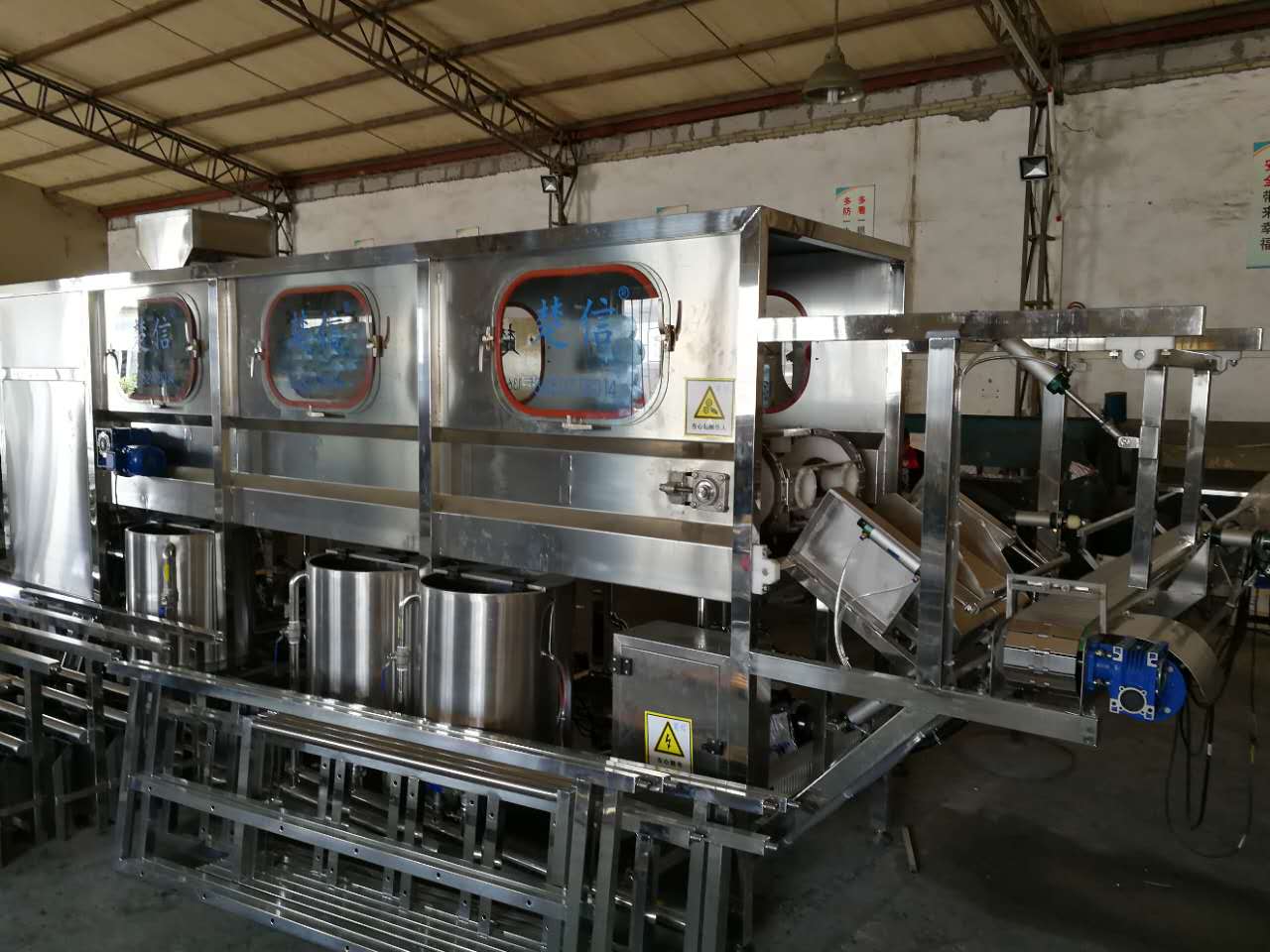
Case Studies and Real-World Applications \\nChuxin Mingwei has extensive experience in designing and implementing custom RO systems for various industries. For example, our Fully Automatic Bottled Purified Water Filling Production Line, built on a two-stage RO reverse osmosis deep purification process, integrates full-process operations including bottle washing, filling, capping, and inspection. This line is designed to handle a wide range of bottle sizes, from 5 L to 18.9 L, with a rated capacity of 200–2,500 bottles/hour. \\n\\nIn another case, our Clean Air Purification Systems for water bottling and barrelled water filling cleanrooms are designed to meet ISO Class 8 (100,000) and higher standards. These systems are integrated with the RO system to ensure a controlled environment, further enhancing the overall performance and reliability of the water treatment process. \\n\\n

Conclusion \\nTemperature plays a crucial role in the performance of RO systems, particularly in the permeate flow rate. By understanding the principles, process flow, and operational best practices, you can optimize your RO system for maximum efficiency and longevity. Chuxin Mingwei offers comprehensive solutions, including design, manufacturing, installation, and long-term support, to help you achieve your water treatment goals. \\n\\n

Next Steps \\nIf you need assistance in optimizing your RO system or have specific requirements for a custom water treatment solution, contact us today. Our team of experts is ready to provide tailored recommendations and support. \\n