Enterprise
Water Treatment Technologies

Practical guidance for better product and service decisions.

How to Design a CIP Cleaning Loop for Water Treatment Systems: Key Parameters, Associated Equipment & Operational Record

Published: 2026-07-25

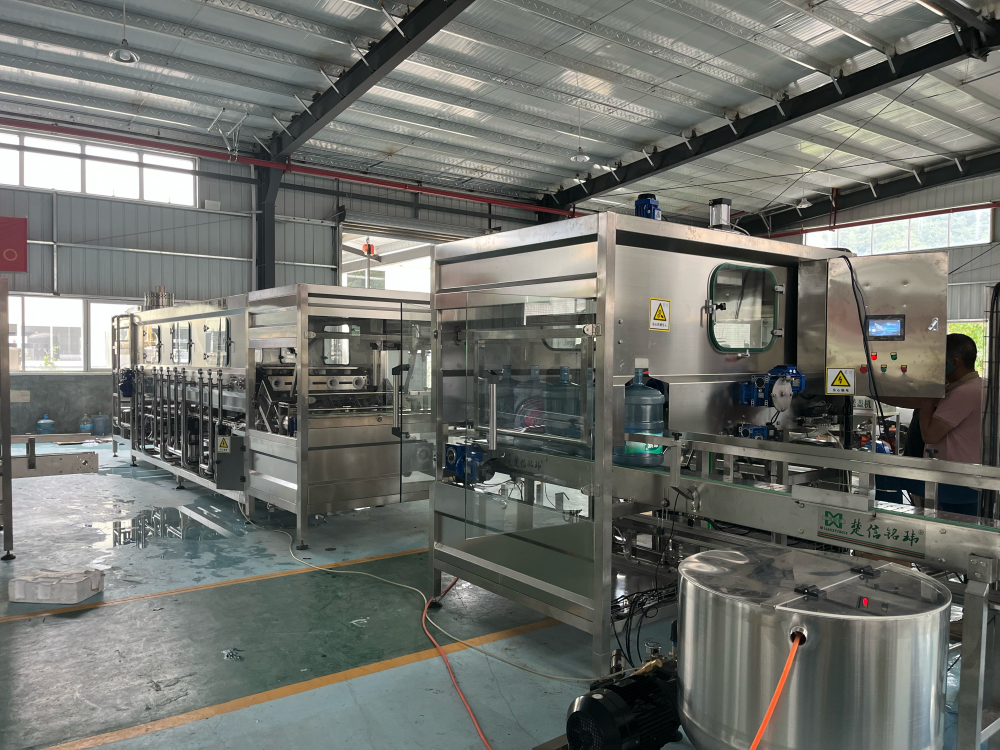
How to Design a CIP Cleaning Loop for Water Treatment Systems: Key Parameters, Associated Equipment & Operational Records \\![Hero Image](https://www.chuxinmingwei.com)\\n

How to Design a CIP Cleaning Loop for Water Treatment Systems: Key Parameters, Associated Equipment & Operational Record

Introduction \\nIn the context of water treatment systems, ensuring the cleanliness and hygiene of the equipment is crucial for maintaining high water quality standards. A well-designed Clean-In-Place (CIP) system is essential for this purpose. This article will guide you through the key parameters, associated equipment, and operational records required to design an effective CIP cleaning loop. \\n

Target Audience and Applications \\nThis guide is intended for procurement managers, operations leads, and digital project teams in the beverage, food, pharmaceutical, electronics, and industrial sectors. The principles and processes discussed here are particularly relevant for facilities that require high levels of water purity and regulatory compliance. \\n

Key Parameters for CIP Design \\n

1. Flow Rate \\nThe flow rate is a critical parameter in CIP design. It ensures that the cleaning solution reaches all parts of the system at a sufficient velocity to remove contaminants. Typically, the flow rate should be between 1.5 to 2.5 m/s to achieve effective cleaning. \\n

2. Temperature \\nTemperature plays a significant role in the effectiveness of the cleaning process. Higher temperatures can enhance the solubility of contaminants and improve the cleaning efficiency. However, the temperature must be carefully controlled to avoid thermal damage to the equipment. A common range for CIP cleaning is between 60°C to 80°C. \\n

3. Cleaning Solution Concentration \\nThe concentration of the cleaning solution, such as caustic soda or acid, must be optimized to effectively remove residues without causing corrosion or other damage to the equipment. The concentration typically ranges from 1% to 5%, depending on the specific contaminants and the material of the equipment. \\n

4. Contact Time \\nThe contact time, or the duration for which the cleaning solution is in contact with the equipment, is another critical parameter. Sufficient contact time ensures that the cleaning solution has enough time to break down and remove contaminants. A typical contact time is 15 to 30 minutes. \\n

Associated Equipment \\n

1. Pumps \\nPumps are used to circulate the cleaning solution through the system. They must be capable of delivering the required flow rate and pressure. \\n

2. Heat Exchangers \\nHeat exchangers are used to control the temperature of the cleaning solution. They ensure that the solution is heated to the desired temperature and cooled down after the cleaning cycle. \\n

3. Valves and Piping \\nValves and piping are essential for directing the flow of the cleaning solution and isolating different sections of the system during the CIP process. \\n

4. Control Systems \\nPLC-based control systems are used to automate the CIP process. They monitor and control the flow rate, temperature, and contact time, ensuring consistent and reliable cleaning. \\n

Operational Records and Documentation \\nMaintaining accurate and detailed operational records is crucial for ensuring the effectiveness and compliance of the CIP system. These records should include: \\n- Flow Rate and Temperature Logs: Regularly record the flow rate and temperature during each CIP cycle. \\n- Cleaning Solution Concentration Logs: Document the concentration of the cleaning solution used in each cycle. \\n- Contact Time Logs: Record the duration of the cleaning cycle. \\n- Inspection and Maintenance Records: Keep records of regular inspections and maintenance activities to ensure the system remains in good working condition. \\n

Implementation Steps \\n1. Assess the System Requirements: Evaluate the specific needs of your water treatment system, including the types of contaminants, the material of the equipment, and the required cleaning frequency. \\n2. Select the Appropriate Equipment: Choose pumps, heat exchangers, valves, and control systems that meet the flow rate, temperature, and pressure requirements. \\n3. Design the CIP Loop: Create a detailed design of the CIP loop, including the layout of the piping, the placement of valves, and the integration of the control system. \\n4. Install and Test the System: Install the CIP system and perform initial testing to ensure it meets the specified parameters. \\n5. Train Operators: Provide training to operators on the proper use and maintenance of the CIP system. \\n6. Maintain and Monitor: Regularly maintain and monitor the CIP system to ensure it continues to operate effectively and complies with regulatory standards. \\n

Conclusion \\nDesigning an effective CIP cleaning loop for water treatment systems requires careful consideration of key parameters, selection of appropriate equipment, and thorough documentation. By following the steps outlined in this article, you can ensure that your CIP system operates efficiently and maintains the highest standards of water quality. \\n

Next Steps \\nIf you need further assistance in designing and implementing a CIP system for your water treatment facility, contact us to schedule a consultation. Our team of experts can provide tailored solutions based on your specific requirements. \\n--- \\n

Knowledge Evidence \\n- : , : `FAQ-CAP-01`, : In addition to the filling line capacity, the CIP cleaning and other process water usage must be considered. \\n- : , : `CIP Cleaning System, Pipeline Disinfection System`, : CIP cleaning systems and pipe disinfection systems are essential components of the water treatment and filling lines. \\n