
Mineral Water Bottling Machine Process Explained: From Source Water to Filled Bottle — A Technical Guide for Beverage &
Who This Applies To
This guide is written for procurement managers, operations leads, and digital project teams evaluating or commissioning a mineral water bottling line — especially those sourcing from natural springs, mountain sources, or protected aquifers where mineral integrity, microbiological safety, and regulatory compliance (e.g., GB 8537, EU Directive 2009/54/EC) must be preserved without over-processing.
Why Standard Bottling Logic Doesn’t Apply to Mineral Water
Unlike purified water production — which relies on aggressive two-stage RO to remove all ions — mineral water bottling requires selective treatment. The goal is not demineralization, but stabilization: removing pathogens and particulates while retaining signature minerals (Ca²⁺, Mg²⁺, HCO₃⁻) and natural organoleptic properties. Chuxin Mingwei’s approach starts with your raw water report — not a catalog spec sheet.
Core Process Stages & Equipment Logic
Based on Chuxin Mingwei’s Bottled Spring Water Filling Production Line (Product ID: 60), the mineral water bottling machine process follows four tightly coupled stages:
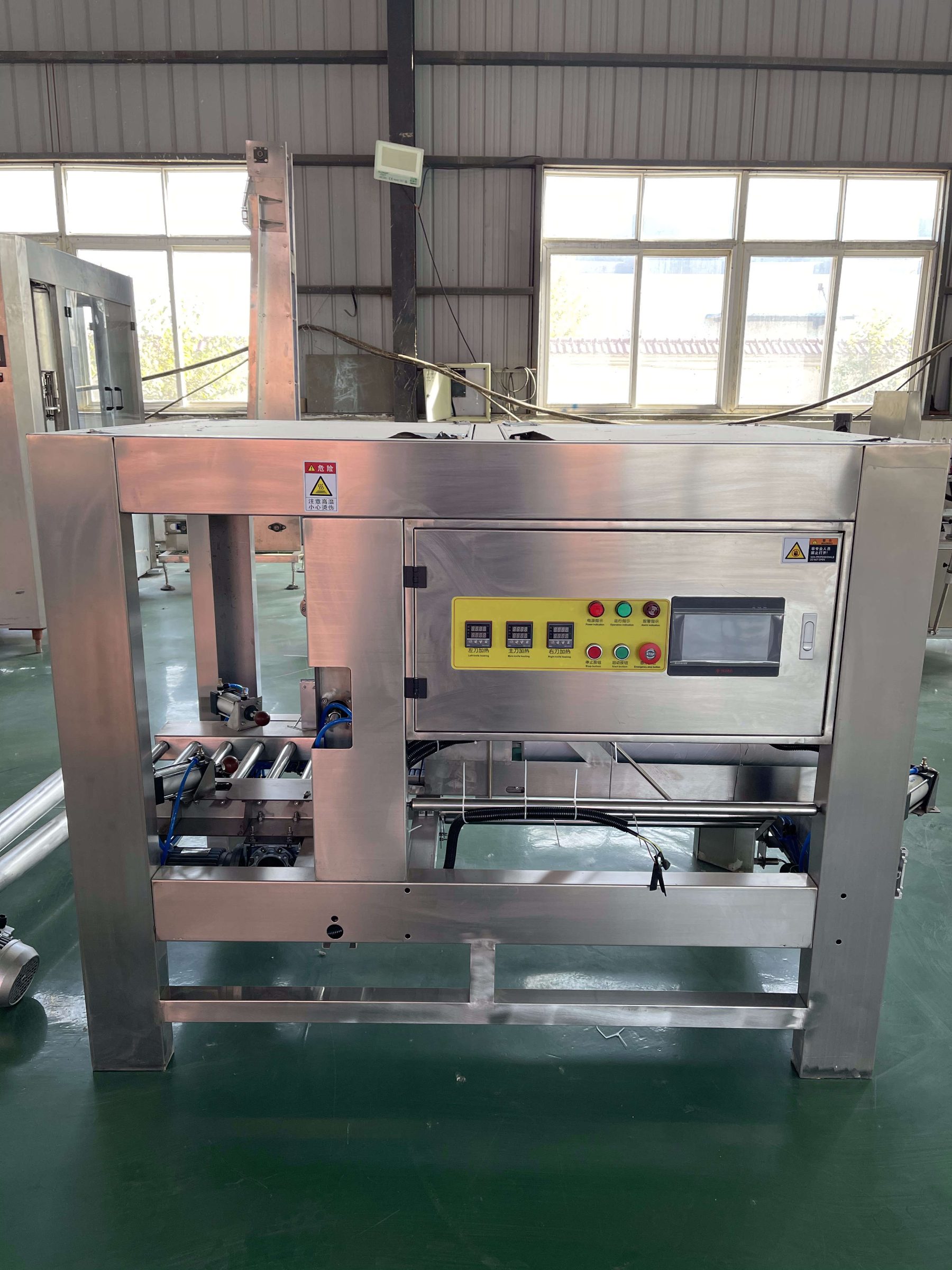
- Source-Adapted Purification
- Dual-membrane NF + UF process: Nanofiltration (NF) selectively removes bacteria, viruses, and heavy metals while retaining >92% of beneficial minerals; ultrafiltration (UF) provides final particulate and colloidal removal.
- No RO used — consistent with K02 (“Mineral water/basic process”) from internal knowledge base: *“Cannot blindly adopt purified water RO process; treatment intensity must match source composition and product standard.”
*
- Precision Bottle Handling & Filling
- Integrated bottle washing-filling-capping unit handles 18.9 L, 11.3 L, and 5 L standard drinking water bottles.
- Filling accuracy ≤ ±2 mL per bottle; capping pass rate ≥99.6% — validated under real-time PLC-based control with pressure, flow, and level feedback loops.
- Cleanroom-Integrated Environment Control
- Air purification system (Product ID: 58) engineered to ISO Class 8 (100,000) — with optional upgrade to Class 7 (10,000).
- H13 HEPA filtration, real-time diagnostics via HMI, and airflow routing designed in coordination
- with the filling line layout — not as a standalone add-on.
- Post-Fill Integrity Assurance
- Final UV (254 nm) sterilization at point-of-fill — applied after filling to avoid photochemical degradation of minerals.
- No ozone injection into finished water — aligning with K09 guidance: *“Ozone suits container disinfection, but risks bromate formation in mineral-rich water if misapplied.”
*
Applicable Boundaries & Delivery Constraints
- Not suitable for: Brackish or high-iron spring sources without pre-oxidation and media filtration (requires separate feasibility review).
- Capacity range: 200–1,800 bottles/hour (18.9 L format); output scales linearly with bottle size and automation level — not by simply adding modules.
- Site dependency: Layout, ceiling height, floor load capacity, and utility supply (compressed air ≥0.6 MPa, 3-phase power) directly determine equipment footprint and integration sequence.
- Support boundary: Commissioning includes operator training on membrane cleaning protocols, UV lamp replacement intervals, and HMI alarm response — but excludes ongoing consumables supply unless contracted separately.
Next Step: Validate Against Your Conditions
Before selecting equipment or approving layout, confirm:
- Your latest raw water test report (including hardness, TDS, Fe/Mn, coliforms, and turbidity)
- Target bottle type, cap specification, and hourly throughput requirement
- Available cleanroom space dimensions and HVAC interface points
[drinking water treatment equipment process flow] explains how pre-treatment integrates upstream — while [drinking water treatment equipment price] reflects variable engineering effort, not fixed list pricing.
Chuxin Mingwei delivers non-standard solutions — meaning your line is designed from your data, not adapted to our catalog. For a technical alignment review, submit your water report and facility sketch.