
How to Select Industrial Water Treatment and Filling Equipment for Your Facility
Selecting industrial water treatment and filling equipment is not a matter of choosing the highest capacity or lowest price. For procurement managers and operations leads in beverage, food, pharmaceutical, and electronics manufacturing, the goal is to deploy a system that delivers consistent output, complies with hygiene standards, and remains maintainable over years of operation.
At Chuxin Mingwei, we design systems based on real operational conditions — not generic templates. Below is a structured approach to evaluating your needs.
1. Start with Your Water Source and Target Quality
The first decision point is your raw water quality and the final product standard. For example:
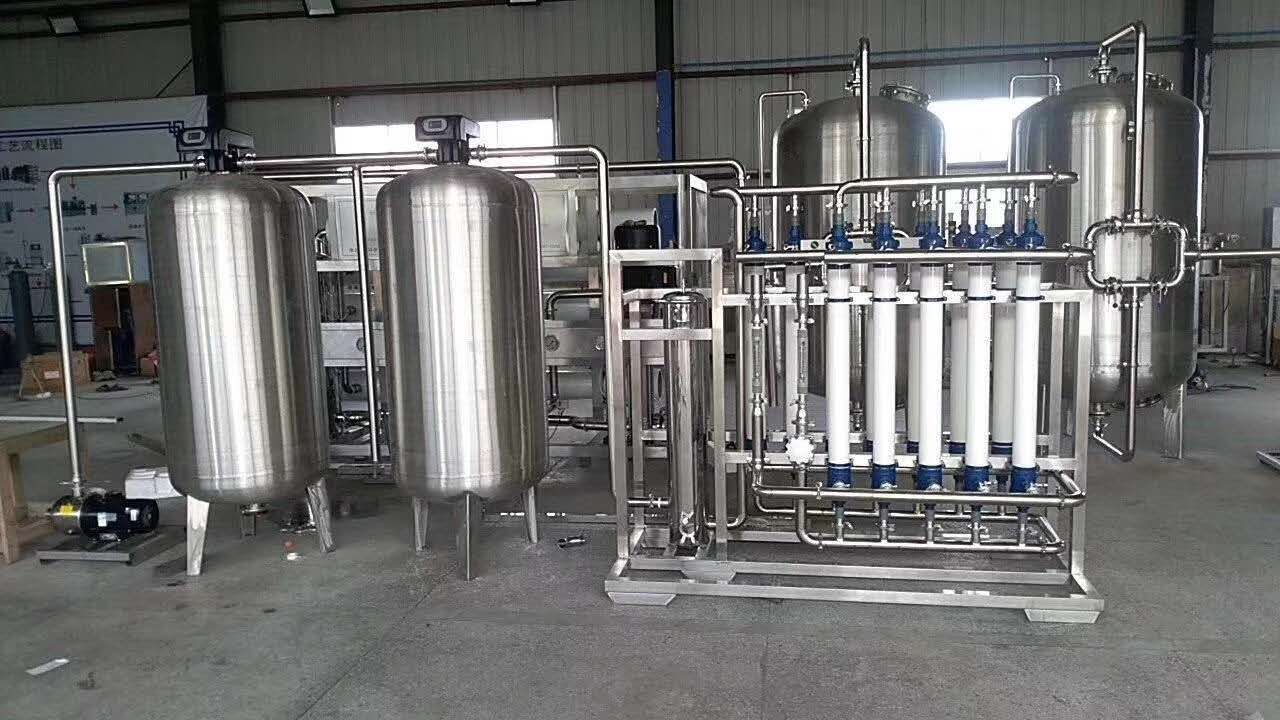
- If your source is groundwater with moderate mineral content and you need to retain natural minerals while removing organics and microbes, a dual-membrane NF + UF process (as used in our Bottled Spring Water Filling Production Line) may be optimal.
- If your source is municipal or heavily contaminated, a two-stage RO system with ozone and UV sterilization (as in our Bottled Purified Water Filling Line) is typically required.
Do not assume all "purified water" systems are the same. Membrane selection, pre-filtration stages, and disinfection methods must align with your input water chemistry and regulatory targets.
2. Match Packaging Format and Production Volume
Your filling line must accommodate your bottle or barrel size, material, and output target. Our equipment supports:
- Bottle sizes: 5 L, 11.3 L, and 18.9 L (standard for drinking water)
- Output ranges: 200–2,500 bottles per hour, depending on configuration
- Packaging formats: PET bottles and 5-gallon barrels
Critical considerations:
- Bottle diameter and height affect washing and filling head design
- Capping performance must be verified under your specific line speed and bottle type to avoid rework and contamination risk
- Line speed must align with your filling valve type, bottle handling system, and cleanroom airflow capacity
3. Integrate Clean Air Support from Day One
Water filling operations require controlled air environments to prevent microbial contamination. Our Clean Air Purification Systems are engineered to meet ISO Class 8 (100,000) standards — upgradable to Class 7 (10,000) — with H13 HEPA filtration and PLC-controlled pressure zoning.
Do not treat air systems as an afterthought. Inadequate airflow or improper duct routing can compromise your entire filling line’s hygiene performance, even if the water treatment is flawless.
4. Define Your Delivery and Support Boundaries
Many suppliers offer equipment only. At Chuxin Mingwei, we deliver end-to-end engineering services:
- Site-specific design based on your facility layout, utility access, and ceiling height
- Full installation and commissioning with process validation
- Operator training and maintenance documentation
- Post-installation support including spare parts, remote diagnostics, and service response
Avoid vendors who cannot define their scope clearly. If they do not include commissioning, training, or after-sales response time, you are buying equipment — not a working system.
5. Avoid Common Selection Traps
- Choosing based on competitor specs without validating your water quality
- Assuming higher capacity = better ROI (overcapacity increases energy, maintenance, and cleaning costs)
- Ignoring utility requirements: compressed air, cooling water, drainage, and power stability
- Skipping cleanroom integration planning before equipment delivery
Next Steps: Prepare for Technical Evaluation
Before engaging a supplier:
- Collect a recent water quality report (TDS, pH, turbidity, microbial load)
- Confirm your bottle/barrel dimensions and annual volume target
- Map your facility layout — including space for equipment, utilities, and maintenance access
- Identify your cleanroom classification requirement (ISO 8 or higher)
This information enables a meaningful technical discussion — not a sales pitch.
Chuxin Mingwei is based in Huizhou, Guangdong, China, and delivers custom-engineered water treatment and filling systems to clients across China’s beverage, food, pharmaceutical, and electronics sectors. We do not sell off-the-shelf packages. We engineer systems that work in your environment — and support them for the long term.