Why Reusable 3- and 5-Gallon Water Bottles Fail Hygiene Tests—and How a Proper Cleaning, Filling & Capping Line Prevents
A bottled water plant in Southeast Asia started receiving complaints about a musty odor in 5-gallon jugs. Lab tests confirmed elevated heterotrophic plate counts. The production manager blamed the source water. The real root cause? A reused barrel that had passed through a poorly designed washing station, leaving biofilm in the neck and shoulder area. This is a common failure in reusable 3- and 5-gallon container operations—and it isn’t always about the water treatment.
Reusable polycarbonate or PET barrels are the backbone of the bottled water delivery market. But unlike single-use bottles, returned containers bring unpredictable contamination: road dust, algae, slime, even insect residues. Cleaning, filling, and capping these barrels is not a simple rinse-and-refill process. It’s a multi-stage engineering sequence where each step must be matched to the barrel’s condition, the target water quality, and the plant’s throughput. When one step is skipped or under-engineered, the final product fails.
The Process Chain, Explained
A typical engineered barrel water line—as deployed by Chuxin Mingwei for 3- and 5-gallon applications—follows a defined sequence derived from years of equipment integration:
- Empty barrel reclaim & inspection
Returned barrels are sorted. Damaged barrels, barrels with foreign objects, or those with odor are rejected before they enter the line.
- Cap removal
An automatic de-capping machine removes the original cap without damaging the barrel neck. Missed caps are flagged downstream.
- External & internal brushing
External brushes remove exterior dirt, labels, and residues. Internal brushes paired with cleaning solution jets scrub the inside walls, dome, and shoulder—areas where biofilm commonly forms.
- Multi-station washing & sanitization
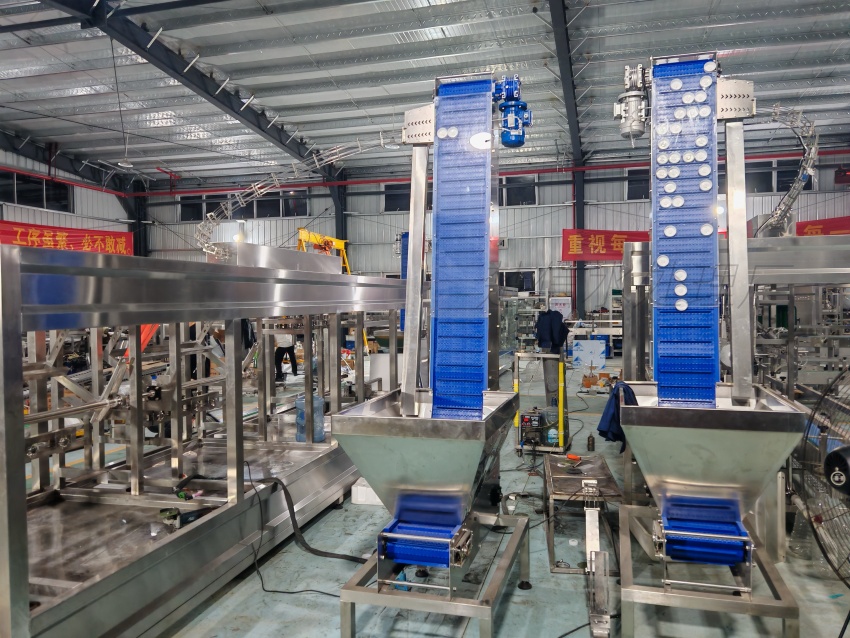
This is the core of hygiene. Multiple stations apply a sequence of sanitizing agents, hot water, and potable water rinses. The exact number of stations and chemical types depends on the level of contamination and the target product category (purified, spring, or mineral water).
- Final product water rinse
The last rinse uses treated product water—not raw water—to remove any remaining cleaning agent traces. This is where the water treatment system (often a two-stage RO or NF/UF combination) must be integrated.
- Filling
A filling-capping monoblock unit fills the clean barrel with the finished water. Fill accuracy is typically controlled to ±1–2% of nominal volume. A no-barrel-no-fill sensor prevents product waste and contamination.
- Capping
A new, sanitized cap is automatically placed and pressed or screwed onto the barrel. The cap itself must be sterilized (via UV, ozone water, or hot water) before use, or it reintroduces contamination.
- Light inspection & leak detection
Operators visually inspect for turbidity, particles, and cap integrity. Automated systems can add weight checks or pressure decay tests.
- Sleeve labeling, shrink wrapping, coding, and bagging
The barrel receives a tamper-evident sleeve, production date, and batch code. Shrink wrapping and bagging complete the outbound package.
Why Cleaning Fails: Engineering Pitfalls
1. Insufficient contact time and temperature
Many low-cost lines use a single rinse station or short dwell times. Sanitizers need minimum contact time and temperature to kill bacteria and remove biofilm. Without proper engineering, the barrel emerges “clean” to the naked eye but still carries microbiological risk.
2. Neglecting the barrel neck and cap contact area
Internal brushes often miss the neck area where the cap seats. If the cap contact surface isn’t flushed and sanitized, a new cap simply seals in contamination. This is a direct cause of cap-related spoilage.
3. Using raw water for the final rinse
If the last rinse uses untreated water, all prior cleaning is compromised. The final rinse must be the same product water that fills the barrel. Chuxin Mingwei integrates the barrel washing line with the plant’s water treatment system to ensure this.
4. Inadequate cap sterilization
Caps are often forgotten as a contamination source. A cap that hasn’t been sanitized by UV or ozone can reintroduce bacteria into the filled barrel. The line must include a cap sterilization station.
5. Poor air quality in the filling zone
Filling and capping in a non-clean environment exposes the barrel and cap to airborne particles and microbes. At minimum, the filling zone should meet ISO Class 8 (100,000) cleanroom standards, with HEPA-filtered air, as designed in Chuxin Mingwei’s clean air systems.
Corrective Actions: How to Configure a Reliable Barrel Line
- Match the wash station count to the contamination load.*
- For barrels from typical commercial returns, 5–7 wash stations (including sanitizer, intermediate rinse, and final product rinse) are a practical baseline. For heavily soiled barrels, consider pre-soak and extra brushing.
- Integrate the water treatment system.*
- The final rinse and filling water must be produced by a validated purification system—typically RO for purified water or NF+UF for spring water—to ensure microbial and chemical safety.
- Automate barrel inspection points.*
- Light inspection, cap detection, and missing-cap alarms are not optional; they are the last defense before shipping.
- Validate the entire chain with microbial testing.*
- Regular swab testing of washed barrels and filled product validates that the cleaning process is effective.
Where Chuxin Mingwei Fits
Chuxin Mingwei designs barrel water filling lines as an integrated system, not a collection of standalone machines. The engineering starts with your barrel type, capacity target, site layout, and source water analysis. Equipment selection covers the entire chain—from empty barrel handling to shrink-wrapped pallets—and is supported by on-site commissioning, operator training, and after-sales service.