
Designing a 5-Gallon Barrel Filling Line: Technical Considerations for Industrial Buyers
When planning a new 5-gallon barrel filling line, procurement teams in the beverage, food, and pharmaceutical sectors must move beyond generic equipment lists and focus on site-specific engineering parameters. This guide outlines the technical framework for designing a reliable, maintainable, and compliant system — grounded in the actual configurations used by Huizhou Chuxin Mingwei for industrial clients in China.
1. Core System Components and Functional Boundaries
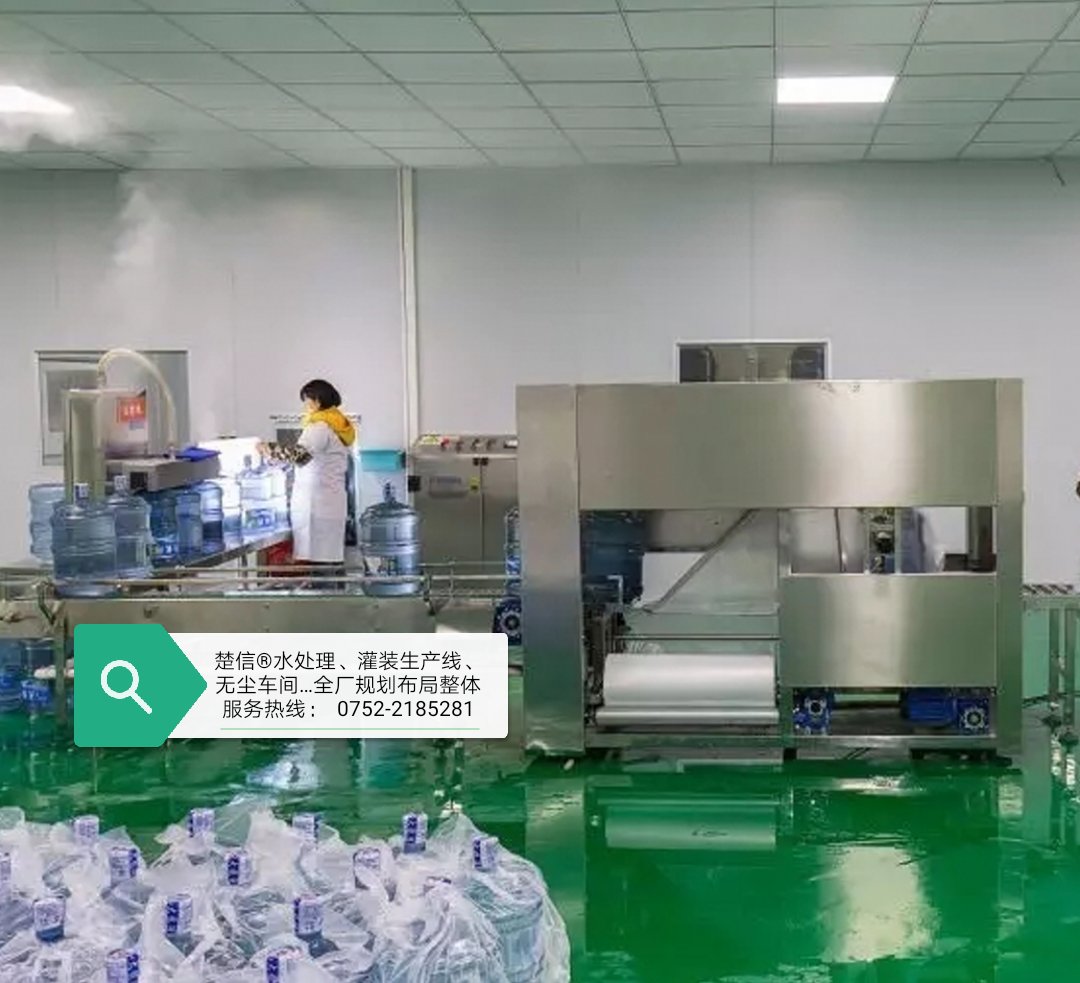
A standard 5-gallon barrel filling line is not a single machine but an integrated workflow. Based on verified installations, the essential units include:
- Barrel inspection and handling: Manual or automated checks for cracks, residue, and lid compatibility
- External and internal cleaning: Multi-stage washing with high-pressure spray nozzles and approved sanitizing agents
- Filling and capping: Precision filling heads with verified accuracy, paired with capping mechanisms designed for consistent seal integrity
- Final inspection and packaging: Light inspection for fill level and seal integrity, followed by shrink-sleeve or film wrapping
Critical boundary: The system does not include water treatment. If your source water is groundwater or municipal supply, a separate purification system — such as dual-stage RO or NF+UF — must be integrated upstream. Chuxin Mingwei’s barrel filling lines are designed to accept pre-treated water at specified flow rates and pressure levels.
2. Capacity Planning and Real-World Throughput
Rated output is often quoted as barrels per hour, but actual production depends on multiple variables:
- Cycle time: Each barrel requires 6–12 seconds for washing, filling, and capping — depending on nozzle count and cleaning intensity
- Downtime factors: CIP cleaning cycles, changeovers, and maintenance windows reduce effective output
- Water balance: Process water for rinsing and cleaning can consume 1.5–2x the volume of final product. Ensure your raw water storage and filtration capacity can support peak demand
For example, a line rated at 1,200 barrels/hour under ideal conditions may realistically deliver 900–1,000 barrels/hour over an 8-hour shift when accounting for all operational interruptions.
3. Cleanroom Integration and Air Quality Requirements
Barrel filling operations in food and pharma environments require controlled air quality to prevent microbial contamination. Chuxin Mingwei’s systems are designed to interface with ISO Class 8 (100,000) cleanrooms, with optional upgrades to Class 7 (10,000). Key considerations:
- Airflow direction: Laminar or turbulent flow must be engineered to prevent cross-contamination from adjacent zones
- HEPA filtration: H13-grade filters are standard; efficiency must be validated at installation
- Pressure zoning: Filling area must maintain positive pressure relative to packaging and storage zones
If your facility lacks existing cleanroom infrastructure, plan for duct routing, HVAC integration, and access control — these are not included in the filling line quotation.
4. Site Readiness Checklist
Before finalizing equipment specifications, verify:
- Water source quality and flow rate (min. 3–5 m³/h for 1,200 bph line)
- Electrical supply: 3-phase 380V ±10%, 50Hz, with dedicated circuit for PLC and motors
- Drainage capacity: Minimum 1.5x filling line output volume per hour
- Floor load capacity: Sufficient to support equipment and full barrels — typically 500–800 kg/m²
- Access for crane or forklift: Minimum 3.5m clearance and 2.5m width for barrel delivery
Failure to confirm these items during engineering design often leads to costly delays during installation.
5. Next Steps for Technical Buyers
If you are evaluating a 5-gallon barrel filling line for a new or expanded facility:
- Define your water source and target standard (e.g., purified vs. spring water)
- Determine daily output target and shift pattern
- Confirm cleanroom classification and existing utility infrastructure
- Request a detailed equipment list from your supplier — including motor brands, material grades (SS304/316), and control system specs
- Require a process flow diagram and layout plan before signing off
Chuxin Mingwei provides end-to-end engineering services for these systems, including on-site commissioning and operator training. For clients in Guangdong and surrounding provinces, we recommend scheduling a technical consultation to align your facility constraints with proven configurations.
Learn how to evaluate water treatment requirements for your source water: RO water treatment equipment working principle