
Barrel Water Filling Line Equipment List and Configuration Guide
Who This Guide Is For
Procurement managers, plant engineers, and digital project leads in beverage, food, pharmaceutical, and industrial sectors — especially those planning their first barrelled water (3-gallon or 5-gallon) production line. You’re likely comparing vendor proposals, verifying scope completeness, or preparing internal technical specifications. This guide clarifies what is typically included, what requires site-specific validation, and where responsibility boundaries lie — based on actual Chuxin Mingwei delivery practice.
Core Equipment Modules in a Standard Barrelled Water Filling Line
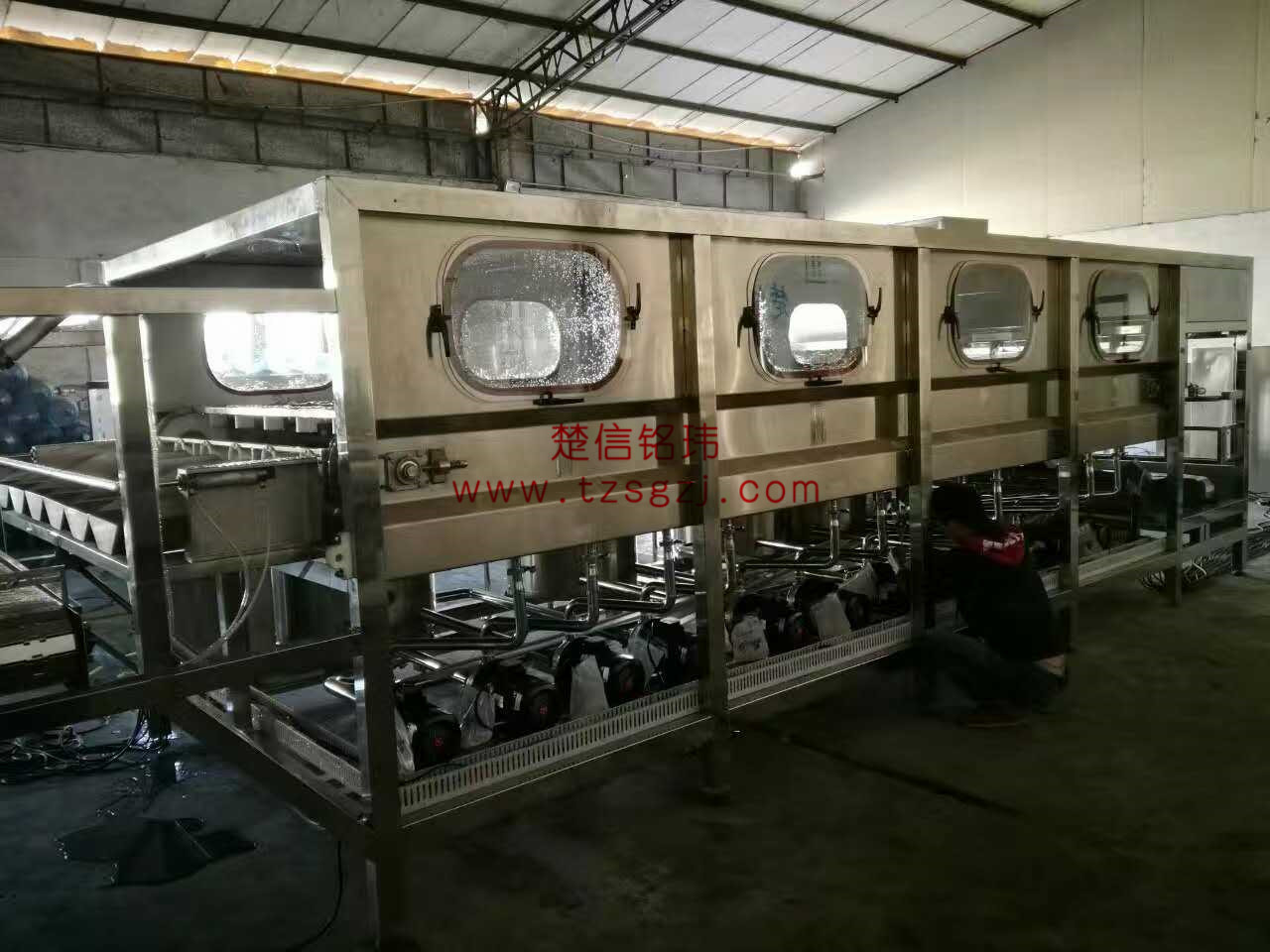
Chuxin Mingwei’s barrelled water lines are engineered as integrated systems — not just a collection of machines. A typical turnkey configuration includes:
- Recycled barrel handling & inspection station: Visual check for damage, label residue, and structural integrity (required for returnable 3/5-gallon PET or polycarbonate barrels)
- Automatic cap removal unit: Mechanical or pneumatic cap extraction, compatible with common twist-off or snap-on closures
- External barrel brush washer: Rotating brushes + high-pressure spray for outer surface cleaning
- Internal wash-disinfection-rinse system: Multi-stage process using heated alkaline solution, acid rinse, chlorine or ozone disinfection, and final purified water rinse — all adjustable per barrel condition and hygiene standard
- Filling unit: Gravity or time-pressure controlled filling; configurable for single or dual heads (200–1,500 barrels/hour capacity range)
- Capping station: Automatic lid placement and sealing (heat-shrink or press-fit), with torque verification logic
- Lamp inspection (light test): UV or visible-light inspection for particulates, cloudiness, or foreign matter
- Conveyor & packaging interface: Modular belt or roller conveyor linking to downstream sleeve wrapping, labeling, or palletizing — with optional integration points for cleanroom airflow zoning
Note: New-barrel lines omit cap removal, external brushing, and intensive internal disinfection — but still require pre-fill rinsing and sterilization validation per local regulatory requirements.
Key Configuration Variables — Not “One-Size-Fits-All”
Unlike off-the-shelf packaging lines, barrelled water systems must be matched to your real-world conditions:
- Barrel type & standard: 3-gallon (11.3 L) vs. 5-gallon (18.9 L); new vs. recycled; PET vs. PC; neck diameter and thread specification (e.g., PCO 188, PCO 1810)
- Water source & quality: Raw water hardness, iron/manganese content, and microbial load directly impact filter sizing, chemical dosing, and CIP frequency — which Chuxin Mingwei engineers into the purification subsystem before line layout
- Facility constraints: Ceiling height, floor loading capacity, drainage slope, electrical supply (380 V / 50 Hz standard in CN), and cleanroom pressure zoning (ISO Class 8 design supported)
- Operational staffing: Fully automatic mode (≤2 operators per shift) vs. semi-automatic (higher manual intervention at cap handling or lamp inspection)
These variables determine whether a quoted line includes optional modules — such as an inline ozone generator, HEPA-filtered air shower at entry, or PLC-based batch traceability logging.
What’s Not Automatically Included — Common Scope Boundaries
To avoid post-order gaps, clarify these boundaries early:
- Raw water pretreatment: Multi-media filtration, softening, or iron removal units are part of the water treatment system, not the filling line — but must be sized and interfaced with the line’s rinse and fill water demand
- Final packaging: Sleeve wrapping, labeling, cartoning, and palletizing are separate from the core filling line — though Chuxin Mingwei offers them as coordinated add-ons
- Civil works & utilities: Floor trenching, drainage piping, compressed air supply, and purified water distribution loops are client-responsible unless explicitly scoped in the engineering agreement
- Regulatory documentation: Chuxin Mingwei provides equipment compliance documentation aligned with Chinese manufacturing standards and export requirements. Facility-level certification support (e.g., GMP alignment, local health authority registration) is advisory only — not included in standard delivery.
Next Steps for Your Project
- Confirm barrel specs and usage pattern: Provide photos, dimensions, and sample caps — plus weekly return volume if using recycled barrels.
- Share raw water test report: Even a basic lab analysis (pH, TDS, Fe, Mn, turbidity, total coliforms) enables accurate pretreatment design.
- Review facility layout drawing: Mark ceiling height, column spacing, utility access points, and proposed cleanroom zone.
- Request a scope-of-supply checklist: Chuxin Mingwei provides a standardized equipment list template — itemized by module, control interface, and commissioning responsibility.
For qualified inquiries, request a bottled water production line quotation with full configuration notes — or explore how RO water treatment equipment integrates with your barrel line’s water demand profile.