
Myth vs. Fact: Why 'Standard' Spring Water Lines Fail and How to Upgrade for Stability
Myth vs. Fact: Why 'Standard' Spring Water Lines Fail and How to Upgrade for Stability
For Implementation and Operations Leaders:
When planning an upgrade or expansion of a bottled spring water facility, the most common operational risk is assuming that a generic "water treatment" configuration will suffice. The reality is that spring water possesses unique chemical characteristics—specifically its natural mineral content—that standard purification lines (often designed for purified water) cannot handle without compromising product quality or equipment stability.
This article addresses the specific challenges faced by procurement managers and operations leads when deploying Fully Automatic Bottled Spring Water Filling Lines. We move beyond marketing claims to examine the technical boundaries, process requirements, and verification steps necessary to ensure your production line delivers consistent output without frequent downtime.
The Core Symptom: Instability in Mineral-Rich Applications
A frequent symptom reported by operations teams during the commissioning or scaling of spring water lines is the conflict between filtration efficiency and mineral retention.
Many facilities attempt to use Reverse Osmosis (RO) systems, which are highly effective at removing impurities but also strip away essential minerals found in spring water. When operators try to force a standard RO setup to retain minerals, they face two outcomes:
- Product Quality Failure: The water loses its distinct "spring" profile, failing consumer expectations.
- Equipment Stress: Attempting to bypass filtration stages to save minerals leads to membrane fouling, clogging, and inconsistent fill volumes.
The root cause is not the machinery itself, but the mismatch between the process design and the source water quality.
The Fact: Dual-Membrane NF + UF Engineering
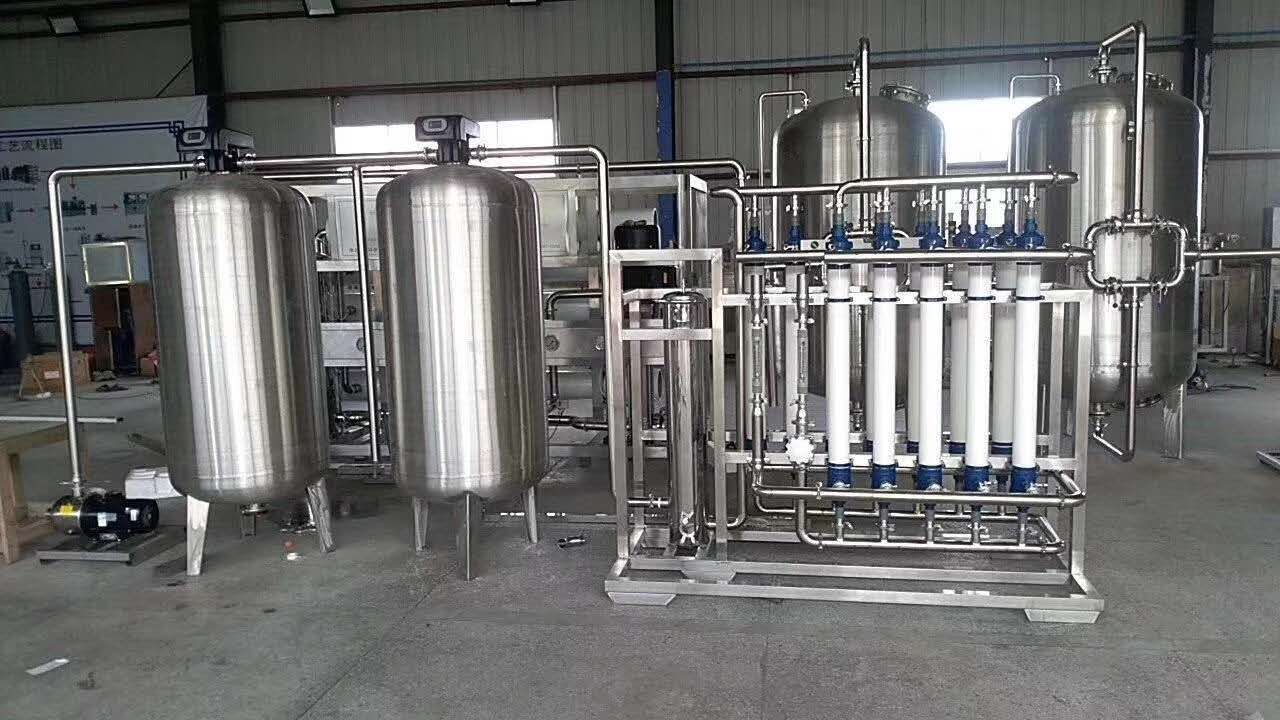
To resolve this, Chuxin Mingwei engineers utilize a specific configuration tailored for spring water: a Dual-membrane NF (Nanofiltration) + UF (Ultrafiltration) process.
Unlike standard RO lines that prioritize total deionization, this hybrid approach balances purification efficiency with mineral retention.
- UF (Ultrafiltration):*
- Removes suspended solids, bacteria, and large organic molecules while allowing dissolved minerals to pass through.
- NF (Nanofiltration):*
- Selectively removes hardness ions and specific contaminants while retaining beneficial minerals essential for the spring water identity.
This engineering choice is not optional for spring water; it is a requirement for maintaining both hygiene standards and the product's market positioning.
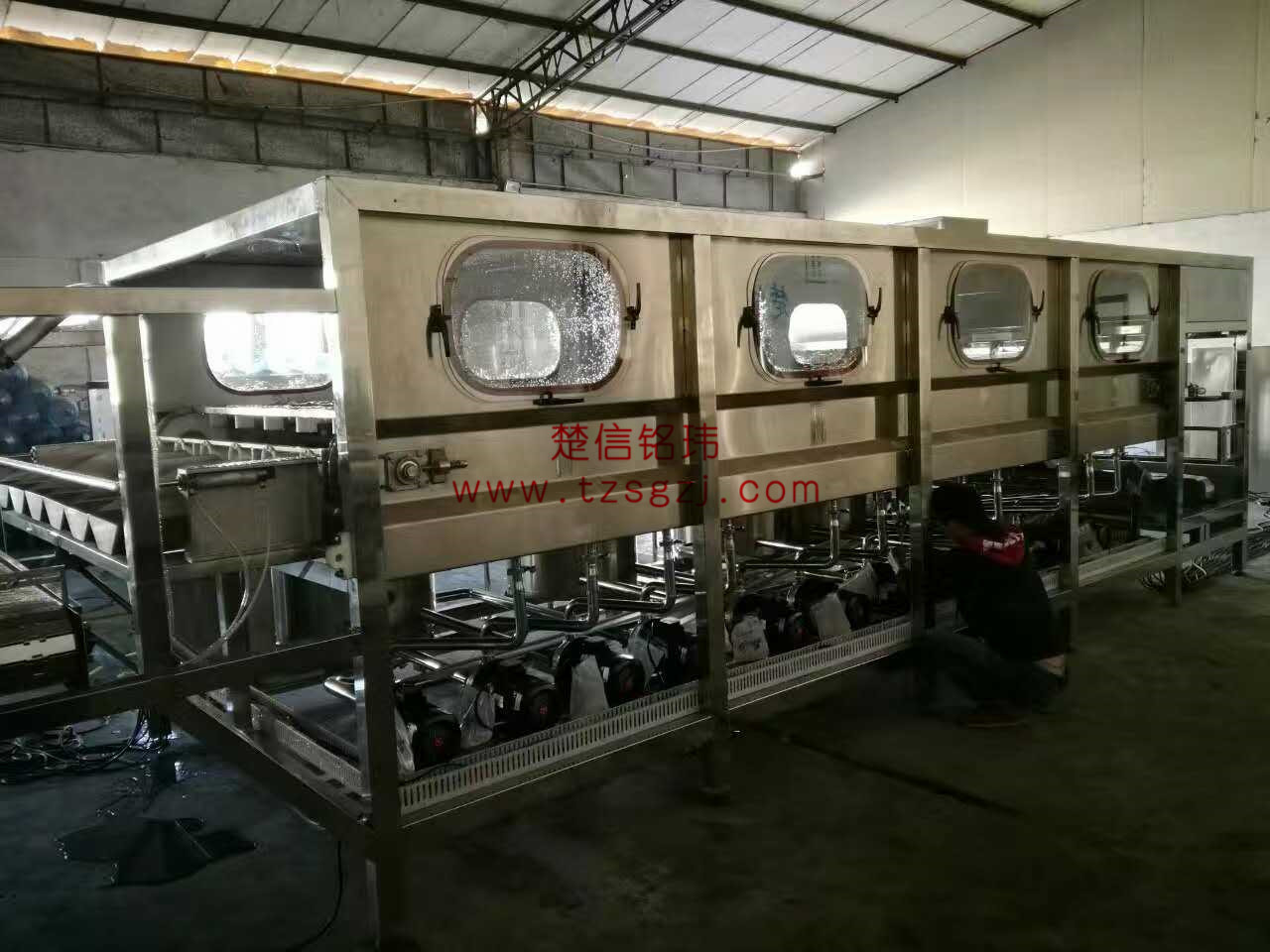
Diagnostic Checklist: Verifying Your Upgrade Path
Before committing to a new line or expanding capacity, operations leaders must validate their current or proposed setup against these factual criteria derived from our engineering standards:
1. Process Verification
Does the proposed system explicitly include NF + UF rather than just single-stage RO? If the supplier offers only RO, ask how they intend to preserve mineral content without risking membrane fouling. A standard RO system is designed for purified water, not spring water.
2. Capacity and Accuracy Metrics
Verify the machine's performance specifications against your target output. For a fully automatic line, the industry benchmark for stability includes:
- Filling Accuracy:*
- Must be ≤ ±2 mL to prevent overfilling (cost loss) or underfilling (compliance issues).
- Capping Pass Rate:*
- Should be ≥99.6% to minimize waste and rework.
- Capacity Range:*
- Ensure the rated output (e.g., 200–1,800 bottles/hour for 18.9L bottles) aligns with your peak demand, not just average load.
3. Bottle Compatibility Check
Spring water is often packaged in larger formats like 18.9 L or 11.3 L barrels. Confirm that the filling head and bottle handling mechanism are compatible with these specific dimensions. Standard lines optimized for small PET bottles may struggle with the weight and volume of 5-gallon containers, leading to mechanical stress.
Implementation Boundaries and Risks
Even with the correct technology, implementation risks remain if site-specific constraints are ignored.
- Source Water Variability:*
- Spring water sources can fluctuate seasonally. A static design may fail if the raw water TDS (Total Dissolved Solids) or turbidity spikes outside the design envelope. The system must have monitoring points to adjust flow rates dynamically.
- Integration Limits:*
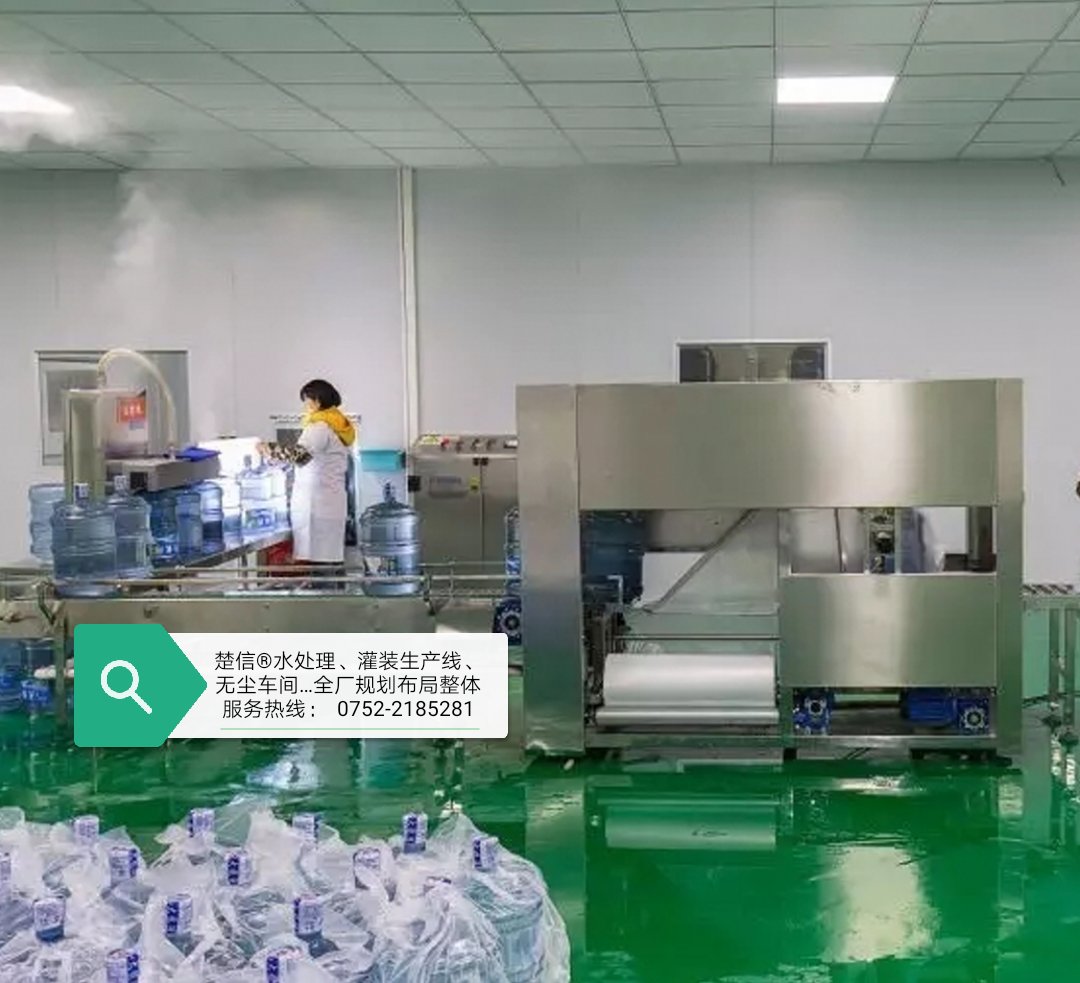
- A filling line is only as stable as its upstream support. You must ensure the clean air system meets ISO Class 8 (100,000) standards to prevent secondary contamination after the water leaves the treatment tank. Air quality is a non-negotiable boundary for food-grade safety.
- Service Scope Clarity:*
- Do not assume the vendor provides all auxiliary components. Clarify the delivery scope regarding operator training, spare parts availability, and post-installation calibration. A line that stops due to a lack of trained staff is a failed investment.
Resolution Strategy: From Diagnosis to Deployment
To successfully upgrade or expand your spring water operation:
- Conduct a Source Audit: Map the actual source water quality against the target water standards. Use this data to mandate the NF+UF process.
- Define Operational Parameters: Set clear KPIs for filling accuracy and capping rates before signing off on the design.
- Validate Support Infrastructure: Ensure your facility has the necessary compressed air, cooling water, and electrical capacity to support the rated output.
- Engage for Custom Engineering: Since spring water solutions are non-standard, request a site-specific engineering review rather than accepting a catalog configuration.
Conclusion
Upgrading a bottled spring water line requires more than buying faster machines; it demands a process engineered for the specific chemistry of spring water. By prioritizing the Dual-membrane NF + UF configuration and verifying key metrics like filling accuracy (≤ ±2 mL) and capping pass rates (≥99.6%), operations leaders can eliminate the instability caused by mismatched processes.
Stability, applicability, and long-term maintainability are achieved only when the equipment is custom-engineered from the actual source water quality up to the final packaging format.
Key Points Summary
- Process Mismatch:*
- Standard RO lines strip minerals; spring water requires NF + UF dual-membrane processes.
- Performance Standards:*
- Reliable lines must achieve filling accuracy ≤ ±2 mL and capping pass rates ≥99.6%.
- Capacity Verification:*
- Ensure the line supports specific bottle sizes (e.g., 18.9 L) and rated outputs (200–1,800 bottles/hour).
- Environmental Control:*
- Clean air systems must meet ISO Class 8 standards to prevent post-treatment contamination.
- Custom Engineering:*
- Solutions must be tailored to source water quality, not generic configurations.
Next Steps
If you are reviewing a proposal for a spring water line or planning an expansion, contact our engineering team to discuss your specific source water report and capacity goals. We provide end-to-end services from design to commissioning, ensuring your line is built for stability.
[Contact Our Engineering Team for a Site-Specific Review]
Recommended
Bottled Spring Water Filling Production Line
Chuxin Mingwei’s customized bottled spring water filling production line is specifically...
Fully Automatic Bottled Purified Water Filling Production Line
Chuxin Mingwei’s customized fully automatic bottled purified water filling production li...
Clean Air Purification Systems
Custom-engineered air purification systems for water bottling and barrelled water fillin...