
Engineering Requirements for SC-Compliant Barrelled Water Production Lines
Engineering Requirements for SC-Compliant Barrelled Water Production Lines
For procurement managers, operations leads, and digital project teams preparing to launch a barrelled water production facility, the path to SC (Food Production License) compliance is defined by engineering precision rather than generic equipment lists. The primary challenge lies not in purchasing machines, but in validating that the entire system—from raw water intake to final packaging—meets specific regulatory standards for hygiene, process control, and environmental safety.
This guide outlines the critical implementation steps for first-time adopters, distinguishing between regulatory myths and verified engineering facts based on Chuxin Mingwei's industrial water treatment and filling solutions.
Step 1: Validating Source Water and Purification Strategy
The foundation of SC compliance is the assurance that the treated water meets national drinking water standards while preserving product integrity where required. A common misconception is that all bottled water requires identical purification processes. In reality, the technology must be selected based on the specific characteristics of the source water and the target product standard.
Fact vs. Myth:
- Myth:*
- All spring water lines must use Reverse Osmosis (RO) to ensure safety.
- Fact:*
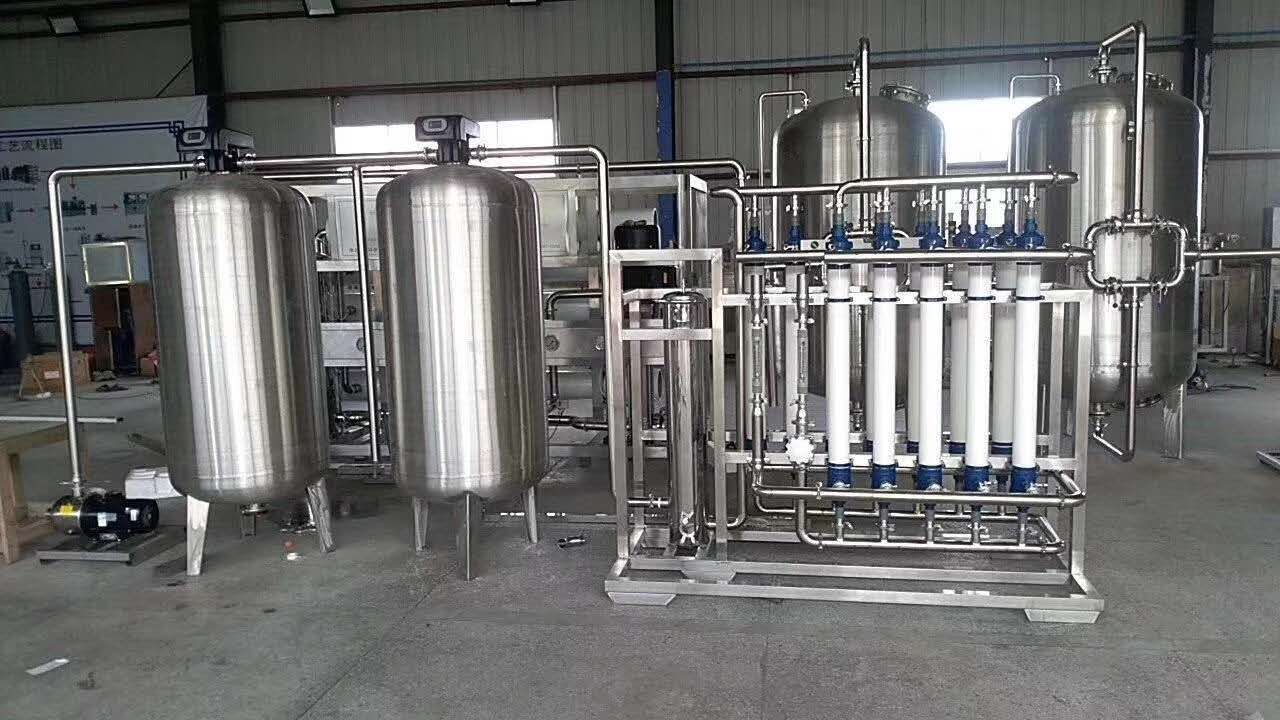
- For natural spring water, excessive RO can strip essential minerals. Instead, a dual-membrane process combining Nanofiltration (NF) and Ultrafiltration (UF) is often engineered to balance purification efficiency with mineral retention. This approach ensures microbial safety without compromising the natural profile of the water, a critical factor for product positioning and regulatory acceptance of "spring water" claims.
Conversely, for purified water, a two-stage RO deep purification process is standard. This integrates multi-media filtration, activated carbon adsorption, and dual sterilization using ozone and UV (254 nm). The selection of these processes must be driven by actual source water quality reports, not industry defaults.
Step 2: Designing the Filling Line for Hygiene and Capacity
Once the water quality is secured, the filling line must be configured to prevent re-contamination during the bottling process. For barrelled water (typically 18.9 L or 5-gallon), the complexity increases due to the handling of returnable containers.
Implementation Requirement:
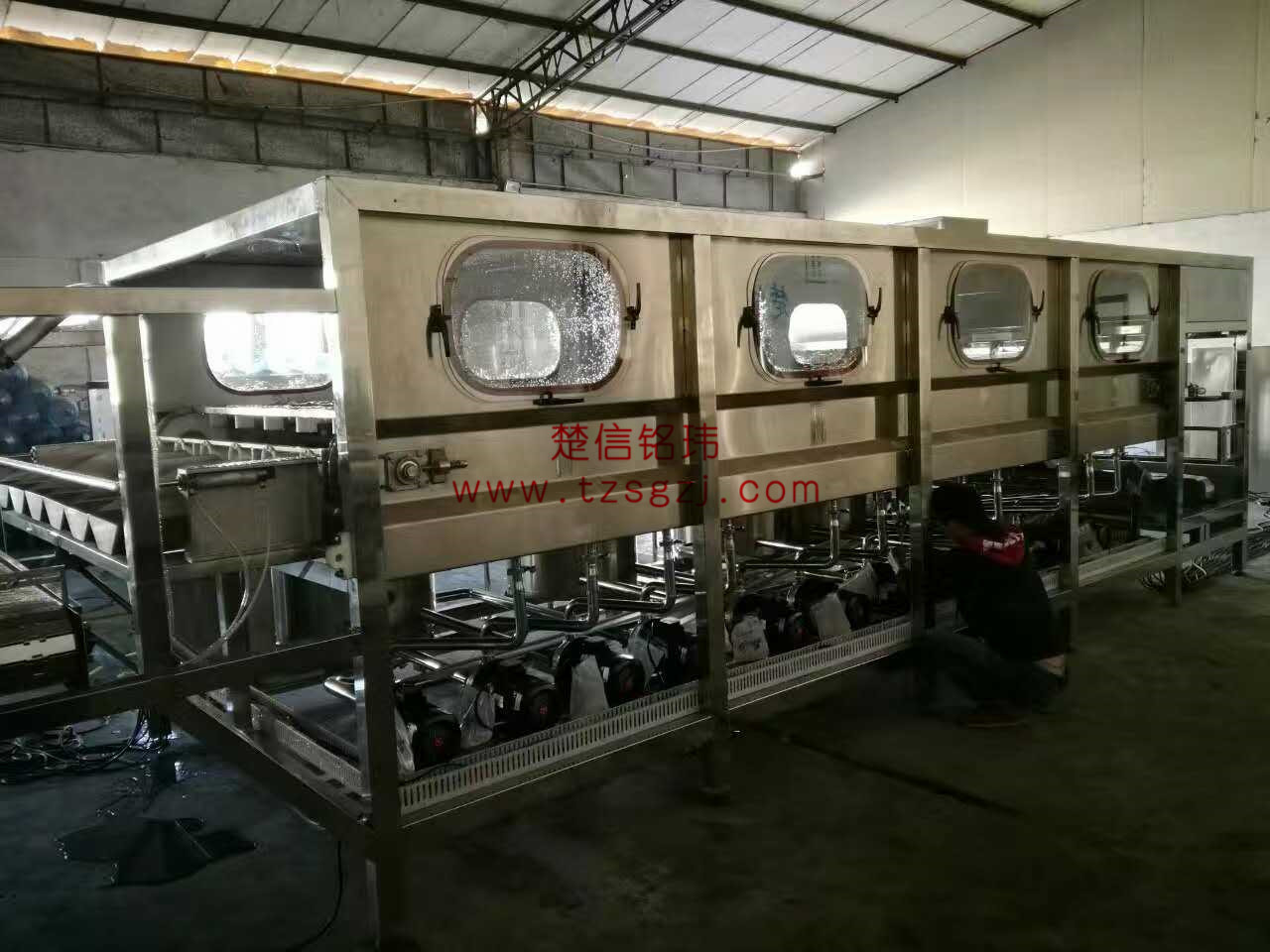
The line must integrate a synchronized workflow for bottle washing, filling, and capping. Key compliance checkpoints include:
- Cleaning Efficacy:*
- The system must handle external brushing, internal rinsing, and disinfection of used barrels. The washing-filling-capping unit should achieve a capping pass rate of ≥99.6% to prevent leakage and contamination risks.
- Filling Accuracy:*
- Precision is vital for both regulatory weight checks and cost control. Automated systems typically maintain filling accuracy within ±2 mL, ensuring consistent fill levels across batches.
- Capacity Planning:*
- Rated output capacities generally range from 200 to 1,800 bottles per hour for 18.9 L barrels, depending on the specific configuration. Procurement teams must calculate capacity based on peak demand plus buffer time for cleaning cycles, rather than just nominal machine speed.
Step 3: Establishing Cleanroom Zoning and Air Quality
SC regulations mandate strict control over the production environment. The filling area must operate as a controlled cleanroom to minimize airborne particulates and microbial load.
Critical Engineering Standard:
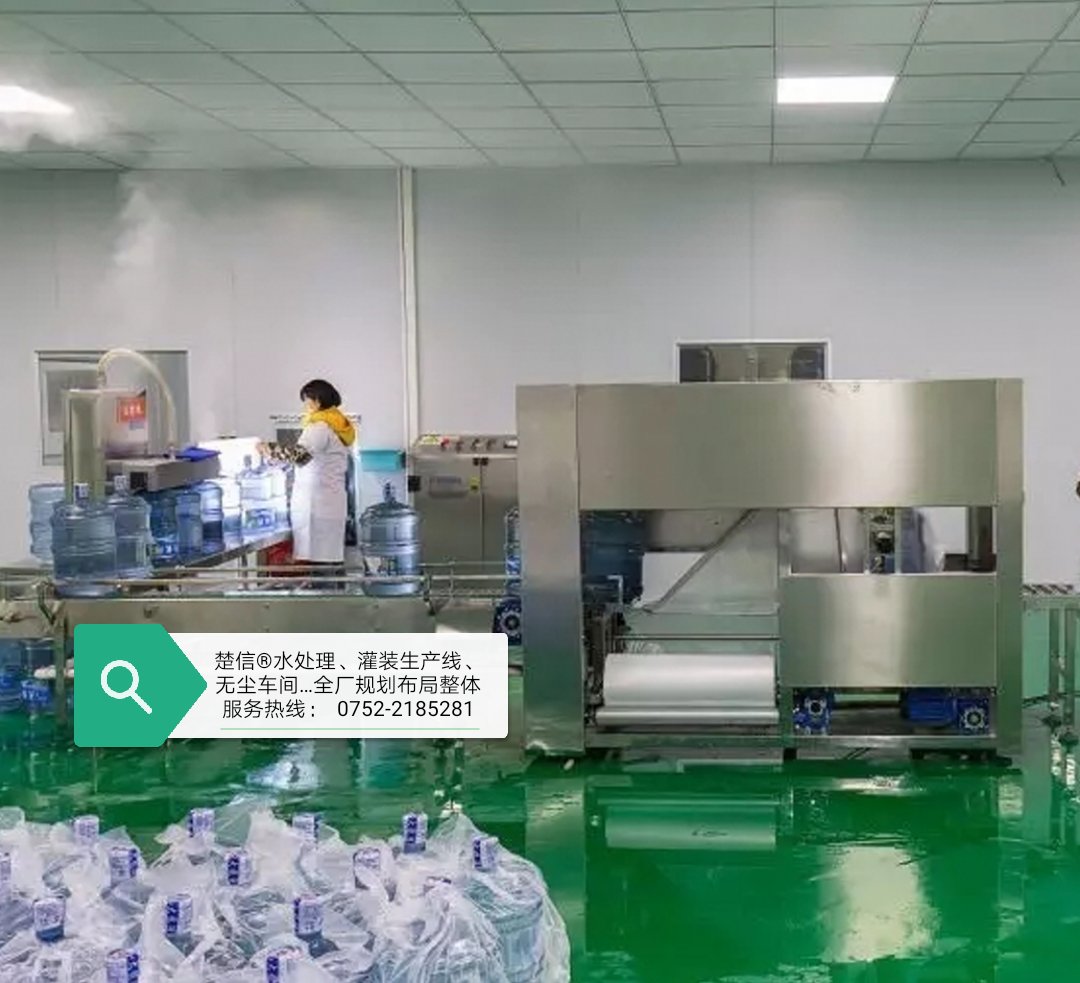
Chuxin Mingwei's clean air purification systems are designed to meet ISO Class 8 (100,000) standards, which is the baseline requirement for many food and beverage facilities. For higher-risk applications or premium product lines, the system can be upgraded to ISO Class 7 (10,000).
Key Control Parameters:
- Filtration Efficiency:*
- Systems utilize H13 HEPA filters to capture fine particles effectively.
- Airflow Management:*
- Airflow rates are site-specific, ranging from 1,500 to 20,000 m³/h, determined by room volume and pressure zoning requirements.
- Pressure Zoning:*
- Proper duct routing and pressure differentials must be engineered to ensure air flows from clean zones to less clean zones, preventing backflow contamination.
Step 4: Operational Readiness and Post-Installation Support
Compliance is not achieved at installation; it is maintained through operation. The transition from construction to production requires rigorous operator training and a clear service boundary definition.
Service Scope:
End-to-end engineering services include design, manufacturing, installation, commissioning, and operator training. However, clients must understand that long-term compliance depends on sustained maintenance. The system relies on PLC-based intelligent control for real-time diagnostics, but human oversight remains essential for CIP (Clean-in-Place) procedures and filter replacement schedules.
Decision Boundaries and Risk Factors
When planning an SC-compliant line, several variables require project-specific confirmation:
- Source Water Variability: Seasonal changes in raw water quality may necessitate adjustments to the purification process parameters.
- Facility Constraints: Existing building layouts may limit airflow routing or tank placement, requiring custom engineering solutions.
- Packaging Formats: Switching between different bottle sizes (e.g., 18.9 L to 5 L) requires changeover time considerations and potential hardware adjustments.
Conclusion
Achieving SC compliance for a barrelled water production line is a systematic engineering task that demands alignment between water quality, filling technology, and environmental controls. By prioritizing site-specific design over generic specifications, operators can ensure their facilities meet regulatory standards while maintaining operational stability and product quality.
For organizations preparing for implementation, the next step involves a detailed assessment of current site conditions and water quality data to define a tailored solution scope.
Next Steps
To initiate your compliance-ready project, contact our engineering team to discuss your specific water source analysis and facility layout requirements. We provide end-to-end support from initial design to final commissioning.
[Contact Our Engineering Team for a Site Assessment]
Key Implementation Points
- Process Selection:*
- Choose NF+UF for spring water to retain minerals; use dual-stage RO for purified water.
- Hygiene Standards:*
- Ensure filling lines achieve ≥99.6% capping pass rates and ±2 mL filling accuracy.
- Environmental Control:*
- Implement ISO Class 8 (or Class 7) cleanrooms with H13 HEPA filtration and proper pressure zoning.
- Capacity Planning:*
- Calculate throughput based on 200–1,800 bottles/hour ranges, accounting for cleaning and buffer times.
- Support Model:*
- Rely on integrated after-sales support for operator training and long-term maintenance boundaries.
Call to Action
Ready to engineer your compliant production line? Schedule a consultation with our experts to review your water quality data and facility constraints.
[Get Started with Your Custom Solution]
Recommended
Bottled Spring Water Filling Production Line
Chuxin Mingwei’s customized bottled spring water filling production line is specifically...
Fully Automatic Bottled Purified Water Filling Production Line
Chuxin Mingwei’s customized fully automatic bottled purified water filling production li...
Clean Air Purification Systems
Custom-engineered air purification systems for water bottling and barrelled water fillin...