Barrel-Wrap Packaging Machine in Practice: A Procurement Checklist for Beverage and Water Producers
Barrel-Wrap Packaging Machine in Practice: A Procurement Checklist for Beverage and Water Producers
If you’re responsible for sourcing or upgrading packaging equipment for 3-gallon or 5-gallon (18.9L) water barrels, the term “barrel-wrap packaging machine” likely appears in your RFPs or vendor comparisons. But not all solutions deliver the same operational fit—especially when your production involves spring water, purified water, or strict cleanroom requirements.
Unlike standard bottle packagers, barrel-wrap systems must handle large, heavy containers that often come from reuse cycles. That means compatibility with your existing wash-fill-cap line, space constraints, and post-installation support become critical decision factors—not just throughput claims.
Why Barrel-Wrap Packaging Isn’t One-Size-Fits-All
Barrel-wrap packaging typically refers to automated systems that apply shrink film or plastic wrap around filled water barrels (commonly 11.3L or 18.9L) before palletizing or shipping. However, its integration depends heavily on upstream processes:
- Is your barrel new or recycled?*
- Recycled barrels require full inspection, de-capping, external brushing, internal washing, disinfection, and final rinsing before filling. This affects how consistently shaped and clean the barrels are when they reach packaging—impacting film tension, alignment, and jam risk.
- What’s your actual output?*
- While some lines claim 2,500 bottles/hour for purified water, real-world capacity for barrel lines is often lower due to handling complexity. Overestimating throughput can lead to mismatched packaging speeds and bottlenecks.
- Do you use integrated wash-fill-cap units?*
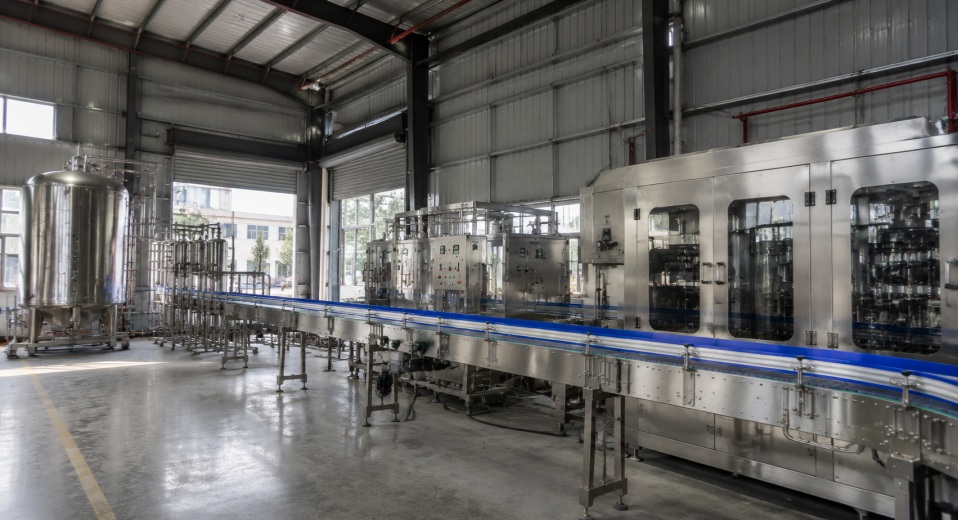
- Chuxin Mingwei’s bottled spring water lines, for example, combine washing, filling, and capping in one synchronized unit with ≤±2 mL filling accuracy and ≥99.6% capping pass rate. A standalone barrel-wrap machine must match this rhythm without manual intervention.
Buyer Decision Checklist: Must-Haves vs. Nice-to-Haves
Use this framework when evaluating alternatives:
Must-Have Criteria
- Mechanical compatibility with your barrel dimensions
- (diameter, height, neck type)—especially if running both 3-gallon and 5-gallon formats.
- Integration capability with your existing conveyor system
- post-filling and post-inspection.
- Clear service scope: Does the supplier include installation, operator training, and remote diagnostics? Chuxin Mingwei delivers end-to-end engineering services—including commissioning and after-sales support—tailored to site-specific constraints.
- Material handling robustness: Can it manage wet, cold, or slightly misaligned barrels without frequent jams?
️ Optional but Strategic Factors
- Film type flexibility
- (PVC, PE, or biodegradable options).
- Energy efficiency of the heat tunnel
- (affects operating cost in high-humidity environments).
- Remote monitoring via HMI/PLC—useful for digital project teams tracking OEE.
Common Risks to Avoid
- Assuming “automatic” means zero human oversight. Most barrel lines still require staff for film roll changes, jam clearance, or quality spot-checks.
- Ignoring cleanroom airflow impact. If your filling zone meets ISO Class 8 standards (as with Chuxin Mingwei’s clean air solutions), the packaging station must not disrupt pressure zoning or introduce particulates.
- Selecting based on price alone. A low-cost machine may lack spare parts availability or local technical backup—critical for minimizing downtime.
Long-Term Support: The Hidden Differentiator
In industrial water production, equipment longevity hinges on post-installation support. Unlike generic machinery vendors, Chuxin Mingwei emphasizes sustained service execution—mapping equipment capabilities to real-world operational contexts, not just factory specs.
This includes:
- Clarifying delivery workflow boundaries (e.g., who handles civil works vs. equipment anchoring).
- Providing training tailored to your team’s skill level.
- Offering responsive after-sales channels for troubleshooting.
Without this, even a technically sound barrel-wrap machine can become a maintenance liability within 12–18 months.
Next Steps: Validate Before You Commit
Before finalizing a barrel-wrap packaging solution:
- Confirm your barrel type (new vs. recycled), dimensions, and hourly target—including realistic uptime (typically 80–85%, not 100%).
- Request a layout simulation showing integration with your current filling line.
- Ask for a detailed service agreement covering first-year support, spare parts list, and response time SLAs.
If you’re evaluating custom water treatment and filling systems alongside packaging, ensure the entire workflow—from source water to wrapped barrel—is engineered as a cohesive unit.
Need help assessing compatibility between your water quality, filling line, and packaging automation? Share your production parameters with our engineering team for a non-binding feasibility review.
相关推荐
- [Chuxin Mingwei water purification equipment for hotel water supply systems](/)
- bottled water production line quotation