Barrel Wrap Packaging Machine Selection: Matching Speed, Container Type, and Line Integration for Replacement Projects
Barrel Wrap Packaging Machine Selection: Matching Speed, Container Type, and Line Integration for Replacement Projects
When evaluating a replacement or upgrade for your barrel wrapping station, the primary challenge is rarely the wrapper itself, but ensuring it integrates seamlessly with your existing filling line's rhythm and physical constraints. For technical evaluators and procurement teams managing 3-gallon (18.9 L) or 5-gallon (11.3 L) production lines, the decision hinges on three specific variables: container geometry compatibility, throughput synchronization, and the scope of post-filling operations.
Diagnostic Symptoms: Why Standard Wrappers Fail in Existing Lines
In many replacement scenarios, the initial symptom is a bottleneck at the end of the line. You may observe that the filling line runs smoothly, but the wrapping station causes frequent jams, misalignment, or idle time. This often stems from a mismatch between the wrapper's mechanical handling capabilities and the specific characteristics of the barrels being processed.
Common failure modes include:
- Container Geometry Mismatch:*
- The wrapper cannot accommodate the specific diameter or height variations of your current barrel stock, particularly if switching between new and recycled containers.
- Throughput Discrepancy:*
- The wrapper's maximum cycle rate does not align with the filling line's rated output, forcing the entire line to slow down or creating buffer pile-ups.
- Integration Gaps:*
- Lack of synchronized control logic between the filler and the wrapper, leading to inconsistent spacing or missed cycles.
Critical Checks: Defining Selection Criteria
To resolve these issues, you must conduct a rigorous audit of your operational parameters before selecting a new unit. Based on industry standards for 3–5 gallon systems, the following criteria are non-negotiable for a successful selection.
1. Container Compatibility and Handling Logic
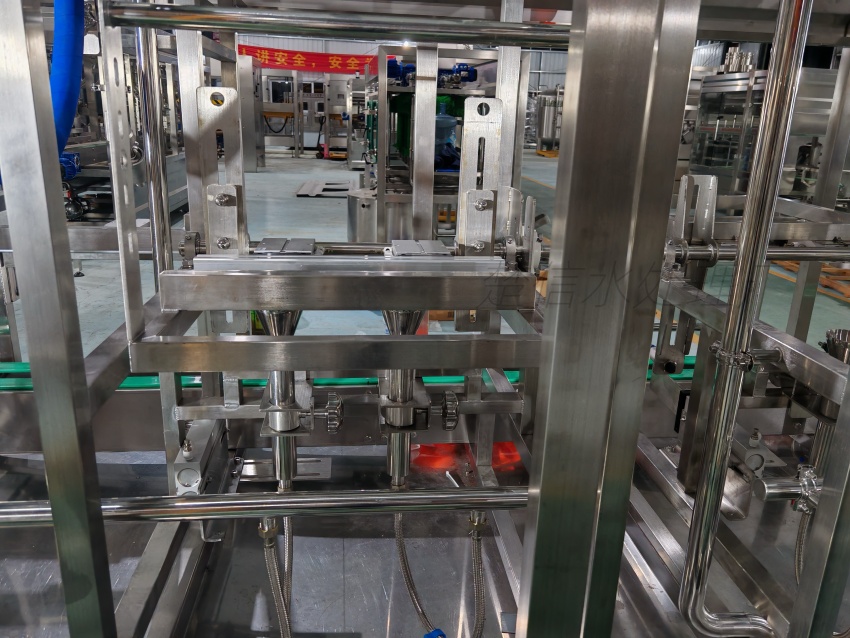
The core function of a barrel wrap machine is to handle the specific physical attributes of the container. Unlike small-bottle lines which often use rigid PET preforms, barrel lines deal with large, heavyTote Bins (recycled or new).
- Size Range Verification:*
- Ensure the selected machine explicitly supports the full range of your target sizes (e.g., 18.9 L / 5-gallon and 11.3 L / 3-gallon). Some units are optimized for one size only; others require significant changeover parts.
- New vs. Recycled Distinction:*
- If your operation utilizes recycled barrels, the wrapper must be compatible with the potential surface irregularities or label remnants left after washing. The feeding mechanism must gently handle these without crushing the barrel or misaligning the film application.
- Orientation Stability:*
- The machine must maintain stable orientation during the high-speed rotation required for shrink-wrapping, preventing barrel tipping which can damage the film or the equipment.
2. Throughput Synchronization and Capacity Matching
Speed is a common differentiator, but "faster" is not always better. A wrapper rated for 2,000 bottles/hour is useless if your filling line produces 1,800 and the downstream logistics cannot handle the surge.
- Rated Output Alignment:*
- Match the wrapper's capacity to your filling line's rated output. For example, if your Chuxin Mingwei bottled spring water line operates at 200–1,800 bottles/hour (based on 18.9 L), the wrapper should have a buffer capacity slightly above this peak to handle transient surges without stalling.
- Cycle Time Consistency:*
- Verify that the wrapper's cycle time per barrel is consistent with the filler's discharge interval. Inconsistent timing leads to gaps in the conveyor flow, causing the wrapper to wait or the filler to back up.
- Scalability:*
- Consider future expansion. If you plan to increase capacity by 20% within two years, select a unit with a headroom margin rather than one operating at 100% utilization.
3. Integration Boundaries and System Scope
One of the most frequent errors in replacement projects is assuming the wrapper handles all downstream tasks. It is critical to define the boundary of responsibility between the wrapper and other equipment.
- Process Scope Clarification:*
- A standard barrel wrap machine typically performs film application and heat sealing. It does not replace the need for:
- Bottle Washing:*
- Pre-wrapping cleaning is handled by the upstream washing station.
- Capping:*
- Sealing is completed by the capping unit before the wrapper.
- Labeling/Inspection:*
- These often occur before or after wrapping depending on the process flow.
- Palletizing:*
- Wrapping is distinct from palletizing; ensure your layout accounts for the transition from wrapped single units to pallet loads.
- Control Interface:*
- The wrapper must integrate with your plant's PLC system. Look for HMI interfaces that allow real-time diagnostics and remote-ready connectivity, ensuring you can monitor performance without stopping the line.
- Cleanliness Compliance:*
- Since these machines operate in cleanrooms (often ISO Class 8 or higher for water bottling), verify that the wrapper's design minimizes dust generation and allows for easy CIP (Clean-in-Place) or manual cleaning access.
Resolution Strategy: Implementation Steps for Replacement
Once the selection criteria are defined, follow this structured approach to implement the upgrade:
- Audit Current Inventory: Measure the exact dimensions (diameter, height, weight) of your current barrel stock, including tolerances for recycled units.
- Define Process Flow: Map the exact sequence from the filling line discharge to the final palletizing point. Identify where the wrapper fits and what intermediate conveyors are needed.
- Request Technical Data Sheets: Ask vendors for specific data on changeover times, power consumption, and air requirements. Do not rely on generic marketing claims.
- Validate Integration: Require a site-specific engineering review to confirm airflow, duct routing, and pressure zoning compatibility if the wrapper is placed near sensitive filling zones.
- Finalize Technical Agreement: Explicitly document the scope of supply. Does the price include installation? Operator training? Spare parts kits? What is the warranty period for the motor and heating elements?
Escalation Boundary: When to Seek Custom Engineering
If your production line involves non-standard container shapes, extreme hygiene requirements (e.g., pharmaceutical-grade water), or unique facility constraints (e.g., limited floor space or unusual ceiling heights), standard off-the-shelf wrappers may not suffice. In these cases, the project requires custom engineering services. This includes designing site-specific airflow solutions, customizing the film feed mechanism for irregular barrels, or integrating the wrapper into a fully automated end-to-end workflow that minimizes manual intervention.
Conclusion
Selecting a barrel wrap packaging machine is a technical exercise in matching physical constraints with operational rhythm. By focusing on container compatibility, throughput alignment, and clear integration boundaries, procurement managers can avoid costly downtime and ensure a smooth transition during line upgrades. The goal is not just to buy a machine, but to secure a reliable extension of your filling line's capabilities.
For teams ready to evaluate specific configurations for their 3–5 gallon lines, we recommend initiating a detailed site survey to validate these parameters against your actual facility conditions.
---
Key Points Summary
- Container Specificity:*
- Select machines explicitly verified for your target barrel sizes (18.9 L / 5-gallon and 11.3 L / 3-gallon) and capable of handling both new and recycled units.
- Capacity Matching:*
- Ensure the wrapper's rated output exceeds your filling line's peak capacity to prevent bottlenecks, while accounting for buffer needs.
- Scope Definition:*
- Clearly distinguish between the wrapper's function (film application/sealing) and upstream/downstream processes (washing, capping, palletizing) to avoid integration gaps.
- Integration Readiness:*
- Verify PLC/HMI compatibility and cleanroom compliance (ISO Class 8+) before finalizing the purchase.
- Customization Threshold:*
- Engage custom engineering services if your facility has non-standard constraints or requires specialized hygiene protocols.
Next Steps
To proceed with a tailored evaluation for your barrel wrapping needs, please contact our engineering team. We can assist in mapping your current line specifications to our available configurations or discussing custom integration options.
Contact Chuxin Mingwei for a Site Survey