
How to choose Industrial Clean Air Solutions,r: selection, rollout and support checklist
Clean air isn’t optional—it’s a contamination control boundary
For procurement managers and operations leads in beverage or food facilities, Industrial Clean Air Solutions are often treated as auxiliary add-ons to water filling lines. But risk control data shows otherwise: if your cleanroom air system isn’t co-engineered with your bottled spring water production line, you risk violating hygiene standards after the water has already been purified and filled.
This isn’t theoretical. In multiple client audits, Chuxin Mingwei has observed that microbial counts rise not from the water itself, but from airborne particles settling on bottle necks, caps, or conveyor surfaces post-filling. The root cause? Air systems sized generically or installed without mapping to actual equipment layout and workflow.
Two non-negotiable engineering inputs
Chuxin Mingwei’s approach starts with two site-specific inputs before any airflow calculation:
- Physical integration points: Where does the clean air envelope begin and end relative to the washing-filling-capping unit? For example, on an 18.9L bottled water line, the critical zone typically spans from post-rinse bottle exit through capping and into immediate downstream inspection. If the HEPA supply doesn’t cover this entire path under positive pressure, recontamination occurs.
- Dynamic airflow balance: Cleanrooms aren’t static boxes. Equipment heat output, door openings, and personnel movement disrupt laminar flow. Our Industrial Clean Air Solutions use PLC + HMI control with real-time diagnostics to maintain ISO Class 8 (100,000) conditions—upgradable to Class 7—by adjusting fan speed and damper positions based on actual pressure differentials, not just design specs.
“ISO Class 8 certified design — upgradable to Class 7 (10,000)” and “Site-specific engineering: airflow, duct routing, and pressure zoning based on facility constraints” are standard in our project scope. These aren’t marketing claims—they define the delivery boundary.
Where risk hides: three common misalignments
Based on field service records, these gaps frequently emerge when air systems are procured separately from filling lines:
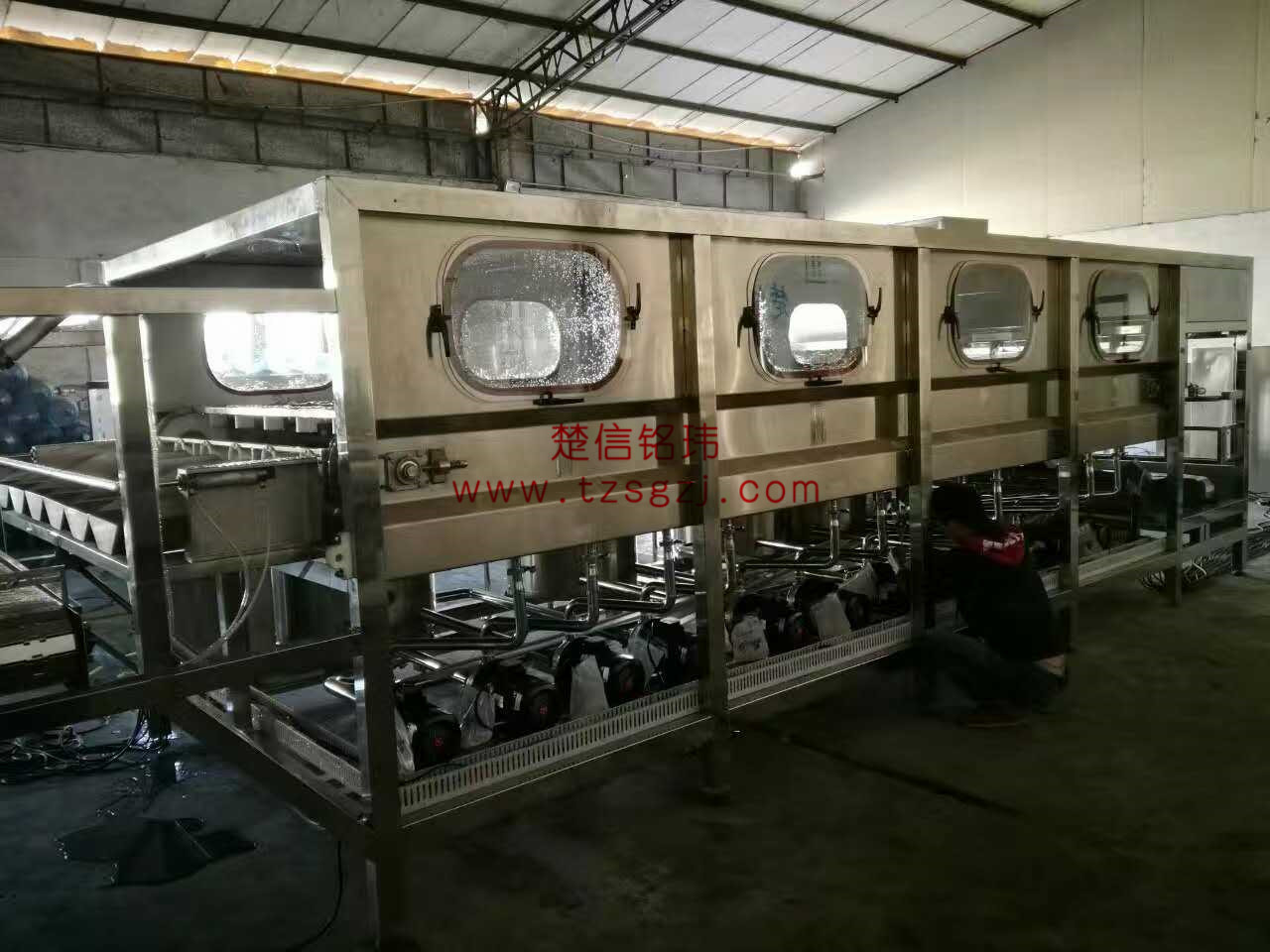
- Mismatched coverage: A clean air unit rated for 10,000 m³/h may still leave dead zones if duct routing ignores machine height or conveyor bends. We model airflow paths during layout design using 3D facility scans.
- Uncoordinated commissioning: Air balancing and particle counting must happen after
- the filling line is fully installed—not during standalone air system testing. Otherwise, equipment-generated turbulence invalidates initial certification.
- Undefined support boundaries: Does your vendor include filter change protocols, alarm calibration, or remote diagnostics? Chuxin Mingwei’s after-sales support covers operator training on air quality monitoring and scheduled HEPA integrity checks.
Actionable verification steps before purchase
To control risk, ask these questions during technical evaluation:
- Can the supplier provide a pressure zoning diagram showing differential pressures between filling zone, packaging area, and external corridor?
- Is the H13 HEPA filtration efficiency validated under actual operating conditions (not just factory test reports)?
- Does the scope include integration with your existing utilities (compressed air, chilled water for dehumidification) and control system (e.g., shared PLC with filling line)?
If answers are vague or deferred to “on-site adjustment,” treat it as a red flag. True risk control requires engineering certainty before fabrication begins.
Next step: Align air and water systems early
Don’t wait until your spring water filling equipment is installed to address air quality. At Chuxin Mingwei, we bundle clean air design into the initial process layout review—using your source water report, target capacity (e.g., 200–1,800 bottles/hour for 18.9L), and facility footprint to co-develop both water and air subsystems.
This prevents costly retrofits and ensures compliance isn’t compromised by siloed procurement. Contact our engineering team to request a preliminary integration assessment—including airflow simulation and interface checklist—for your bottled water project.