
Engineering Logic of Bottle Inversion Sterilization and Spray Cooling in Hot-Fill Processes: A Decision Memo
Decision Memo: Engineering Logic of Bottle Inversion Sterilization and Spray Cooling in Hot-Fill Processes
Objectives
For procurement managers and operations leads in the beverage industry, specifying a hot-fill production line extends far beyond the filling monoblock. The role of bottle inversion sterilization and spray cooling in hot-fill processes is foundational to product safety and packaging integrity. This memo clarifies the operating principles of these packaging technologies, demonstrating how they dictate upstream water treatment sizing, mechanical conveyor configurations, and overall facility utility planning.
Operating Logic: Bottle Inversion Sterilization
In hot-fill processes—typically operating at 85°C to 92°C for high-acid beverages like teas, juices, and sports drinks—the product itself acts as the sterilizing agent. After the bottle is filled and capped, it is mechanically inverted.
- Principle: The hot liquid flows into the headspace, contacting the inner surface of the cap and the bottle neck. This thermal exposure eliminates potential microbial contamination introduced during the capping process.
- Configuration Basis & Mechanical Boundary: This process requires absolute mechanical stability to ensure the required sterilization dwell time is met without disrupting line flow. When configuring the packaging equipment technology for 300–1,500 mL PET bottles, suspension neck-conveying systems are utilized. By gripping the bottle neck ring rather than the base, these conveyors prevent jamming and maintain precise spacing during the physical inversion and reversion phases.
Operating Logic: Spray Cooling Tunnels
Following inversion, the product must be rapidly but gradually cooled to approximately 35°C–40°C before labeling and case packing.
- Principle: Prolonged exposure to high temperatures degrades product quality (e.g., flavor loss, vitamin degradation, browning) and can cause thermal deformation of the PET bottle. Spray cooling tunnels use cascading temperature zones to gradually reduce the product temperature, preventing thermal shock that could shatter the glass or warp the plastic.
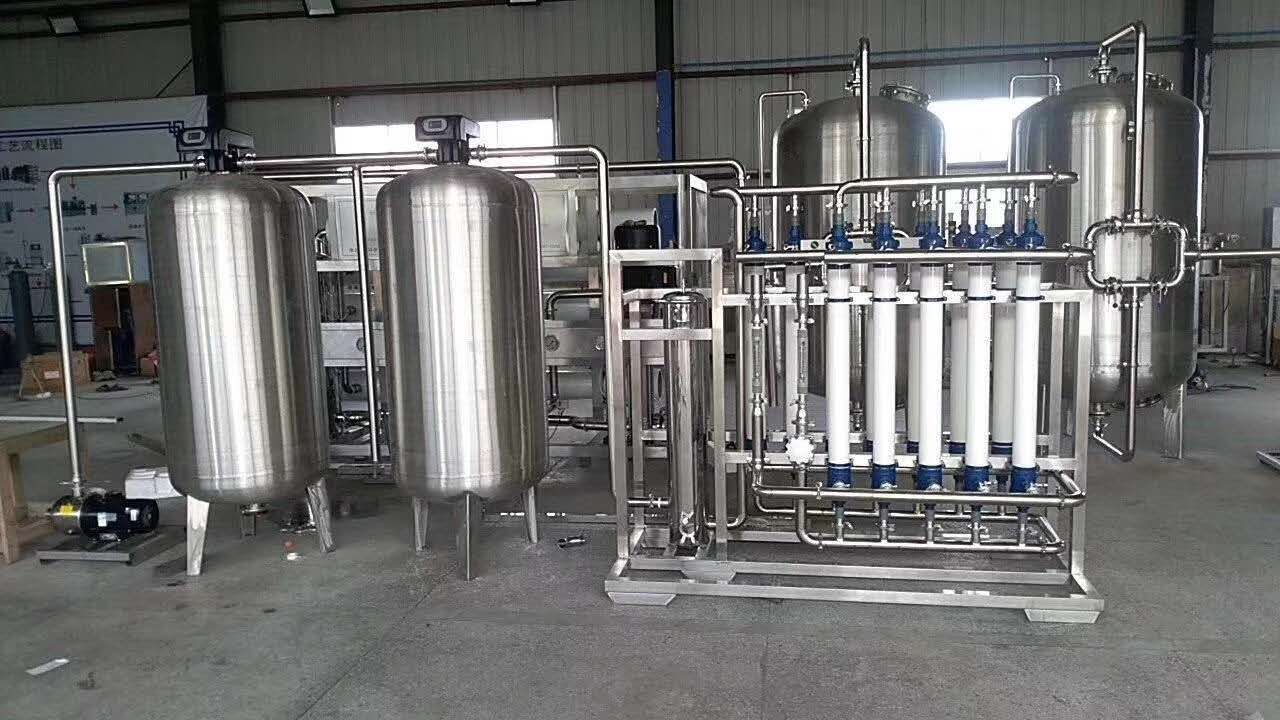
- Utility Demand & Misconceptions: A common misconception is that cooling water does not require stringent treatment because it does not contact the product internally. In reality, the spray cooling tunnel consumes a massive volume of process water. Poor water quality leads to nozzle clogging, heat exchanger fouling, and external bottle staining. Therefore, a raw water report is the starting point for water treatment equipment selection. To protect the cooling infrastructure, sodium ion exchange softening primarily reduces calcium and magnesium hardness to control scaling in the recirculation loops. While softened water still contains dissolved salts, it provides the necessary boundary for cooling tower makeup water.
Alternatives: Hot-Fill vs. Aseptic Cold Filling
When evaluating production lines, technical teams must weigh the operational boundaries of hot-fill against aseptic cold filling.
- Hot-Fill: Relies on product heat and bottle inversion for backend sterilization. It requires heat-resistant PET bottles (heavier gram weight) but generally involves lower capital expenditure for the filling environment.
- Aseptic Cold Filling: Fills ambient-temperature product into standard, lightweight PET bottles. This shifts the sterilization burden to chemical or thermal treatment of the packaging and requires a highly controlled environment. Implementing this alternative necessitates ISO Class 8 (100,000) cleanrooms supported by HEPA clean air purification systems to maintain sterility, significantly altering the facility's HVAC and filtration budget.
Recommendation & Implementation Boundaries
Do not evaluate the filling monoblock, inversion conveyor, and cooling tunnel as isolated purchases. Successful integration requires a holistic engineering approach:
- System Synchronization: Ensure the PLC control system integrates the filling speed with the inversion chain length and cooling tunnel transit time to guarantee precise thermal exposure.
- Utility Planning: When budgeting for water plant equipment installation and commissioning, facility managers must account for the piping, storage, and softening systems required specifically for the cooling tunnel's recirculation loops, alongside the primary product water treatment system.
- Site-Specific Engineering: Facility constraints, such as floor drainage capacity for cooling water overflow and ambient humidity control, must be addressed during the layout phase to prevent operational bottlenecks.
Next Steps
Based in Huizhou, Guangdong, China — serving domestic and international clients in beverage, food, pharma, electronics, and heavy industry sectors. Chuxin Mingwei engineers non-standard, site-specific water treatment and filling solutions. By mapping equipment capabilities to your actual source water quality and production targets, we ensure long-term maintainability. Contact our technical team to discuss the integration of your hot-fill packaging line with robust utility water systems.