
Bottled Purified Water Filling Line: Mitigating Operational Risks Through Process Parameters
Understanding Bottled Purified Water Filling Line Performance Through Technical Parameters
When evaluating a Bottled Purified Water Filling Line, procurement and operations teams frequently anchor their decisions to headline throughput metrics. However, real-world production stability depends on how well core technical parameters align with your actual source water, facility layout, and sanitary requirements. Misalignment in purification staging, mechanical tolerances, or system buffering typically manifests as yield loss, elevated maintenance costs, or compliance gaps downstream.
Purification Staging: Matching Membrane Architecture to Source Variability
Deep purification for bottled purified water relies on a multi-stage filtration sequence, typically beginning with multi-media and activated carbon pre-treatment before entering reverse osmosis (RO) membranes. A common risk vector is over-engineering the membrane stage without validating source water characteristics. Dual-stage RO does not automatically guarantee superior output; it should only be deployed when single-stage RO cannot consistently meet your target conductivity and impurity thresholds. Furthermore, activated carbon filters require scheduled backwashing, disinfection, and replacement to prevent microbial proliferation and pressure drop. Selecting a line where the purification architecture is calibrated to your specific raw water report—not a standardized template—reduces membrane fouling frequency and stabilizes long-term operating costs.
Washing-Filling-Capping Tolerances: Controlling Secondary Contamination
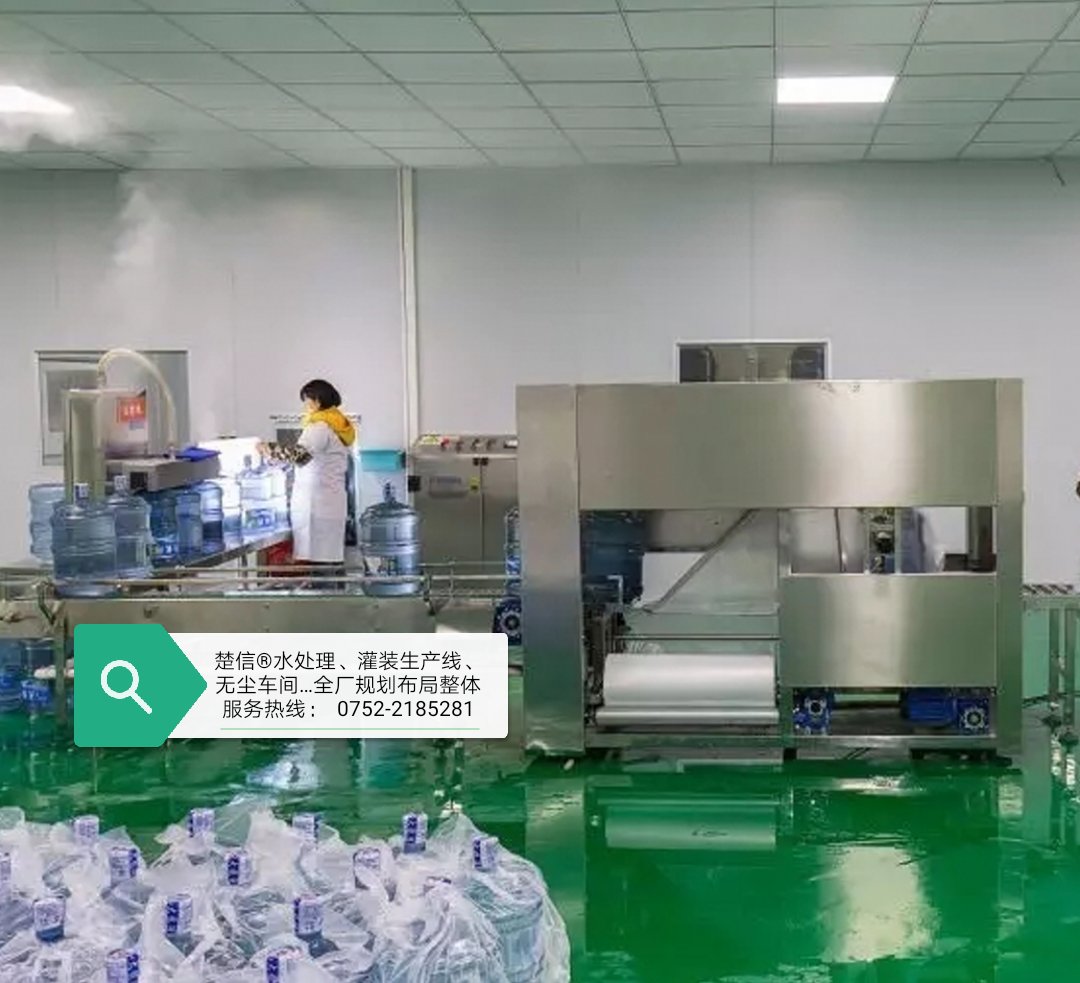
The integrated washing-filling-capping unit is the mechanical heart of the line, but its reliability hinges on precise hydraulic and torque parameters. Rinsing water quality and nozzle pressure directly influence bottle neck cleanliness; inconsistent pressure increases the risk of secondary contamination and particulate carryover. Modern units incorporate no-bottle-no-fill logic, missing cap detection, and programmable capping torque to maintain seal integrity across varying PET bottle wall thicknesses. If these mechanical safeguards are not synchronized with your bottle geometry and cap type, you will experience increased reject rates and unplanned downtime. Validating the line’s compatibility with your specific bottle diameter, fill volume, and closure system before commissioning eliminates a major source of operational friction.
Capacity Calculation and System Buffering
Rated output figures, such as bottles per hour, represent idealized cycle times under continuous operation. Actual plant throughput must account for rinse water consumption, CIP cleaning cycles, product transfer losses, and peak demand buffers. A frequent oversight is undersizing raw water storage or finished water holding tanks relative to the line’s rated capacity. Without adequate hydraulic buffering, short-term demand spikes can starve the filling zone or cause pump cavitation. Proper system design balances the nominal hourly output with realistic shift schedules, ensuring that upstream pretreatment and downstream packaging zones operate at matched velocities.
Selection and Implementation Checklist
To mitigate risk during the procurement phase, verify the following before finalizing equipment specifications:
Validate purification staging against a recent source water analysis and defined product standard.
Confirm washing-filling-capping tolerances match your exact bottle dimensions, material grade, and closure type.
Calculate net daily output by factoring in CIP intervals, rinse water ratios, and planned maintenance windows.
Review utility requirements (compressed air, cooling water, electrical load) against your facility’s existing infrastructure.
Define clear service boundaries for installation, operator training, and post-commissioning support.
Next Steps
Engineering a Bottled Purified Water Filling Line requires translating theoretical parameters into site-specific execution. Chuxin Mingwei designs custom water treatment and filling configurations based on verified source data, target standards, and facility constraints. We provide detailed parameter mapping, utility coordination, and structured after-sales support to ensure stable, maintainable operations.
Contact our technical team to schedule a parameter alignment review or request a preliminary layout assessment for your facility.