
Bottled Water Washer-Filler-Capper Monoblock Process Flow: A Technical Reference for Returnable 3- and 5-Gallon Operatio
Target Audience and Scenario
This technical memo is written for production managers, quality assurance teams, and procurement engineers at bottled water plants that use returnable 3-gallon and 5-gallon (18.9 L) polycarbonate bottles. It addresses the question: “How does a washer-filler-capper monoblock actually work, and what do I need to know before integrating one into my line?”
Why an Integrated Machine?
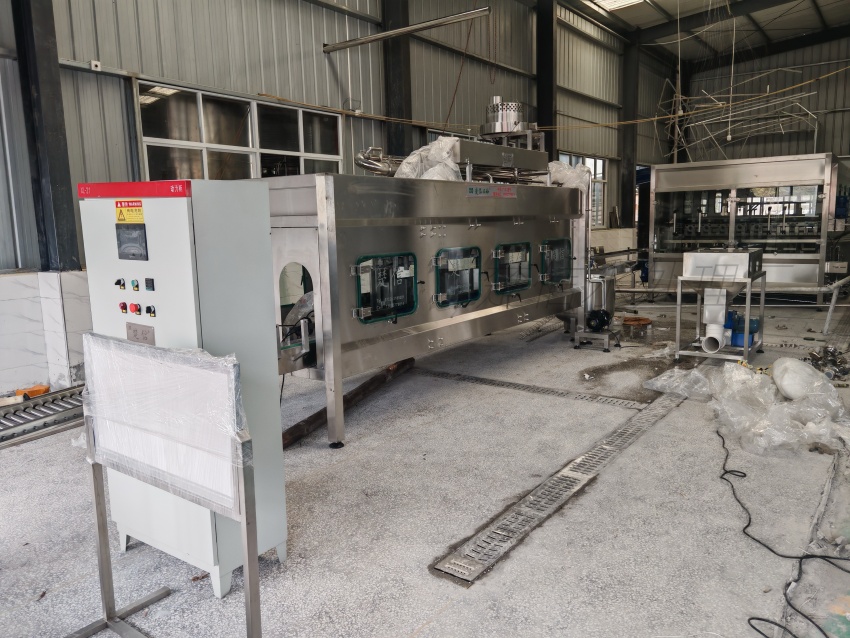
A washer-filler-capper monoblock — also called a three-in-one machine — combines bottle rinsing, filling, and capping into a single continuous unit. Unlike a fragmented setup where bottles are washed on one station, conveyed to a stand-alone filler, then moved to a separate capper, the monoblock keeps the bottle inside a controlled enclosure from the moment it enters the wash station until it exits with a sealed cap. This shortens the time the bottle interior is exposed to ambient air, reduces manual handling, and contributes to a lower risk of recontamination.
In the world of returnable bottle filling, the core of the process is not simply “filling water into a bottle.” It is a combination of returned bottle sorting, brushing, multi-stage washing, disinfection, final rinsing, capping, and environmental control. A monoblock addresses the washing, filling, and capping portion of this chain in one tightly synchronized step.
Standard Process Flow
Drawing from the full production chain for returnable bottles, the monoblock typically sits after the bottle preparation steps:
- Empty bottle return and inspection – bottles are visually checked, and damaged or heavily soiled bottles are removed.
- Decapping and external/internal brushing – old caps are removed; the outside and inside of the bottle are brushed.
- Multi-station chemical washing and disinfection – bottles go through a series of wash stations with detergent, sanitizer, and intermediate rinses. The number of stations and contact time depend on the level of soiling and the required disinfection level.
- Final rinse with treated water – the last rinse uses product water (the same water that will be filled) to remove any residual chemicals.
- Monoblock stage – the bottle enters the integrated washer-filler-capper.
Inside the Monoblock
Washing Section
The monoblock’s washing section typically uses multiple spray nozzles that inject treated water or a sanitizing solution into the inverted bottle. The bottle is clamped and rotated to ensure complete coverage of the interior surface. Washing parameters (pressure, contact time, and temperature) must be set according to the bottle condition and the target microbiological standard. In some designs, a blast of sterile air follows the liquid wash to remove excess moisture before filling.
Filling Section
The filling station uses gravity, pressure, or volumetric filling systems. For 5-gallon bottles, a volumetric flow meter with PLC control is common. The PLC synchronizes the bottle position with the filling valve, opens the valve, and stops when the preset volume is reached. A well-calibrated system can achieve filling accuracy of approximately ±2 mL. The filling environment inside the monoblock is typically maintained as a positive-pressure clean zone, often integrated with the plant’s clean air system.
Capping Section
Caps are fed from a hopper, oriented, and sterilized (often by UV or ozone rinse) before being placed onto the bottle. The capping head applies a controlled torque to seat the cap without damaging the bottle neck. A capping pass rate of over 99.6% is achievable when cap quality is consistent and torque settings are properly validated. After capping, the bottle leaves the monoblock for downstream inspection (light check, leak detection, coding, and shrink wrapping).
Equipment Setup and Selection Boundaries
When specifying a washer-filler-capper monoblock, the following factors must be pinned down with the equipment manufacturer:
- Bottle type and dimensions:*
- 3-gallon, 5-gallon, or other sizes; bottle mouth diameter; bottle height and shoulder design. This directly affects the gripper, filling nozzle, and capping head selection.
- Returned bottle cleanliness:*
- The level of soiling determines how many wash stations are needed upstream of the monoblock and what chemical dosing is required. If bottles arrive with heavy organic residue, a more aggressive pre-wash may be needed, which could influence the monoblock’s washing cycle time.
- Required output:*
- Rated capacity in bottles per hour (e.g., 200–2,500 bottles/hour). The monoblock’s filling speed must match the washing and capping cycle times to avoid bottlenecks.
- Washing stations and sanitization approach:*
- How many wash and rinse steps are integrated into the monoblock itself? What sanitizing agents are used (ozone, chlorine dioxide, peracetic acid)? The compatibility of materials with these chemicals must be verified.
- Automation level:*
- PLC-based control with HMI for recipe management, alarm logs, and production data. Does the line need to be fieldbus-ready for plant-wide SCADA?
- Cleanroom integration:*
- The monoblock should be housed in a cleanroom meeting at least ISO Class 8 (100,000) standard. The equipment’s air filtration and positive pressure zoning must be designed to work with the facility’s clean air system.
- Upstream and downstream equipment:*
- The monoblock does not operate in isolation. It requires a reliable supply of clean bottles, a steady flow of sterilized caps, and a conveyor system that handles the filled bottles without jamming. The decision to include a decapper, external brush, light inspection, or shrink wrapper impacts the overall line layout and controls.
Operational Guidelines and Boundaries
- Validation at startup:*
- After installation, run a performance qualification with microbiological challenge tests on washed bottles and filled water. Verify that the washing step achieves the required log reduction. This is not a one-time exercise; it must be repeated when bottle suppliers change or when new cleaning chemicals are introduced.
- Daily monitoring:*
- Track filling volume accuracy, cap torque, and wash water pressure/temperature. Record any deviations. A trend of decreasing fill accuracy may indicate a worn filling valve or a calibration drift.
- Maintenance of consumables:*
- Spray nozzles in the washing section can clog, affecting coverage. Inspect and clean them regularly. Rubber grippers and seals degrade over time and should be replaced on a schedule based on bottle count rather than calendar time.
- Boundary of responsibility:*
- The monoblock manufacturer is responsible for the mechanical performance of the machine. However, the final water quality, bottle cleanliness before entering the monoblock, and the cap sterility are the plant’s responsibility. A well-designed monoblock cannot compensate for heavily contaminated incoming bottles or caps.
Recommendation
For a bottled water operation using returnable containers, a washer-filler-capper monoblock is a proven way to reduce manual handling and improve hygiene. The decision to purchase one should be based on a clear specification of your bottle type, target output, and existing bottle washing infrastructure. Without this clarity, you risk over-specifying a machine that becomes a bottleneck upstream or under-specifying one that cannot meet your hygiene targets.
Chuxin Mingwei engineers custom monoblock solutions as part of complete bottled water filling lines. We start with your actual bottle samples, water quality data, and production targets to configure the right number of wash stations, filling method, and automation level. Reach out to discuss your project.