
How to Configure Online Disinfection Monitoring for Beverage Water Treatment Systems
The Real Challenge: Beyond Simple Sensor Installation
For procurement managers and operations leads in the beverage industry, "online disinfection monitoring" is often misunderstood as a standalone hardware purchase. In reality, effective configuration is a system integration task. It bridges the gap between your raw water source characteristics and the strict hygiene requirements of your final packaging format—whether that is 18.9L PC barrels or 500mL PET bottles.
At Chuxin Mingwei, we observe that failed monitoring setups usually stem from a mismatch between the disinfection method (Ozone vs. UV) and the sensor placement relative to the filling process. A robust configuration must account for the entire process chain: from the initial water treatment stage through to the final seal.
Step 1: Define Your Disinfection Logic Based on Product Type
Before selecting a sensor, you must confirm the disinfection mechanism dictated by your product standard. This is not a one-size-fits-all decision.
Scenario A: Purified Water Lines (RO + Ozone/UV)
If you are producing purified water using a dual-stage RO reverse osmosis process, the primary risk is microbial regrowth in the storage and distribution loop.
- Configuration Strategy:*
- Online monitoring typically focuses on Ozone Residual (mg/L) or ORP (Oxidation-Reduction Potential).
- Critical Control Point:*
- The sensor must be placed after the ozone generator and mixing tank but before the filling nozzles. For systems integrating ozone and UV (254 nm) dual sterilization, monitoring ensures the ozone level is sufficient to sanitize the loop without exceeding taste thresholds or damaging packaging materials.
- Integration Note:*
- In fully automatic lines, this data should feed back to the PLC to adjust ozone generator output dynamically, ensuring stability even during flow fluctuations.
Scenario B: Spring Water Lines (NF/UF + Minimal Processing)
For spring water, the goal is to retain natural minerals while ensuring safety. Aggressive chemical disinfection is often restricted.
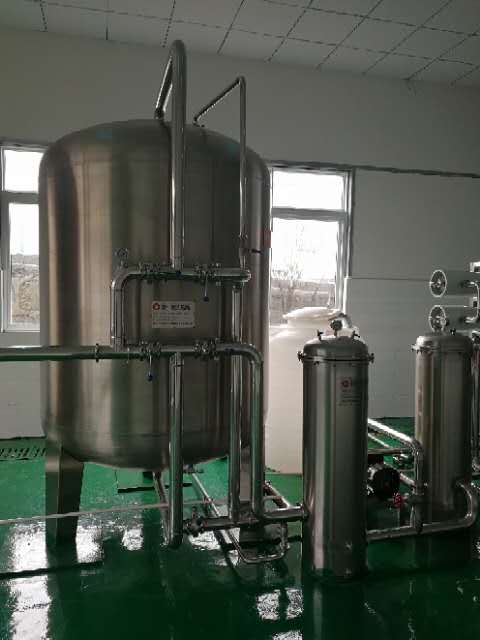
- Configuration Strategy:*
- Monitoring often shifts to UV Intensity (mJ/cm²) or strict Flow Rate verification to ensure contact time.
- Critical Control Point:*
- Since chemical residuals are minimized, the focus is on validating that the UV dose remains effective despite variations in water turbidity or transmittance.
- Process Alignment:*
- As seen in our Bottled Spring Water Filling Production Lines, the balance between purification efficiency (NF + UF) and mineral retention means monitoring must be highly sensitive to prevent over-treatment that alters the water's natural profile.
Step 2: Map Sensor Placement to Filling Line Hygiene Risks
The value of online monitoring is lost if the sensor is blind to the highest risk zones. Your configuration must reflect the physical layout of your filling equipment.
For Barrelled Water Lines (Recycled PC Barrels)
The highest contamination risk in barrelled water production comes from the container itself, not just the water.
- The Risk:*
- Recycled 18.9L barrels undergo rigorous washing and disinfection (internal wash + ozone + UV). If the disinfectant concentration in the final rinse water drops, microbial loads can spike immediately before filling.
- Monitoring Requirement:*
- Install online sensors on the final rinse water line and the filling water supply.
- Operational Boundary:*
- As noted in industry best practices for barrel wash-fill-seal integrated systems, the monitoring system must trigger an automatic line stop or diversion if disinfectant levels fall below the validated threshold during the high-speed cycling of the multiWorkstation washing and disinfection stages. This prevents under-disinfected barrels from entering the filling zone.
For Bottled Water Lines (New PET Bottles)
With new bottles, the risk shifts to the air environment and the filling valve hygiene.
- The Risk:*
- Post-treatment contamination via airborne microbes or dirty filling nozzles.
- Monitoring Requirement:*
- While water quality sensors are vital, configuration here often extends to Clean Air Purification Systems. Monitoring pressure differentials and particle counts in the ISO Class 8 (or Class 7) cleanroom is as critical as water monitoring.
- Integration:*
- Ensure your water disinfection monitor is synchronized with the line's PLC-based intelligent control system. If a deviation occurs, the system should automatically halt the integrated bottle washing-filling-capping unit to prevent producing off-spec batches.
Step 3: Selection Criteria for Monitoring Hardware
When evaluating vendors for monitoring components, avoid generic industrial sensors. Look for specifications that match beverage-grade requirements:
- Material Compatibility: Sensors must use food-grade materials (e.g., 316L stainless steel, PTFE) to withstand continuous contact with ozonated water without corrosion or leaching.
- Response Time: In high-speed lines (e.g., 200–2,500 bottles/hour), the sensor must detect changes in real-time to allow the PLC to react before a significant volume of non-compliant water is filled.
- Data Logging & Traceability: For regulatory compliance (such as SC certification in China or export standards), the system must log historical data. This supports documentation handover during audits, proving that every batch was produced within validated disinfection parameters.
- Maintenance Boundaries: Clarify the calibration frequency and sensor lifespan. A system that requires daily manual calibration creates an operational burden that often leads to neglected maintenance.
Implementation Boundaries and Risk Management
Configuring online monitoring is not a "set and forget" solution. Procurement teams must define clear boundaries:
- Calibration Responsibility:*
- Determine who is responsible for regular sensor calibration—your internal team or the equipment supplier. Lack of calibration renders even the most expensive sensor useless.
- False Positives vs. Safety:*
- Set alarm thresholds carefully. Too sensitive, and you get frequent line stops (false positives); too loose, and you risk safety. This balance requires initial trial runs with your specific water source.
- Integration Limits:*
- Ensure the monitoring system communicates seamlessly with your existing automatic packaging equipment and water treatment PLCs. Proprietary protocols can create data silos, preventing centralized oversight.
Conclusion and Next Steps
Effective online disinfection monitoring is the backbone of a stable, compliant beverage production line. It transforms abstract water quality standards into actionable, real-time data that protects your brand and consumers. Whether you are upgrading an existing line or commissioning a new custom water treatment and filling solution, the configuration must be tailored to your specific water source, product type, and facility layout.
Ready to optimize your disinfection monitoring strategy?
Share your current water quality report, target capacity, and packaging format with Chuxin Mingwei. Our engineering team will analyze your specific scenario and propose a tailored monitoring configuration that integrates seamlessly with your production line.
Request a Solution Consultation