
Diagnosing and Addressing Common Failures in Industrial Water Treatment Systems
Diagnosing and Addressing Common Failures in Industrial Water Treatment Systems
Operators managing bottled water production lines—especially those involving spring water or purified water—must be prepared to identify and respond to common system failures that can impact product quality, throughput, and regulatory compliance. This guide outlines frequent fault symptoms, their likely causes, and structured diagnostic steps tailored to real-world operational environments.
1. Reduced Flow Rate in Membrane-Based Filtration Units
Symptom:
Decreased output flow from filtration stages such as nanofiltration (NF) or reverse osmosis (RO), leading to lower-than-rated system capacity.
Likely Causes:
- Fouling of membranes due to particulates or organic buildup
- Clogged pre-filters or multimedia filtration layers
- Malfunctioning pumps or incorrect pressure regulation
Diagnostic Steps:
- Monitor differential pressure across filter housings; increased readings suggest blockages.
- Review recent raw water analysis reports for changes in turbidity or total organic carbon (TOC).
- Check pump performance logs for irregularities in discharge pressure or unusual noise.
Corrective Actions:
- Replace or clean pre-filters according to scheduled maintenance intervals.
- Initiate chemical cleaning of membranes if fouling is confirmed.
- Adjust pump settings within manufacturer-specified limits.
Note: For systems utilizing dual-membrane NF + UF configurations—such as those in Chuxin Mingwei’s bottled spring water production lines—regular backwashing and sanitization cycles are essential to maintain optimal performance and prevent irreversible membrane degradation.
2. Inaccurate Fill Volumes or Post-Fill Leakage
Symptom:
Fill volumes deviating beyond acceptable tolerances (e.g., >±2 mL) or visible leakage around bottle openings after capping.
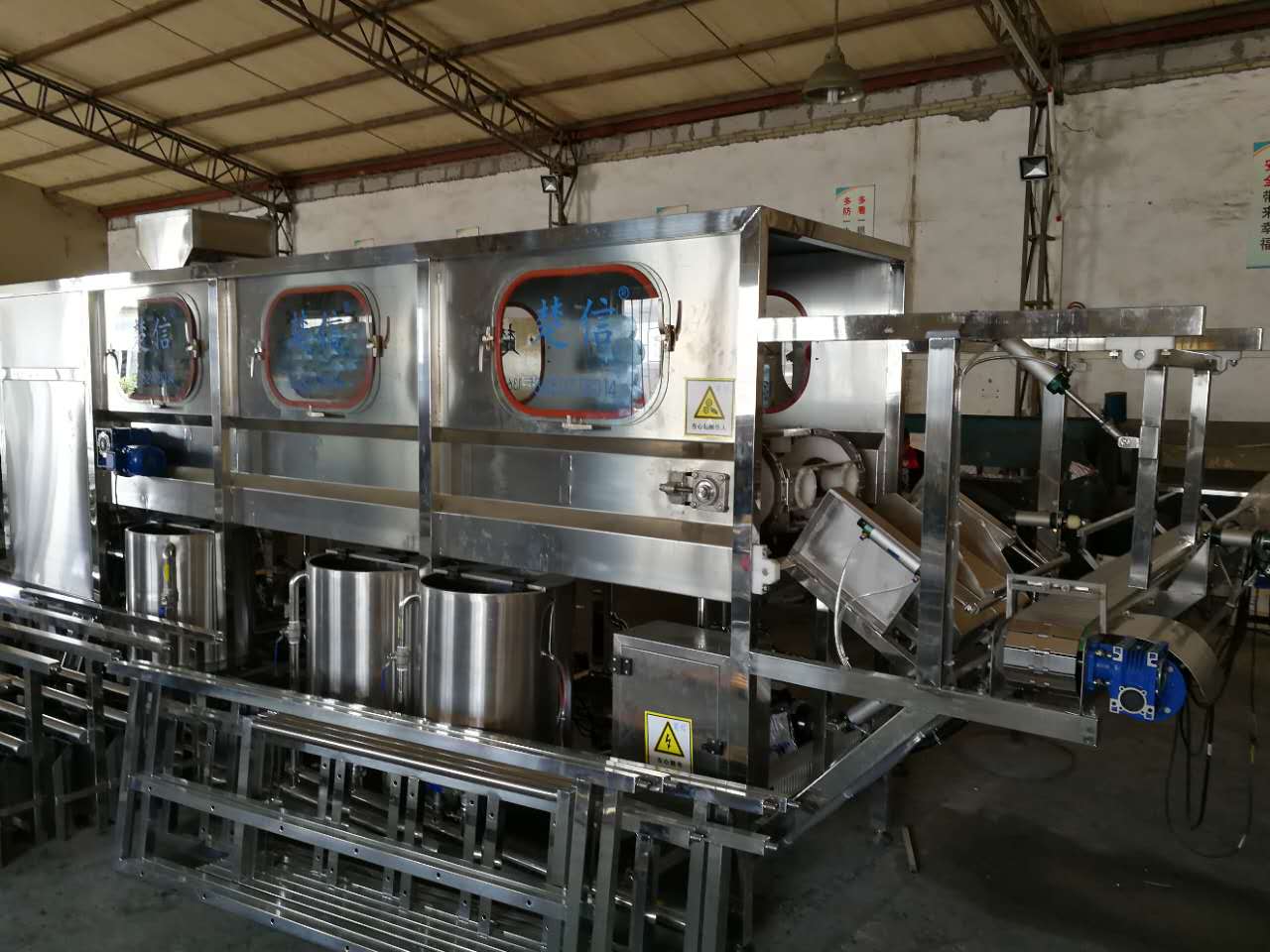
Likely Causes:
- Misalignment between filling nozzles and containers
- Worn seals, gaskets, or mechanical components
- Unstable feed water pressure affecting dosing accuracy
Diagnostic Steps:
- Visually inspect nozzle positioning relative to container openings.
- Examine sealing elements for signs of wear or damage.
- Monitor water supply pressure fluctuations during peak operation periods.
Corrective Actions:
- Realign filling heads using OEM-provided calibration tools.
- Replace worn parts proactively based on operational hours.
- Stabilize inlet pressure using buffer tanks or variable frequency drives (VFDs).
Tip: Automated systems rated at 200–2,500 bottles/hour, like Chuxin Mingwei’s purified water lines, often feature PLC-controlled interfaces that record error codes linked to filling inconsistencies—consult these logs before performing physical inspections.
3. Elevated Particle Counts in Cleanroom Areas
Symptom:
Increased airborne particles or microbial presence detected in cleanroom zones adjacent to bottling operations.
Likely Causes:
- Degraded HEPA filters or improper installation
- Leaks in ductwork or imbalanced airflow distribution
- Loss of positive room pressurization
Diagnostic Steps:
- Perform leak tests on HEPA filter frames and mounting structures.
- Confirm airflow rates align with design specifications (typically 1,500–20,000 m³/h for industrial systems).
- Measure differential pressure between cleanroom and surrounding areas.
Corrective Actions:
- Replace HEPA filters in accordance with established maintenance schedules.
- Repair ductwork breaches and rebalance fan speeds as needed.
- Recalibrate HVAC controls to sustain required air cleanliness levels.
Best Practice: Routine verification of filtration efficiency and airflow uniformity helps ensure continued compliance with environmental standards applicable to bottled water facilities.
Implementation Boundaries and Escalation Guidelines
While many issues can be resolved through routine diagnostics and component-level interventions, some situations require escalation:
- Persistent decline in membrane performance despite repeated cleaning may indicate permanent damage requiring replacement.
- Recurring filling inaccuracies after recalibration could point to deeper mechanical misalignment needing factory service.
- Significant deviations in cleanroom classification may warrant third-party validation or revalidation of HVAC integration.
Always refer to original equipment documentation and contractual service terms for defined escalation pathways. When uncertain, contact your system supplier or authorized technical support provider for further assistance.
Conclusion
Effective troubleshooting starts with recognizing both visible symptoms and underlying causes tied to specific subsystems within your water treatment and filling setup. By applying structured diagnostic approaches grounded in real-world operating parameters—such as those found in Chuxin Mingwei’s engineered solutions—you can minimize unplanned downtime, extend asset lifespan, and maintain consistent production outcomes.
For more detailed guidance on maintaining system integrity or evaluating upgrade options, consult our team directly or explore related resources on ultrafiltration process flows.