
What Components Are Included in Drinking Water Production Equipment? Complete Equipment List & Function Overview
What Components Are Included in Drinking Water Production Equipment?
For procurement managers and operations leads planning a new water bottling facility or upgrading an existing line, understanding the complete drinking water production equipment components list is the first critical step. A functional production line is not a single machine but an integrated system where water treatment, container handling, filling, and packaging must work in sync.
At Chuxin Mingwei, we engineer these systems based on your specific source water quality, target capacity, and packaging format. Below is a detailed breakdown of the essential components required for standard bottled and barrelled water production lines, categorized by their function in the process chain.
1. Raw Water Treatment & Purification Systems
The foundation of any drinking water line is the water treatment system. The specific components here depend entirely on your raw water analysis (e.g., turbidity, hardness, TDS) and the type of water you intend to produce (Purified, Mineral, or Spring).
Pre-Treatment Units
Before water reaches the core purification membranes, it must be conditioned to prevent fouling:
- Multi-Media Filters:*
- Typically filled with quartz sand to remove suspended solids, sediment, and reduce turbidity.
- Activated Carbon Filters:*
- Essential for adsorbing residual chlorine, organic compounds, and odors that could damage downstream RO membranes or affect taste.
- Water Softeners:*
- Use ion exchange resin to reduce calcium and magnesium hardness, preventing scale formation on high-pressure pumps and membranes.
- Security Filters:*
- Fine cartridge filters (usually 5μm) acting as the final barrier before the high-pressure pump.
Core Purification Technologies
- Reverse Osmosis (RO) Systems:*
- The heart of purified water production. A standard configuration includes high-pressure pumps, membrane vessels, and control panels. For higher purity requirements, a dual-stage RO setup is often employed.
- Ultrafiltration (UF) Systems:*
- Preferred for mineral or spring water projects where retaining beneficial minerals is crucial while removing bacteria and colloids.
- EDI & Mixed Bed Polishers:*
- Used for ultra-pure water applications in electronics or pharmaceuticals, providing continuous deionization without chemical regeneration.
Disinfection & Storage
Post-treatment stability is ensured through:
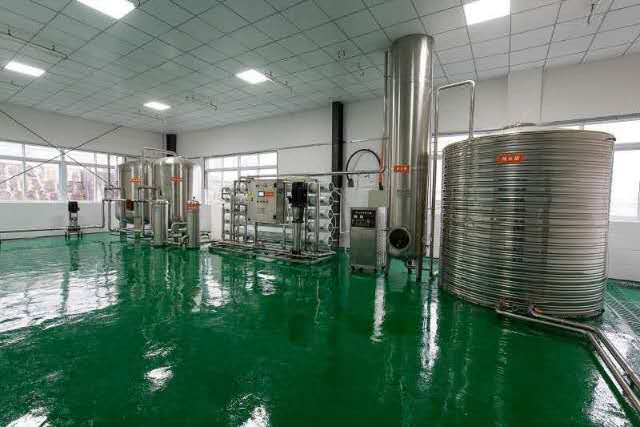
- Ozone Generators & Mixing Towers:*
- For primary disinfection and maintaining residual ozone in the storage tank.
- UV Sterilizers:*
- Typically 254nm wavelength units for final point-of-fill disinfection.
- Sanitary Storage Tanks:*
- Stainless steel vessels with breathing filters and level controls.
2. Bottled Water Filling Line Components
For PET bottled water (ranging from 350mL to 10L), the equipment list focuses on high-speed automation and hygiene.
Blowing & Conveying (Optional/Integrated)
- Blow Molding Machines:*
- Convert PET preforms into bottles using high-pressure air and molds. This requires supporting air compressors and chillers.
- Air Conveyors:*
- Gentle transport systems that move empty bottles from the blower to the filler without scratching.
The Filling Block
The central unit is often a 3-in-1 Monoblock integrating:
- Rinsing Station:*
- Uses purified water or air to clean the interior of empty bottles.
- Filling Station:*
- Utilizes gravity or isobaric filling valves to ensure precise volume control (accuracy typically ≤ ±2 mL).
- Capping Station:*
- Automatically sorts, disinfects, and applies caps with torque control.
Post-Filling Processes
- Labeling Machines:*
- Either sleeve labelers (shrink fit) or adhesive labelers, depending on your brand design.
- Coding & Dating:*
- Inkjet or laser coders for printing batch numbers and expiration dates.
- Packaging Units:*
- Shrink wrap machines for multi-packs or carton boxers for final distribution.
3. Barrelled Water Filling Line Components
Barrelled water (15L–22L) production involves unique challenges due to the reuse of containers. The equipment list emphasizes rigorous cleaning and sterilization.
Container Handling & Cleaning
- Automatic Depalletizers & Unscramblers:*
- Orient and feed dirty barrels onto the line.
- Exterior Brushing Machines:*
- Remove external dirt and labels.
- Interior/Exterior Washing Stations:*
- Multi-stage systems using high-pressure jets, caustic soda, and acid rinses. A typical line includes multi-station rinse-disinfect-final rinse cycles to ensure microbial safety.
- Cap Washers & Sterilizers:*
- Dedicated units to clean and sanitize bucket caps before application.
Filling & Sealing
- Barrel Filling Machines:*
- Can be linear or rotary. Key features include automatic lid placement and crimping mechanisms.
- Leak Detection & Visual Inspection:*
- Automated stations to check water levels, cap alignment, and foreign particles.
Secondary Packaging
- Bagging Machines:*
- Automatically apply PE protective bags to filled barrels.
- Conveying & Palletizing:*
- End-of-line systems to stack barrels for warehouse storage.
4. Clean Air & Environmental Support
A often overlooked but critical component list includes the facility's air quality systems, especially for GMP or SC-compliant plants.
- HVAC & Filtration:*
- Initial, medium, and HEPA (H13) filters to maintain ISO Class 8 (100,000) or better cleanroom standards in filling zones.
- Air Showers & Pass Boxes:*
- Control personnel and material entry into clean areas.
- Pressure Control Systems:*
- Maintain positive pressure in filling rooms to prevent external contamination.
Implementation Prerequisites & Selection Criteria
Selecting the right components is not about buying the most expensive items, but matching them to your operational reality.
- Source Water Analysis: You cannot finalize the water treatment list without a full water quality report. High hardness requires robust softening; high silica may need specific antiscalants.
- Capacity Planning: Define your output in bottles/barrels per hour (BPH). A 2,000 BPH line requires different conveyor dynamics and buffer zones than a 500 BPH line.
- Container Specifications: The filling valves and capping heads must match your specific bottle neck finish (e.g., PCO 1881, 30/25) or barrel mouth diameter.
- Facility Layout: Consider ceiling height for air conveyors, floor drainage for washing zones, and power supply stability for RO high-pressure pumps.
Conclusion
A complete drinking water production equipment components list spans from raw water intake to final palletizing. Success lies in the integration of these subsystems—ensuring the water treatment output matches the filler's hygiene requirements and the packaging speed matches the filler's output.
At Chuxin Mingwei, we do not sell isolated machines. We provide engineered solutions where every component, from the multi-media filter to the final shrink wrapper, is selected based on your specific water source, capacity goals, and facility constraints.
Ready to define your equipment list? Share your water quality report and production targets with our engineering team. We will propose a tailored configuration that balances performance, compliance, and long-term maintainability.
Request a Solution Consultation