
How to choose greywater recycling system cost : selection, rollout and support checklist
Defining the Scope: Why "Cost Per Set" Varies
When procurement managers ask about the greywater recycling system cost per set, they are often looking for a baseline figure. However, in industrial engineering, a "set" is not a standardized off-the-shelf product like a consumer appliance. The final investment is determined by the gap between your specific source water characteristics (e.g., laundry effluent, rinse water, cooling tower blowdown) and the strict quality standards required for its intended reuse (e.g., toilet flushing, landscape irrigation, or process cooling).
At Chuxin Mingwei, we approach every project as a non-standard, site-specific engineering challenge. Since 2008, our team has designed systems where the core value lies not just in the hardware, but in the precise matching of treatment processes to operational realities. A system designed for light commercial restroom reuse will have a fundamentally different cost structure than one engineered for high-purity industrial process water.
Key Cost Drivers in System Configuration
To understand the budget landscape, decision-makers must evaluate four primary variables that directly influence the price per set.
1. Source Water Quality and Pre-Treatment Needs
The complexity of the pre-treatment stage is often the largest variable. If the incoming greywater contains high levels of suspended solids, oils, or organic load, the system requires robust primary separation units.
- Filtration Requirements:*
- Systems may need multi-media filters to reduce turbidity or activated carbon units to adsorb odors and residual chemicals. As noted in our technical guidelines, activated carbon filters are critical for removing chlorine and organics but require regular backwashing and replacement, impacting both initial CAPEX and long-term OPEX.
- Membrane Selection:*
- For higher quality reuse, membrane technologies like Ultrafiltration (UF) or Reverse Osmosis (RO) are employed. A dual-membrane NF + UF process, similar to those we configure for spring water lines to balance purification with mineral retention, might be adapted for greywater to ensure pathogen removal while managing fouling risks. The choice between single-stage and double-stage RO significantly alters the equipment count and pump specifications.
2. Target Water Quality and Reuse Application
The intended use dictates the treatment intensity.
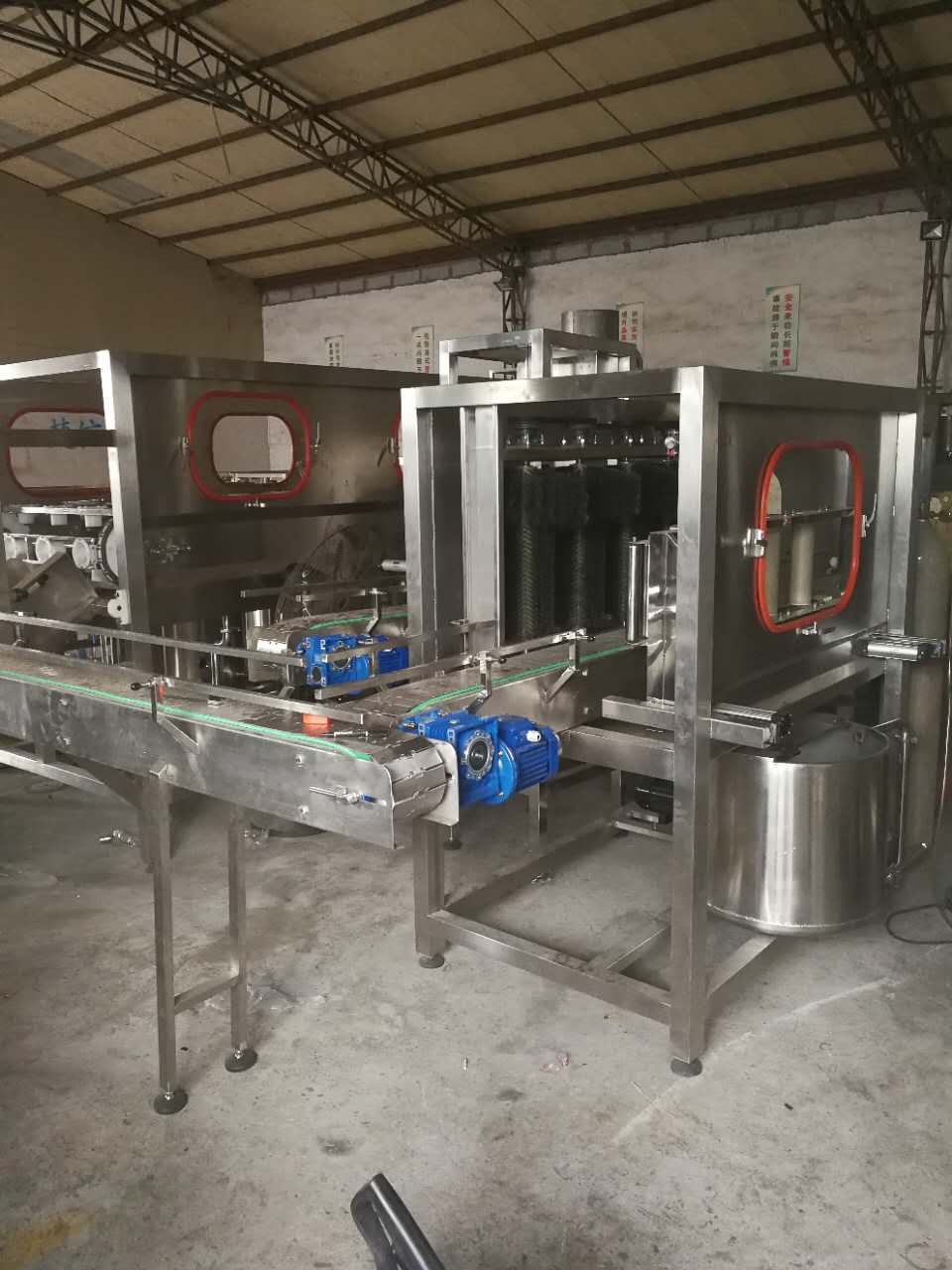
- Non-Potable Reuse:*
- Applications like toilet flushing or floor cleaning generally require disinfection and particulate removal. This often involves UV sterilization or ozone dosing. Our experience with ozone generators and UV (254 nm) dual sterilization in bottled water lines demonstrates how combining methods ensures microbial safety without excessive chemical residuals.
- Process Water Reuse:*
- If the recycled water is for cooling towers or specific manufacturing rinses, parameters like hardness, conductivity, and silica become critical. This may necessitate softening units or advanced demineralization, increasing the system footprint and cost.
3. Capacity and Automation Level
The hourly flow rate (m³/h) determines the size of tanks, pumps, and membrane arrays.
- Scalability:*
- A modular architecture allows facilities to start with a base capacity and add units later. However, the initial control system must be sized for future expansion.
- Automation:*
- Fully automated systems with PLC-based intelligent control systems and HMI interfaces reduce labor costs and improve consistency. These systems monitor pressure differentials, flow rates, and water quality in real-time, automatically triggering backwash cycles or alerting operators to maintenance needs. While this increases the upfront equipment cost, it minimizes the risk of human error and system downtime.
4. Integration and Civil Works
The "cost per set" often excludes the significant expenses of site integration.
- Piping and Layout:*
- Retrofitting an existing facility requires careful planning of airflow, duct routing, and pressure zoning if the water treatment area interacts with cleanroom environments.
- Storage and Distribution:*
- Adequate finished water tanks and circulation loops are essential to maintain water quality between treatment and point-of-use. Poorly designed storage can lead to secondary contamination, negating the treatment investment.
Implementation Boundaries and Risk Factors
Budget planning must account for more than just the equipment list. Several boundary conditions frequently impact project viability:
- Space Constraints:*
- Industrial sites often have limited floor space. Compact, skid-mounted designs are available but may carry a premium for custom engineering.
- Regulatory Compliance:*
- Local environmental regulations regarding discharge limits for the concentrate (brine) stream can necessitate additional zero-liquid-discharge (ZLD) components, drastically changing the cost profile.
- Maintenance Access:*
- Systems must be designed for easy access to filter elements, membrane vessels, and dosing pumps. Ignoring maintenance accessibility during the design phase leads to higher long-term operational costs and potential compliance failures.
Steps to Accurate Budgeting
To move from a rough estimate to a reliable budget:
- Water Analysis: Conduct a comprehensive test of the source greywater. Parameters like COD, BOD, TSS, and oil content are non-negotiable for accurate sizing.
- Define Reuse Standards: Clearly specify the target quality metrics based on the end-use application.
- Site Survey: Evaluate available space, utility connections (power, drainage), and integration points with existing infrastructure.
- Process Simulation: Use the data to model the treatment train. This confirms whether a simple filtration-disinfection line suffices or if a full multi-media + activated carbon + membrane sequence is required.
Conclusion
The greywater recycling system cost per set is a function of technical specificity. There is no universal price because no two water sources or reuse goals are identical. Effective budgeting requires shifting focus from "price per unit" to "cost per unit of treated water" over the system's lifecycle. By prioritizing stability, applicability, and maintainability in the design phase, facilities can avoid the hidden costs of under-performing or over-engineered solutions.
For projects in the beverage, food, pharmaceutical, or general industrial sectors, a tailored engineering approach ensures that the investment delivers measurable returns in water savings and compliance security.
Beyond the core treatment train, a complete cost-per-set evaluation must include the disinfection, storage, and distribution modules, such as ozone generators, UV sterilizers, sterile tanks, and CIP cleaning systems, alongside variable automation levels for bottling or bucket filling lines if applicable. Furthermore, accurate budget planning requires validating local regulations regarding environmental compliance, food safety, and operational permits, as these factors significantly influence the final configuration and total investment.