
How to Select Sterilization and Cooling Equipment for Hot-Fill Juice Lines: A Technical Selection Guide
How to Select Sterilization and Cooling Equipment for Hot-Fill Juice Lines
For procurement managers and operations leads in the beverage sector, the sterilization and cooling sections of a hot-fill production line are the most critical determinants of product shelf-life and packaging integrity. Unlike standard water filling, hot-fill processes for juice, tea, and sports drinks involve high-temperature liquids (typically 85°C–92°C) that demand specific equipment capabilities to ensure microbial safety without compromising bottle structure.
Selecting these systems is not about choosing generic components; it requires matching equipment specifications to your specific product formulation, packaging material, and facility constraints.
1. Define Product Parameters Before Equipment Selection
The first step in selecting sterilization and cooling equipment is a rigorous definition of the product profile. As noted in industry technical standards, juice, tea beverages, and sports drinks are the primary candidates for hot-filling, but products containing particles, dairy, or high-viscosity materials require separate validation and cannot automatically be processed on standard lines.
Your equipment supplier must evaluate:
- Product Viscosity and Composition:*
- High-pulp juices or thick tea blends affect flow rates through sterilization plates and cooling tunnels.
- Target Filling Temperature:*
- Precise control is required to ensure sterilization efficacy while preventing bottle deformation.
- Bottle Heat Resistance:*
- The packaging must withstand the thermal shock of hot liquid and the subsequent cooling curve.
2. Sterilization System Selection: Temperature and Hold Time
The core of the hot-fill process is the sterilization unit, which typically integrates with the blending and deaeration systems. The selection focus here is on thermal precision and material compatibility.
Critical Selection Criteria
- Temperature Control Accuracy:*
- The system must maintain the sterilization temperature within a narrow band (±0.5°C) to guarantee microbial reduction without cooking the flavor profile.
- Hold Time Configuration:*
- Equipment must provide sufficient residence time at peak temperature. This is often achieved through specific pipe lengths or holding tubes designed into the skid.
- Material Standards:*
- All product-contact parts must be constructed from 304 or 316 stainless steel to resist corrosion from acidic fruit juices and cleaning agents.
- Integration with CIP:*
- The sterilization skid must support Clean-In-Place (CIP) cycles to manage residue buildup, a common issue in juice processing.
Procurement Note: Avoid suppliers who propose standard water filling valves for hot-fill applications. Hot-fill requires specialized valve materials and sealing technologies to handle thermal expansion and prevent leakage.
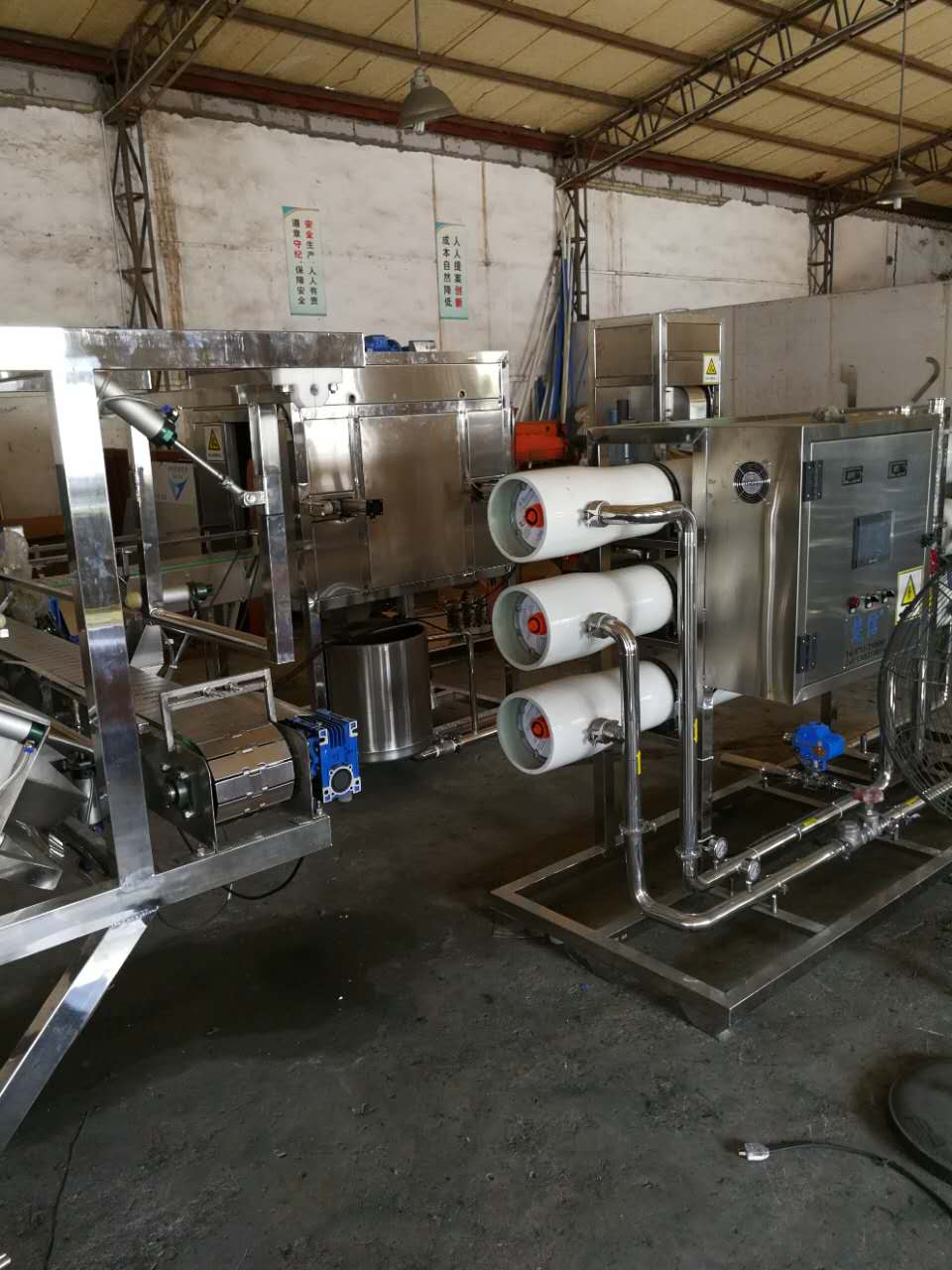
3. Cooling System Design: Protecting Bottle Integrity
After filling and capping, the product must be cooled rapidly but controllably to stop the cooking process and stabilize the container. Poor cooling design is a leading cause of bottle distortion and label wrinkling.
The Cooling Curve Strategy
Effective cooling is a multi-stage process:
- Inversion/Spray Cooling: Immediately after capping, bottles are often inverted or sprayed with hot water to sterilize the cap interior, then gradually cooled.
- Step-Down Temperature Zones: A well-engineered cooling tunnel uses multiple zones with decreasing water temperatures. Sudden exposure to cold water can cause thermal shock, leading to paneling or cracking in PET bottles.
- Air Knife Drying: Final drying is essential before labeling to ensure adhesive bonding.
Interface Specifications to Verify
When evaluating cooling tunnels, request data on:
- Water Flow and Pressure:*
- Must be adjustable to match different bottle sizes and wall thicknesses.
- Zone Segmentation:*
- Independent control of each cooling zone allows for fine-tuning based on ambient factory conditions.
- Drainage and Filtration:*
- Recirculated cooling water requires robust filtration to prevent particulate contamination.
4. Risk Boundaries and Common Pitfalls
Procurement decisions often fail due to overlooked interface constraints. Be aware of the following boundaries:
- Bottle Compatibility:*
- Not all PET preforms are suitable for hot-fill. Crystallized neck finishes and specific wall thicknesses are mandatory. If your current bottle supplier cannot guarantee heat resistance, equipment selection alone cannot solve the problem.
- Capacity Mismatch:*
- The sterilization and cooling capacity must exceed the filler's rated speed to account for start-up, shutdown, and potential bottlenecks. A line rated for 2,000 bottles/hour may require a sterilization system capable of 2,400 liters/hour to maintain stable pressure.
- Utility Requirements:*
- Hot-fill lines consume significantly more steam and chilled water than ambient lines. Ensure your facility's boiler and chiller capacities align with the equipment's peak demand before signing a contract.
5. Implementation and Supplier Evaluation
When engaging with a manufacturer like Chuxin Mingwei, focus the discussion on engineering execution rather than just catalog specifications. Since 2008, our approach to water treatment and filling equipment has prioritized site-specific adaptation.
Evaluation Checklist
- Request a Process Flow Diagram (PFD): Verify that the diagram includes all critical control points for temperature and pressure.
- Validate Material Certifications: Ensure all steel and sealing components meet food-grade standards (e.g., GB4806.9-2016 for contact materials).
- Review After-Sales Support: Hot-fill systems require regular maintenance of seals and heating elements. Confirm the supplier offers operator training and long-term spare parts availability.
Conclusion
Selecting sterilization and cooling equipment for hot-fill juice lines is a balance of thermal dynamics, material science, and operational practicality. Success depends on defining your product's specific viscosity and temperature needs, choosing systems with precise control zones, and validating the compatibility of your packaging.
By focusing on these technical criteria and engaging with a supplier who understands the nuances of beverage production lines, you can mitigate the risks of bottle failure and ensure consistent product quality.
Next Steps
Ready to evaluate your project requirements? Share your product formulation, target capacity, and bottle specifications. Our engineering team will provide a tailored equipment configuration and process analysis.
Request a Solution Consultation