
Industrial Clean Air Solutions: Cost and Value Decisions for Water Filling Facilities
Industrial Clean Air Solutions: Cost and Value Decisions for Water Filling Facilities
For procurement managers and operations leads in the beverage, food, and pharmaceutical sectors, the true value of Industrial Clean Air Solutions lies not in the lowest upfront price, but in the precision of site-specific engineering that ensures long-term stability and regulatory compliance. A system that fails to match your facility's layout or production capacity can lead to excessive energy consumption, failed audits, and compromised product safety. Therefore, the primary conclusion for any capital investment in clean air technology is to prioritize customized airflow design and verified filtration efficiency over generic, off-the-shelf configurations.
The Hidden Costs of Generic Air Systems
In the context of water bottling and barrelled water filling, cleanrooms are critical for preventing secondary contamination after purification. A common misconception is that any HEPA filtration system will suffice. However, without precise engineering, facilities often face hidden operational costs.
1. Compliance and Certification Risks
The core value of a professional clean air system is its ability to meet specific standards reliably. Chuxin Mingwei's solutions are engineered to meet ISO 14644-1 Class 8 (100,000) standards, with options to upgrade to Class 7 (10,000) depending on the product sensitivity.
- The Risk: Installing a system without verified pressure zoning or proper duct routing can result in airflow turbulence, allowing unfiltered air to enter critical zones. This leads to failed microbial tests and costly production halts.
- The Value: A site-specific design calculates exact airflow ranges (typically 1,500 – 20,000 m³/h) based on the room volume and required air changes per hour. This ensures that the H13 HEPA filtration efficiency is utilized effectively, maintaining the sterile environment required for high-quality bottled spring water or purified water production.
2. Energy Efficiency and Operational Expenditure (OpEx)
Clean air systems are significant energy consumers. The cost of electricity over a 5-10 year lifespan often exceeds the initial equipment purchase price.
- Inefficient Design: Oversized fans or poorly sealed ductwork force the system to work harder, driving up utility bills.
- Optimized Engineering: By integrating PLC + HMI control systems with real-time diagnostics, operators can monitor pressure differentials and filter status. This allows for predictive maintenance rather than reactive repairs, optimizing fan speed and reducing energy waste. The ability to interface with remote diagnostics further reduces downtime and travel costs for technical support.
Critical Selection Criteria for Cost-Effective Implementation
When evaluating vendors for Industrial Clean Air Solutions, decision-makers should focus on three technical pillars that directly influence both CAPEX and OPEX.
A. Site-Specific Airflow and Pressure Zoning
Every facility has unique constraints regarding ceiling height, column placement, and adjacent production areas.
- Requirement: The solution must include a detailed analysis of airflow, duct routing, and pressure zoning.
- Impact: Proper positive pressure gradients prevent contaminants from flowing from less clean areas (like packaging) into critical filling zones. Ignoring this leads to cross-contamination risks that no amount of post-production testing can fix.
B. Filtration Integrity and Maintenance Boundaries
The heart of the system is the filtration stage.
- Fact: Utilizing H13 HEPA filters is standard for ISO Class 8 compliance. However, the housing design and sealing mechanism are equally important.
- Maintenance Reality: Filters have a finite lifespan. A well-designed system allows for easy access and replacement without dismantling major ductwork. Systems that are difficult to service increase labor costs and the risk of seal breaches during maintenance.
C. Integration with Water Treatment and Filling Lines
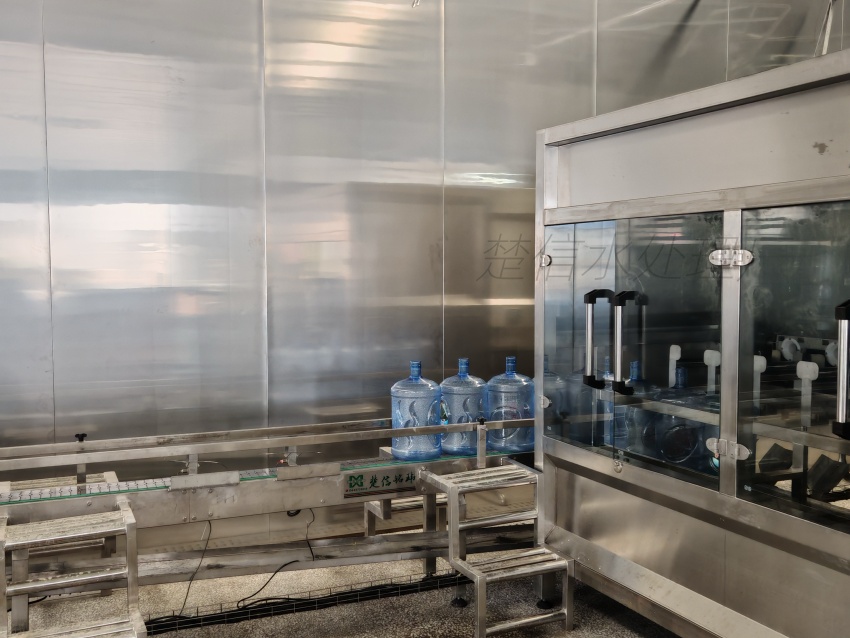
Clean air does not operate in a vacuum. It must synchronize with your bottled spring water production line or purified water filling equipment.
- Scenario: If your filling line operates at 1,800 bottles/hour, the cleanroom's air exchange rate must handle the heat load and particle generation from that specific throughput.
- Coordination: The clean air system should be part of an end-to-end engineering service that includes design, manufacturing, installation, and commissioning. This ensures that the air system's controls communicate effectively with the filling line's PLC, creating a unified operational environment.
Implementation Boundaries and Realistic Expectations
It is crucial to understand what a clean air system can and cannot do to avoid budget overruns.
- Scope of Supply: A robust solution covers the design and installation of the purification unit, ducting, and control systems. It does not typically include civil works like building walls unless specified as a turnkey cleanroom project.
- Performance Limits: While systems are designed for ISO Class 8, achieving Class 7 requires stricter controls on personnel movement, gowning procedures, and material transfer. The equipment provides the environment; operational protocols ensure the standard is maintained.
- Customization Necessity: Standard units rarely fit perfectly. The airflow range of 1,500 – 20,000 m³/h indicates the need for project-specific selection. Attempting to force a standard unit into a non-standard space often results in inadequate coverage or excessive noise and vibration.
Strategic Recommendation for Procurement
For enterprises in Huizhou and beyond looking to upgrade or install new facilities, the most cost-effective path is to engage with a manufacturer that offers end-to-end engineering services. This approach ensures that the Industrial Clean Air Solutions are not just bought as hardware, but delivered as a validated performance guarantee.
- Audit First: Begin with a detailed assessment of your source water quality, target production capacity, and facility layout.
- Define Standards: Clearly specify whether ISO Class 8 or Class 7 is required based on your product type (e.g., pharmaceutical vs. standard beverage).
- Verify Integration: Ensure the air system provider coordinates with your water treatment and filling line suppliers to align control systems and physical layouts.
By focusing on these engineering realities rather than just the price tag, companies can secure a system that delivers stable production, minimizes regulatory risk, and optimizes long-term operational costs.
Next Steps
If you are planning a new beverage facility or upgrading your current cleanroom capabilities, precise engineering is the key to balancing cost and value. Contact Chuxin Mingwei to discuss your specific airflow requirements and cleanroom compliance goals. Our team provides custom design, manufacturing, and sustained post-installation support tailored to your production scenario.
Beyond air filtration, the total cost of ownership for water filling facilities is heavily influenced by the precision of the production line configuration and water treatment process. Selecting the correct filling valve type and sanitation controls based on whether the product is still, hot-filled, or carbonated is critical to preventing secondary contamination and ensuring level consistency. Furthermore, water treatment strategies, such as choosing between ultrafiltration or reverse osmosis, must be tailored to specific source water reports and product positioning to avoid unnecessary energy expenditure or the destruction of natural water characteristics. A comprehensive material balance calculation that accounts for bottle rinsing, CIP cleaning, and process losses is essential to accurately size raw and finished water tanks, ensuring operational stability that generic system estimates often overlook.