How to Assess Whether an Existing Barrel Washing System Can Be Upgraded for Higher Hygiene Standards Without Full Replac
How to Assess Whether an Existing Barrel Washing System Can Be Upgraded for Higher Hygiene Standards Without Full Replacement
For procurement managers, operations leads, and technical project teams in beverage, food, pharmaceutical, and industrial sectors, upgrading an existing barrel washing system without full replacement is often a strategic alternative to achieve higher hygiene standards. However, such upgrades must be grounded in real operational conditions, especially when the system operates within a clean air environment.
This article outlines a diagnostic approach based on verified process parameters from Chuxin Mingwei’s industrial water treatment and filling systems, focusing on contamination risks, cleaning protocol alignment, and integration with clean air purification systems.
Symptom: Increased Contamination Risk in Recycled Barrel Processing
An increase in microbial detection or visible residue after washing typically indicates that the current system may no longer meet hygiene demands—particularly when handling recycled barrels. Unlike new barrels, which require minimal pre-treatment, recycled containers have endured transport, storage, and multiple reuse cycles, leading to higher levels of external dirt, residual liquid, and internal biofilm accumulation.
According to internal technical guidance, recycled barrels demand a complete cleaning sequence: cap removal, external brushing, multi-stage internal washing, chemical disinfection, and final rinse. Each step must be validated against product-specific hygiene targets and supported by consistent process control.
Cause: Mismatched Cleaning Protocol or System Limitations
Hygiene failure is not always due to equipment age but often stems from protocol misalignment or inadequate system design. Common issues include:
- A single-pass rinsing configuration unable to remove embedded contaminants from reused barrels.
- Insufficient dwell time in chemical wash stages, reducing disinfection effectiveness.
- Poorly controlled rinse water quality—such as high turbidity or residual chlorine—that reintroduces contaminants.
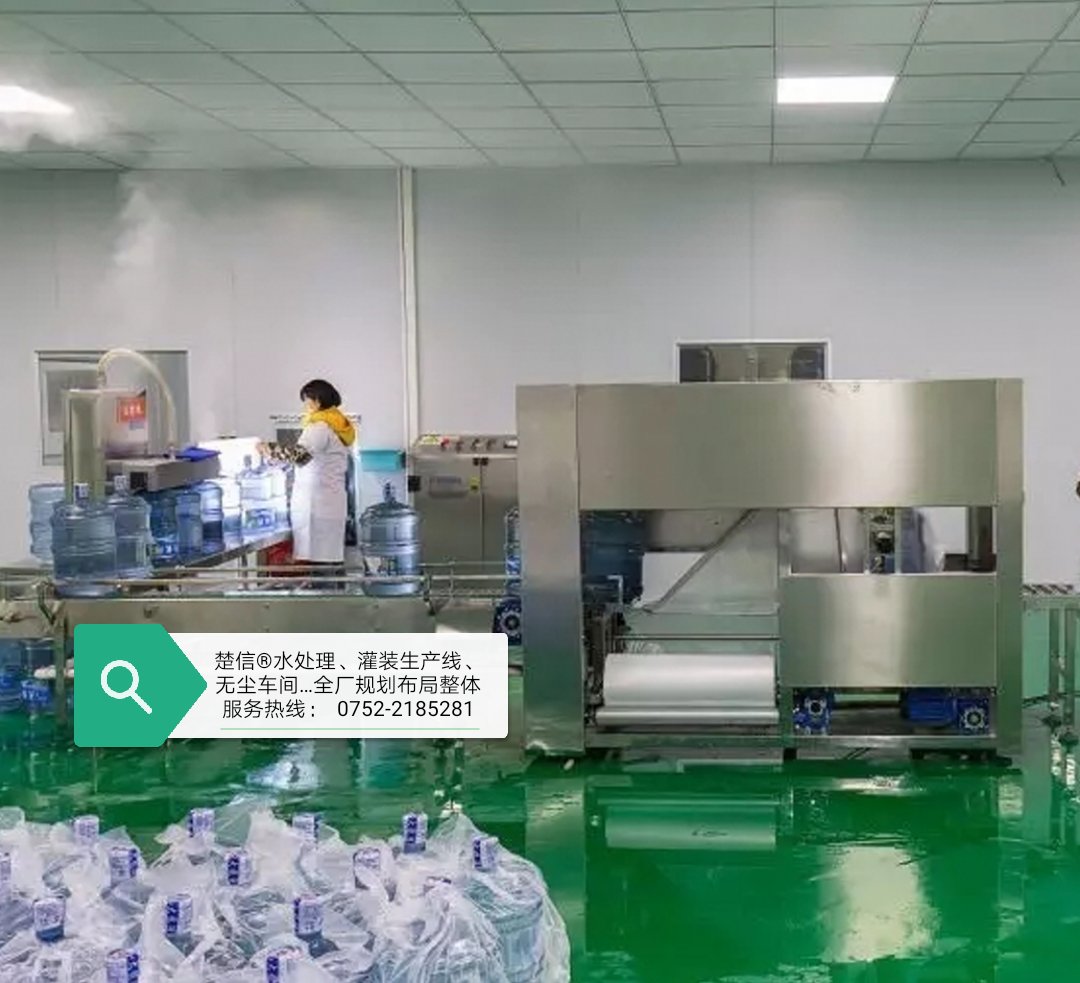
Chuxin Mingwei’s fully automatic bottled spring water filling production line integrates bottle washing, filling, and capping into a single unit with dual-membrane NF + UF purification. While optimized for source water stability and mineral retention, its upstream barrel washing stage must still meet stringent hygiene thresholds when processing recycled containers.
Checks: Diagnostic Criteria Before Any Upgrade Decision
Before deciding on a partial upgrade or full replacement, conduct these evaluations:
- Confirm Barrel Type and Reuse Cycle: Is the system handling new, one-time-use barrels or recycled ones? If recycled, verify if all required steps are present: cap removal, external scrubbing, internal cleaning, disinfection, and final rinse.
- Validate Cleaning Parameters: Ensure contact time, temperature, and chemical concentration fall within validated ranges. For example, ozone-based disinfection at 254 nm UV requires precise exposure duration and flow dynamics.
- Review Clean Air Integration: The Industrial Clean Air Solutions provided by Chuxin Mingwei are designed to meet ISO Class 8 (100,000) standards. If the barrel washing area lacks controlled airflow or pressure differentials, even a well-cleaned barrel can re-contaminate during transfer. Confirm that the cleanroom includes proper pressure zoning and H13 HEPA filtration.
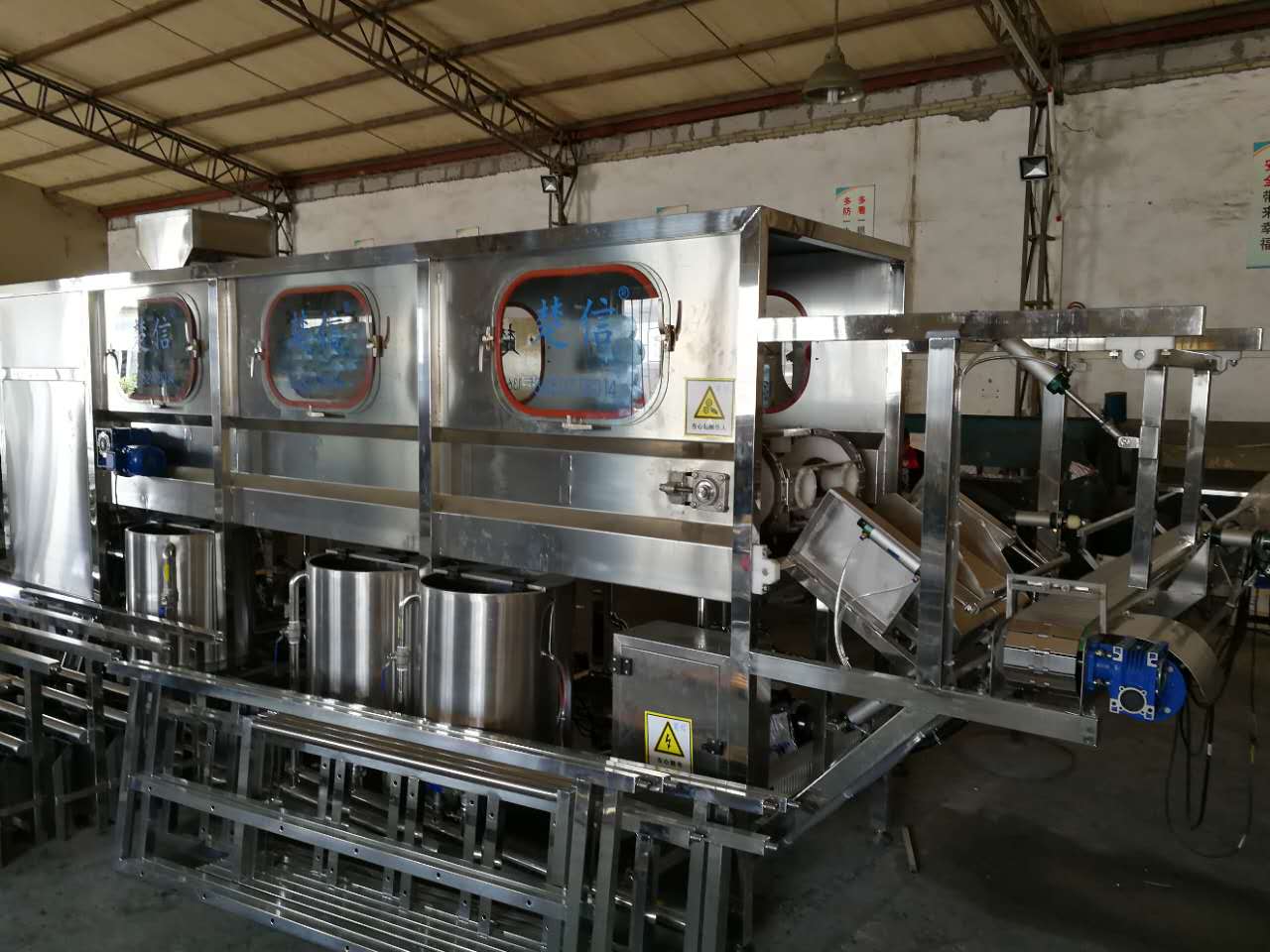
- Assess System Modularity: Can the existing washing station be retrofitted with additional spray heads, extended wash chambers, or upgraded control logic (PLC-based)? Some components may support enhancement; others may be structurally limited and require replacement.
Resolution Path: Upgrade vs. Replace — A Boundary-Based Approach
Based on the above checks, determine the next step:
- Upgrade Option: If the core structure remains sound and only specific stages (e.g., inner wash or disinfection) fall short, targeted upgrades—such as adding a second-stage internal brush or integrating a CIP (Clean-in-Place) loop—are viable. These should be evaluated within the context of the bottled purified water filling production line, which supports dual-stage RO and ozone/UV sterilization.
- Replace Option: If the system lacks modularity, has outdated control architecture, or cannot maintain consistent rinse water quality, a full replacement may be necessary. In such cases, consider integrating the new system with a custom-engineered clean air purification system
- to ensure long-term compliance.
Critical Boundary Note: No upgrade can compensate for fundamental flaws in airflow management or lack of cleaning validation. Always validate performance through pilot runs using representative recycled barrels before scaling.
Escalation: When to Engage Engineering Support
Engage Chuxin Mingwei’s technical team for a site-specific assessment if any of the following apply:
- The current system was not designed for recycled barrel processing.
- There is no documented cleaning validation protocol.
- The facility plans to expand output capacity beyond 2,500 bottles/hour (based on 18.9 L bottles).
- The cleanroom environment does not meet ISO Class 8 standards.
Chuxin Mingwei offers end-to-end engineering services—including design, manufacturing, installation, commissioning, operator training, and after-sales support—ensuring that any upgrade or replacement aligns with actual source water quality, target water standards, packaging format, and facility constraints.
Conclusion: Prioritize Verification Over Assumption
Upgrading a barrel washing system without full replacement is possible—but only when supported by verified process parameters, clean air integration, and a clear understanding of contamination risks. Avoid assumptions about automation or improved cleaning; focus instead on measurable criteria: barrel type, cleaning steps, air quality, and system modularity.
Use this framework to evaluate your current setup. Only then can you make a technically sound decision.
Next Step: Request a Site-Specific Assessment
To determine whether your existing barrel washing system can be upgraded safely and effectively, request a technical review from Chuxin Mingwei. Our engineers will assess your current configuration, compare it against industry-standard hygiene benchmarks, and provide a clear recommendation—whether to extend, modify, or replace.
Request a Free Technical Review
Recommended
Clean Air Purification Systems
Custom-engineered air purification systems for water bottling and barrelled water fillin...
Barrelled Water Sterilization & Filling Production Line
A fully integrated, modular production line for sterilized barrelled water — engineered...
Fully Automatic Barrelled Purified Water Production Line
A turnkey, fully automated production line for purified water in barrels — engineered fo...