
Juice Fill Level Variation with Temperature: Root Cause Analysis for Hot-Fill Lines
When Fill Levels Drift on a Hot-Fill Juice Line
A beverage plant running a 500 mL PET hot-fill juice line notices that bottles filled at 85 °C consistently show lower apparent fill levels after cooling to ambient temperature, while bottles filled during a morning warm-up phase appear overfilled. Operators adjust the target volume upward to compensate, but the variation persists across shifts.
This is a recurring problem-solving scenario on juice, tea, and sports drink hot-filling production lines. The root cause is rarely a single component failure — it is usually a combination of thermal physics, equipment calibration, and process boundary conditions that fall outside the original design envelope.
Why Temperature Changes the Apparent Fill Level
Thermal Expansion of the Liquid
Most fruit juices and sugar-based beverages expand when heated. A liquid filled at 85 °C occupies more volume than the same mass at 25 °C. When the sealed bottle cools, the liquid contracts, and the visible fill line drops. This is not a filling error — it is predictable physics. The issue arises when the temperature at the filler bowl fluctuates, causing inconsistent expansion ratios from bottle to bottle.
PET Bottle Thermal Deformation
Hot-fill PET bottles are designed to withstand temperatures up to approximately 88–92 °C, depending on the crystallinity of the neck finish and the heat-set treatment of the body. If the filling temperature exceeds the bottle's rated threshold, the container can deform slightly — shrinking in volume or distorting at the shoulder — which changes the internal capacity and shifts the apparent fill level. This effect is more pronounced in lightweight bottles or non-standard bottle geometries.
Filler Bowl Temperature Instability
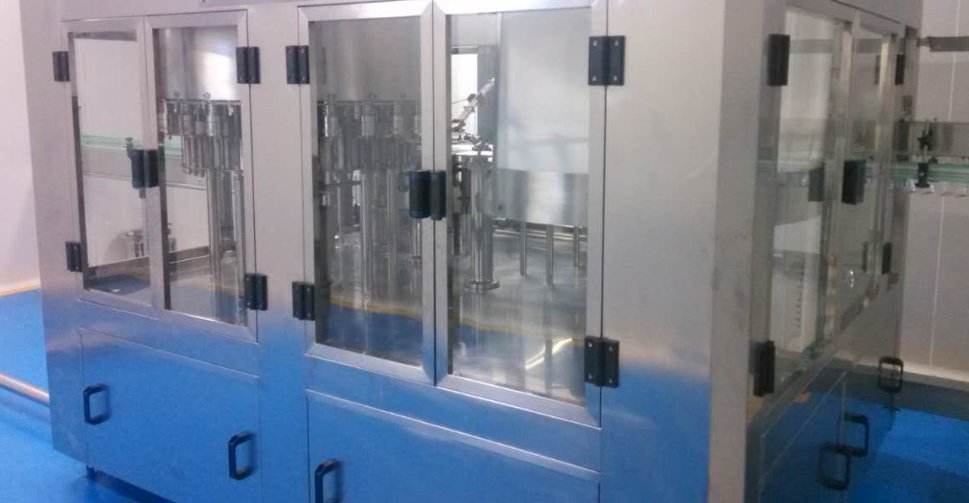
On a typical hot-fill monoblock (rinse-fill-cap integrated unit), the product circulates through a heated filler bowl before entering the filling valve. If the steam jacket, recirculation loop, or temperature PID control is not tuned correctly, the bowl temperature can swing by several degrees during production. Even a 3–5 °C swing changes the liquid density enough to produce measurable fill volume variation across a high-speed run.
Root Cause Checklist: What to Verify First
Before replacing valves or rewriting PLC parameters, operations teams should work through this diagnostic sequence:
1. Confirm the filler bowl temperature stability. Log the bowl temperature at 5-minute intervals over a full production shift. A stable hot-fill line should hold ±1 °C. Wider swings point to steam supply issues, faulty RTD sensors, or PID tuning problems.
2. Check the product supply temperature upstream. The buffer tank feeding the filler should deliver product within the same temperature band. If the UHT or pasteurizer outlet temperature drifts, the filler bowl inherits that variation.
3. Measure actual fill mass, not just visual level. Weigh 10 consecutive bottles at the filler exit and again after cooling. If the mass is consistent but the visual level varies, the issue is thermal contraction or bottle deformation — not the filling valve.
4. Inspect bottle heat resistance specifications. Confirm with the bottle supplier that the PET preform weight, blow-mold heat-set parameters, and neck crystallization are rated for your actual filling temperature. Lightweight preforms optimized for cold-fill water lines will deform under hot-fill conditions.
5. Verify filling valve return flow. Hot-fill lines typically use gravity or low-vacuum filling valves with a return channel. If the return port is partially blocked by pulp residue or sugar crystallization, the valve cannot equalize correctly, leading to inconsistent cut-off levels. This is especially relevant for juice products containing particulates or high-viscosity formulations, which require separate process confirmation and cannot be treated as standard hot-fill applications.
Corrective Actions and Their Boundaries
Temperature Control Calibration
If the root cause is bowl temperature instability, recalibrate the PID loop and verify steam trap function. Ensure the recirculation flow rate is sufficient to prevent cold spots in the bowl. This is the most common fix and usually resolves variation within ±2 mL on a 500 mL fill.
Fill Volume Compensation Tables
Some PLC-controlled fillers allow operators to input a temperature-compensation curve — adjusting the target fill volume based on real-time bowl temperature. This is effective when the temperature variation is small and predictable, but it should not be used to mask a fundamentally unstable thermal process.
Valve Maintenance and Seal Replacement
If mass-weight testing reveals actual fill volume inconsistency (not just visual level shift), inspect the filling valve seals, O-rings, and return tubes. On juice lines, sugar and pectin buildup can cause valves to stick or close slowly. A scheduled CIP cycle that covers the filler bowl, valves, and return lines is essential — and the CIP coverage must be validated for the specific product formulation.
Bottle Specification Alignment
If bottle deformation is confirmed, the corrective action is upstream: work with the preform and blow-molding supplier to increase the heat-set temperature or adjust the preform weight. Switching to a heavier preform may increase packaging cost but eliminates the deformation-driven fill variation entirely.
Where Hot-Fill Line Design Sets the Boundary
Not all juice or beverage products are suitable for standard hot-fill monoblock equipment. Products with high pulp content, dairy components, or viscosity above typical clear-juice ranges require dedicated valve designs, wider flow channels, and potentially different sterilization approaches. Similarly, the choice between a gravity filler and a low-vacuum filler affects how sensitively the system responds to temperature-driven density changes.
For procurement teams evaluating a new hot-fill line, the key selection inputs are: the exact product formulation (including Brix, pulp percentage, and viscosity at filling temperature), the target bottle specifications (preform weight, heat-set rating, and geometry), and the required capacity in bottles per hour. These parameters determine the filler bowl size, valve type, number of filling heads, and whether a recirculation loop is necessary.
Chuxin Mingwei engineers hot-fill juice and tea beverage production lines with integrated rinse-fill-cap monoblocks, negative-pressure or gravity filling valves, and PLC-controlled temperature management — configured to the client's actual product, bottle format, and capacity target. As a water treatment equipment manufacturer and filling system integrator since 2008, we design each line around verified process parameters rather than generic templates.
Next Steps for Operations and Procurement Teams
- If you are troubleshooting an existing line:*
- Start with the five-point checklist above. Log temperature and mass data before authorizing valve replacements or PLC rewrites.
- If you are specifying a new hot-fill line:*
- Provide your product data sheet (Brix, pH, viscosity, pulp content), bottle drawing (preform weight, heat-set rating), and target capacity. These inputs determine whether a standard hot-fill monoblock is sufficient or a modified valve and recirculation design is required.
- If fill level variation persists after corrective actions:*
- The issue may lie in upstream process stability (pasteurizer or buffer tank control) rather than the filler itself. A line-wide thermal audit is the appropriate next step.