
How to Match Barrel Water Filling Line Capacity with Container Specifications: A Technical Evaluation Guide
How to Match Barrel Water Filling Line Capacity with Container Specifications: A Technical Evaluation Guide
Technical procurement teams face critical decisions when matching barrel water filling line capacity to specific container requirements. Proper evaluation ensures equipment meets production targets while maintaining operational flexibility across different packaging formats.
Understanding Capacity Matching Challenges
The primary symptom of poor capacity matching occurs when filling line speed doesn't synchronize with upstream water treatment output or downstream packaging capabilities. This creates production bottlenecks where mismatched equipment causes waiting periods, container accumulation, or complete shutdowns at the slowest processing point.
The root cause stems from calculating capacity based solely on theoretical maximum speeds without considering actual operating conditions. According to industry standards, capacity calculations must account for bottle rinsing, CIP cleaning, equipment washing, and operational losses beyond simple bottle-per-hour conversion. This means water treatment output must support both finished product needs and process water requirements.
Container Compatibility Assessment Framework
Modern filling equipment integrates washing, filling, and capping functions within a single unit. Three-in-one equipment concentrates three processes in continuous conveying paths, which can reduce separate equipment transfer interfaces and facilitate unified rhythm and control. However, bottle diameter, height, material properties, and cap configurations significantly affect compatibility.
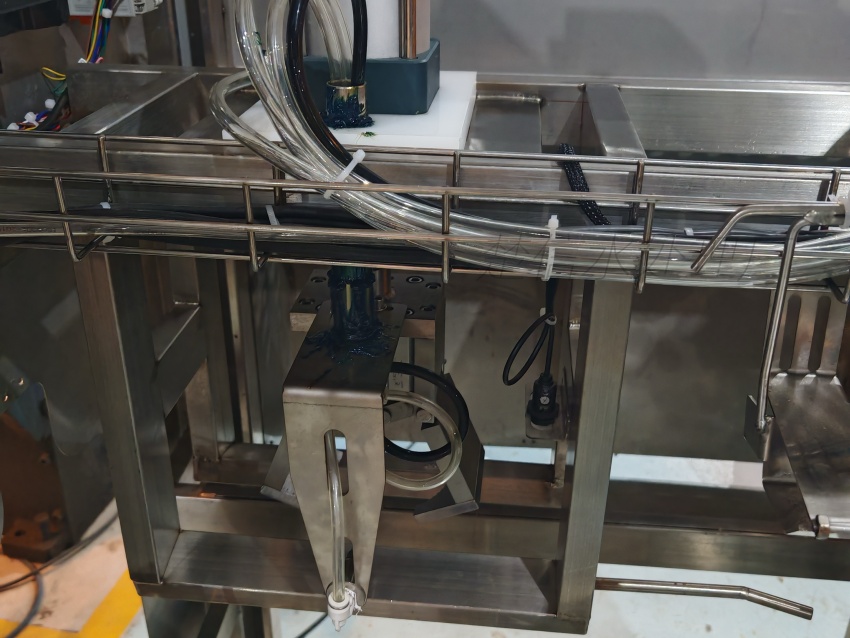
The typical equipment composition includes recycled bucket inspection, cap removal, external brushing, internal washing and disinfection, rinsing, filling, cap arrangement/capping, lamp inspection, bagging, and conveying. Different projects may procure only partial units from the complete system, making modular compatibility assessment essential.
Diagnostic Checks for Capacity Verification
Verify throughput requirements through systematic analysis:
- Hourly production analysis: Calculate actual requirements by container size before reviewing equipment specifications
- Water treatment verification: Confirm that treatment capacity supports both product output and process requirements
- Buffer capacity assessment: Validate storage capability for production fluctuations
- Changeover timing: Evaluate procedures for different container types
Chuxin Mingwei's bottled spring water filling production lines demonstrate this principle with rated output capacities ranging from 200 to 1,800 bottles per hour based on 18.9L containers. This specification illustrates why throughput planning requires comprehensive material balance calculations rather than surface-level capacity matching.
Resolution Strategies for Optimal Matching
Optimal throughput matching requires coordinated sizing of all system components. Water treatment capacity must account for both product output and process requirements including container rinsing, CIP cleaning, equipment washing, and operational losses. Typically, you should first calculate each shift's finished product quantity, then add process water and safety margins while checking whether raw water tanks and finished water tanks can balance short-term fluctuations.
The P10 3—5 gallon barrel water filling line serves 3-gallon or 5-gallon turnover buckets, suitable for purified water, mineral water, distilled water, or other confirmed drinking water products. This configuration addresses selection priorities including new versus recycled containers, container type and mouth standards, target containers per hour, cleaning agents and stations, rinse water source, filling head count, cap type, manual configuration, workshop zoning, and wastewater discharge.
Operational Boundaries and Risk Factors
Standard configurations typically handle 3-gallon, 5-gallon, 10L-18.9L containers with specific neck and height tolerances. The washing-filling-capping integration reduces intermediate transfer points but requires careful coordination between upstream water supply and downstream packaging equipment. Each component must maintain synchronized operation to prevent bottlenecks and ensure consistent product quality.
The three-in-one equipment advantage lies in reducing intermediate transfer interfaces between processes, minimizing potential contamination points. However, it doesn't replace front-end water treatment, container supply, or back-end labeling and packaging systems.
Selection Criteria for Technical Teams
For effective evaluation:
- Calculate actual requirements: Determine hourly production needs by container size before equipment review
- Verify performance standards: Confirm filling accuracy and capping performance meet quality requirements
- Assess compatibility range: Validate equipment can handle planned container type mix
- Evaluate changeover procedures: Review processes for multi-size operations
- Review maintenance access: Confirm spare parts availability and service support
Consider the complete production ecosystem rather than individual equipment performance. Water treatment capacity must support both product output and process requirements including container rinsing and system cleaning.
Implementation Considerations
Container compatibility extends beyond simple dimensional matching. Factors such as new versus recycled containers, container type and mouth standards, target containers per hour, cleaning agents and stations, rinse water source, filling head count, cap type, manual configuration, workshop zoning, and wastewater discharge all influence equipment selection.
The integrated approach to washing, filling, and capping requires careful planning of facility layout, utility connections, and operational workflows. Each component must be sized appropriately to maintain production flow without creating bottlenecks.
Next Steps
Capacity matching and container compatibility evaluation require detailed analysis of specific production requirements. The calculation process involves comprehensive material balance verification to ensure all system components work harmoniously. Final calculations should be confirmed through project material balance documentation.
Contact Chuxin Mingwei's technical team to discuss your specific application requirements and receive customized recommendations based on your water quality, production targets, and facility constraints.