
How to Match Water Disinfection System Capacity to Bottling Line Throughput: Sizing Guidelines and Implementation Bounda
How to Match Water Disinfection System Capacity to Bottling Line Throughput
For procurement managers and operations leads in the beverage and bottled water industry, a common pitfall in project planning is assuming that the water treatment system's flow rate (e.g., tons per hour) should exactly match the bottling line's output volume. In reality, matching water disinfection system capacity to bottling line throughput requires a comprehensive material balance that accounts for process losses, cleaning cycles, and peak demand buffers.
At Chuxin Mingwei, we engineer non-standard, site-specific solutions where the disinfection and purification units are sized not just for the final product volume, but for the entire operational ecosystem of your facility.
Why Simple Flow Conversion Fails
A frequent error in early project scoping is calculating water demand solely based on the finished bottle count. For instance, if a line produces 1,000 barrels of 18.9L water per hour, one might assume a 19 m³/h water treatment system is sufficient. This approach ignores critical consumption points:
- Rinsing and Flushing:*
- Empty bottles or returned barrels require rigorous internal and external washing before filling. This "process water" is significant and varies based on whether you are using new PET preforms or recycled PC barrels.
- CIP and Sanitization:*
- Clean-in-Place (CIP) cycles for the filling machine and piping networks consume large volumes of treated water periodically. The system must have the recovery rate to replenish the sterile tank before the next production run.
- Peak Buffer & Downtime:*
- Production lines often run in batches. The water treatment system must be capable of filling the finished water storage tank within the non-production windows or sustain a higher flow rate during continuous shifts to prevent the filler from starving.
As noted in industry best practices, you cannot simply convert the bottling line's bottles-per-hour into finished water volume. You must account for rinsing water, CIP cleaning, equipment flushing, blending losses, peak buffering, and planned operating time. The final calculation must be confirmed by a project material balance.
Key Data Points for Accurate Sizing
To propose a tailored solution that prioritizes stability and long-term maintainability, our engineering team requires specific data points beyond just "target capacity."
1. Source Water Quality vs. Target Standards
The configuration of the disinfection system depends heavily on the gap between your raw water and the required output.
- Spring Water Projects:*
- If you are producing natural spring water, we often utilize a Dual-membrane NF + UF process. This balances purification efficiency with mineral retention, ensuring the final product meets taste profiles while removing pathogens. Oversizing the RO component here could strip essential minerals, altering the product identity.
- Purified Water Projects:*
- For standard purified water, a Two-stage RO reverse osmosis deep purification process is typical, often combined with ozone and UV (254 nm) dual sterilization. The capacity of the UV and ozone generators must match the peak flow rate of the filling stage to ensure immediate disinfection efficacy.
2. Packaging Format and Line Architecture
The type of container directly influences water loss rates and rinsing requirements:
- Barrelled Water Lines:*
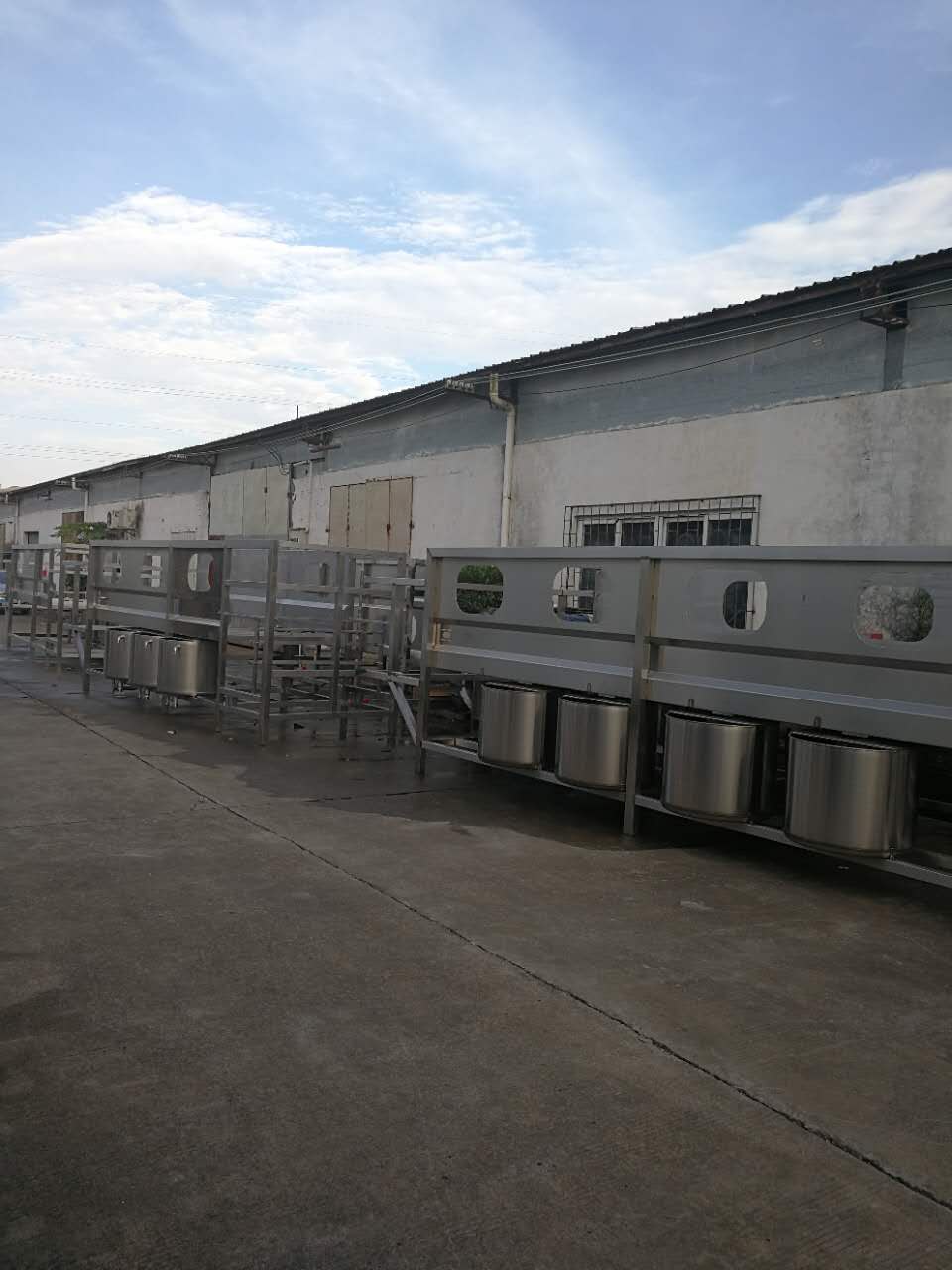
- Our Barrelled Water Sterilization & Filling Production Lines handle 15L–22L PC/ABS containers. These lines often feature a triple-layer disinfection protocol (internal wash + ozone + UV). The water treatment system must support the high-volume rinse cycles required for returned barrels, which are dirtier than new PET bottles.
- Bottled Water Lines:*
- For Fully Automatic Bottled Purified Water Filling Production Lines, the focus is on precision. With filling accuracy controlled to ≤ ±2 mL and capping pass rates ≥99.6%, the water supply must be consistent in pressure and quality to maintain these metrics. Any fluctuation in the disinfection loop can cause line stoppages or quality rejects.
3. Operational Hours and Shift Patterns
A system designed for 24-hour continuous operation differs from one running two 8-hour shifts.
- Continuous Run:*
- The water treatment plant runs in parallel with the filler. Capacity is sized to match the real-time consumption plus a small safety margin (typically 10-15%).
- Batch Run:*
- The water treatment plant must be oversized to fill the intermediate storage tanks completely during downtime. This reduces the initial capital investment in membrane stacks while ensuring the filler never waits for water.
Implementation Boundaries and Risks
When sizing your system, be aware of these common boundaries:
- Storage Tank Limitations:*
- Even with a perfectly sized disinfection system, insufficient finished water tank capacity will create a bottleneck. The tank acts as the buffer between the steady output of the RO/NF system and the variable (or batched) demand of the filler.
- Disinfection Contact Time:*
- Increasing flow rate to match a faster filler reduces the contact time for UV and ozone. If the flow exceeds the design limit of the sterilization unit, microbial control fails. We engineer these units based on the maximum instantaneous flow, not just the average hourly volume.
- Facility Constraints:*
- In existing facilities, space for additional pretreatment or larger tanks may be limited. Our site-specific engineering approach evaluates your workshop layout to optimize piping routes and equipment placement without compromising performance.
Next Steps for Your Project
Selecting the right water disinfection capacity is a balance of technical data, operational strategy, and budget. Generic "off-the-shelf" ratings often lead to either under-performance or wasted capital.
At Chuxin Mingwei, we do not guess. We start with your water source report, calculate your true material balance, and design a system that integrates seamlessly with your chosen filling line—whether it's a 200–1,800 bottles/hour spring water line or a high-speed 500–5,000 barrels per shift purified water system.
Ready to define your exact requirements?
Share your water source analysis, target capacity, packaging format, and facility layout. We will provide a preliminary sizing assessment and a tailored solution proposal that ensures your production line runs smoothly from day one.
Request a Solution Consultation