
New vs. Reused Drum Washing: Process Differences, Equipment Requirements & Operational Boundaries
Who This Applies To
Procurement managers, plant engineers, and digital project leads in beverage, food, and pharmaceutical companies planning or upgrading a barrelled water filling production line — especially those evaluating whether to adopt returnable 18.9 L (5-gallon) drums or switch to single-use new barrels. This comparison directly impacts your water treatment design, equipment footprint, utility requirements, and post-installation support scope.
Why the Distinction Matters
Unlike bottled water lines (e.g., 500 mL PET), barrelled water systems handle large-volume containers that either arrive factory-new (sterile, sealed, unexposed) or return from distribution with variable contamination levels — biofilm, residual product, dust, or label adhesive. These two starting conditions demand fundamentally different washing logic, process validation, and equipment integration.
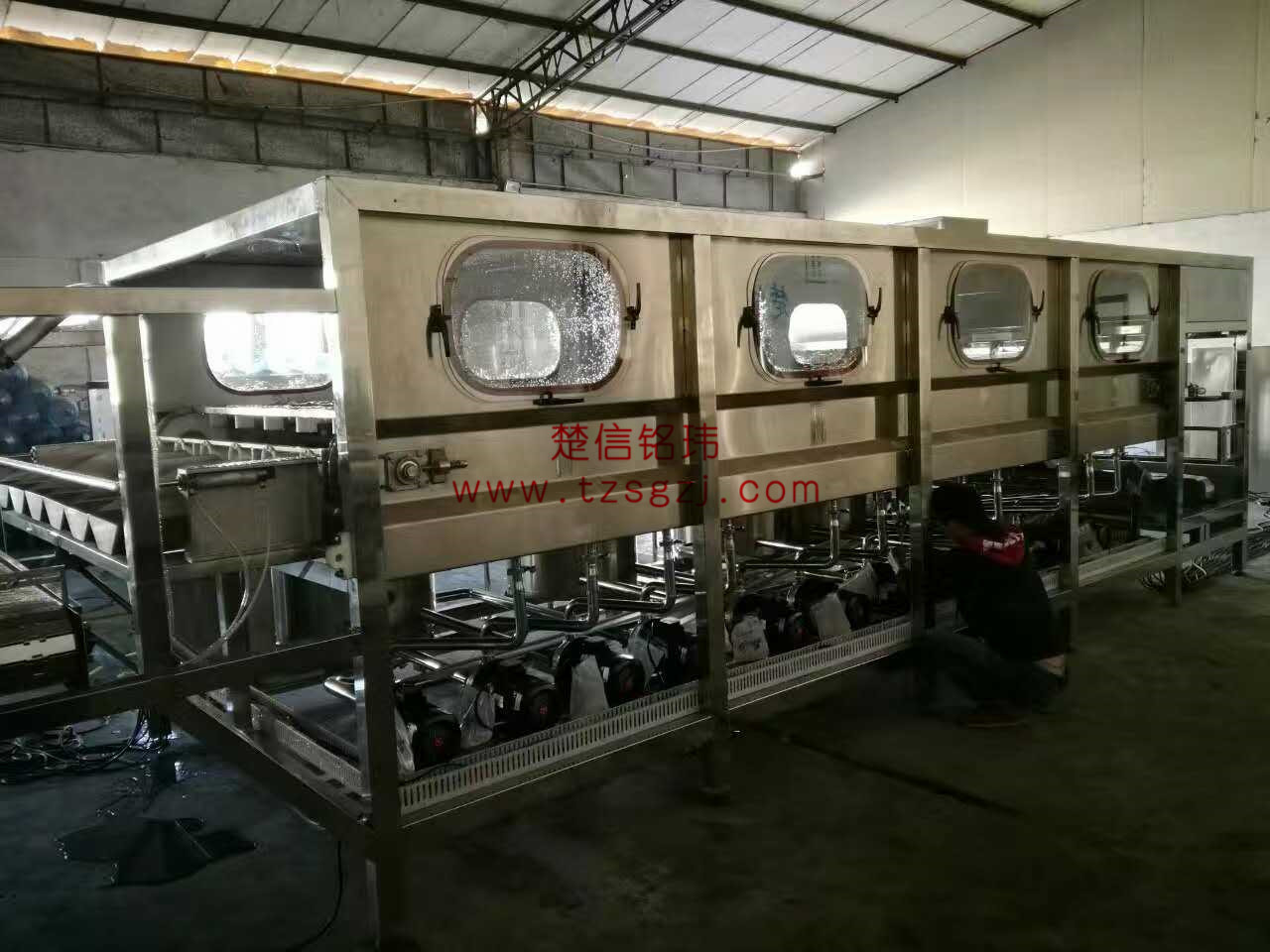
1. New Drum (Virgin) Washing Process
- Starting condition: Factory-sealed, pre-sterilized HDPE or PETG drums — no prior contact with water or environment.
- Primary objective: Surface decontamination and rinse removal of manufacturing residues (e.g., mold release agents, particulates).
- Typical process flow: Pre-rinse → Alkaline wash (low-concentration, short dwell time) → Hot water rinse → Final purified water rinse → Air blow-off.
- Water quality requirement: Purified water (RO-grade) for final rinse only; pre-rinse may use treated municipal water.
- Equipment implication: Lighter-duty washing station; lower thermal load; simpler CIP loop; often integrated into the main filling machine (e.g., as part of a combined washer-filler-capper unit).
- Validation focus: Rinse residue testing (non-volatile residue, conductivity); visual inspection for film or streaks.
2. Reused Drum (Returnable) Washing Process
- Starting condition: Drums returned from retail or delivery — highly variable surface condition, potential biofilm, organic deposits, and microbial load.
- Primary objective: Microbial reduction, complete removal of organic/inorganic residues, and physical defect screening.
- Typical process flow: Pre-soak → High-pressure spray → Alkaline + enzymatic wash (60–75°C, dwell time adjusted per soil load) → Acid rinse → Hot purified water rinse → UV/Ozone sterilization → Air drying.
- Water quality requirement: Multi-stage purification: pre-rinse (treated water), wash (softened + filtered), final rinse (RO + UV/ozoned purified water).
- Equipment implication: Dedicated, heavy-duty rotary drum washer with programmable temperature/pressure zones; separate CIP skid; larger heat recovery system; integrated vision-based defect detection.
- Validation focus: ATP swabbing, microbial plate counts, and full-cycle log-reduction verification per batch — aligned with facility hygiene protocols and regulatory expectations for reuse cycles.
Key Boundary Conditions You Must Clarify Early
Chuxin Mingwei’s engineering approach treats these as non-interchangeable configurations — not optional settings. Your choice determines:
- Water treatment scope: Reused drum lines require deeper pretreatment (multi-media + softening + carbon + dual RO) and on-site ozone/UV generation. New drum lines may use single-stage RO + UV.
- Facility layout: Reused drum washing adds linear footprint and requires dedicated floor drainage, steam supply, and exhaust ventilation — dimensions depend on selected model and throughput.
- Operator training: Reused drum workflows include daily CIP validation logs, microbiological sampling protocols, and preventive maintenance on high-wear components (nozzles, brushes, seals).
- After-sales support: Chuxin Mingwei includes quarterly CIP performance audits and washer nozzle replacement kits only in reused drum service packages — not part of standard new drum support scope.
What This Means for Your Project Timeline & Budget
- Lead time: Reused drum lines require additional time for custom washer design, validation documentation, and extended FAT (Factory Acceptance Test) cycles.
- CapEx impact: Reused drum washing stations increase total line cost due to added equipment complexity, utilities, and validation infrastructure — offset by long-term packaging cost reduction over multi-year reuse cycles.
- No hybrid assumptions: Chuxin Mingwei does not offer ‘one machine fits both’ washing modules. The drum handling mechanism, valve timing, and PLC logic are physically and software-defined per use case.
Next Steps for Technical Procurement Teams
- Confirm drum origin: Is your supply chain sourcing virgin drums or managing a return logistics loop?
- Audit existing water quality data: For reused drums, provide available incoming drum swab test reports — this informs washer chemical dosing and cycle design.
- Share facility constraints: Floor loading capacity, ceiling height, and available steam/air/water utilities — reused drum lines have higher utility peaks.
- Request configuration-specific documentation: Ask for the Reused Drum Washer Technical Dossier (includes CIP cycle SOP, validation checklist, spare parts list) or New Drum Integrated Washer Specification Sheet, depending on your path.
Chuxin Mingwei delivers engineered solutions — not catalog selections. Your drum washing strategy must be anchored in real operational context, not theoretical flexibility.