
Why Ozone System Quotations Must Include Mixing and Off-Gas Destruction: A Buyer’s Guide to Complete Configurations
Why Ozone System Quotations Must Include Mixing and Off-Gas Destruction
When evaluating water treatment equipment for a new bottling line or disinfection upgrade, the ozone system quotation is often the first place cost surprises hide. Many buyers focus on the ozone generator's capacity (grams per hour) and assume that the rest—contact with water and safe destruction of residual gas—is trivial or included by default. In practice, the mixing device and the off-gas destruction unit are frequently listed as optional extras or omitted entirely, shifting the true cost to a later change order.
The Role of Mixing in Ozone Disinfection
Ozone must be transferred from the gas phase into the water to achieve microbial inactivation. The efficiency of this mass transfer depends on the mixing method. Common configurations include:
- Venturi injectors
- with a bypass loop – suitable for most flow rates, but require a recirculation pump and precise pressure control.
- Bubble diffuser tanks
- – used for larger contact volumes, but less efficient without a properly designed contact tower.
- Static mixers
- or online mixing chambers – compact solutions for smaller lines.
The mixing unit is not part of the ozone generator itself. If your quotation lists only the generator and a basic contact tank, you may be missing the pump, nozzle, or control valve needed to actually dissolve ozone into the water. Without proper mixing, ozone residuals become unpredictable, and disinfection performance may fail to meet regulatory standards.
Why Off-Gas Destruction Is Non-Negotiable
After the ozonation contact chamber, any undissolved ozone must be removed before the gas is vented to the atmosphere. Occupational exposure limits for ozone are very low (typically 0.1 ppm over 8 hours). Off-gas destruction systems—usually thermal or catalytic destruct units—ensure that residual ozone concentration in the exhaust meets safety and environmental regulations.
A quotation that omits the destruct unit may appear cheaper, but it creates a compliance gap. In many jurisdictions, venting ozone without treatment is illegal. Even where local regulations are lenient, the health risk to operators near the water treatment area is significant. Adding a destruct unit later can be disruptive: it requires ductwork, electrical supply, and integration with the plant’s ventilation system, all of which are more expensive when done as a retrofit.
What to Check in Your Ozone System Quotation
Use the following checklist when reviewing quotations from any water treatment equipment manufacturer:
- Ozone generator – rated capacity (g/h), output control method, and whether it includes a dry air or oxygen feed system.
- Mixing device – specify type (venturi, diffuser, static mixer), associated pump, and any required recirculation loop.
- Contact tank – volume, residence time, and material (usually stainless steel or PVC).
- Off-gas destruction unit – type (thermal or catalytic), capacity matched to generator output, and connection requirements.
- Safety interlocks – ozone monitor, alarm, and automatic shutdown if destruct unit fails.
- Installation and commissioning – whether these items are included in the quote or charged separately.
If the quotation does not explicitly list a mixing device and a destruct unit, ask the supplier to add them. Some vendors treat them as standard components within their “ozone system” package, but it is better to confirm in writing.
Real-World Cost Implications
While we cannot provide specific prices, the cost of a complete ozone system (generator + mixing + destruct) is typically 30–50% higher than a generator-only quote. The destruct unit alone can represent a significant portion of that difference, especially for larger systems where thermal destruction requires high energy input. However, the total cost of ownership (including retrofit, downtime, compliance penalties, and worker safety) almost always favors specifying the full system from the start.
How This Relates to Your Water Treatment Line
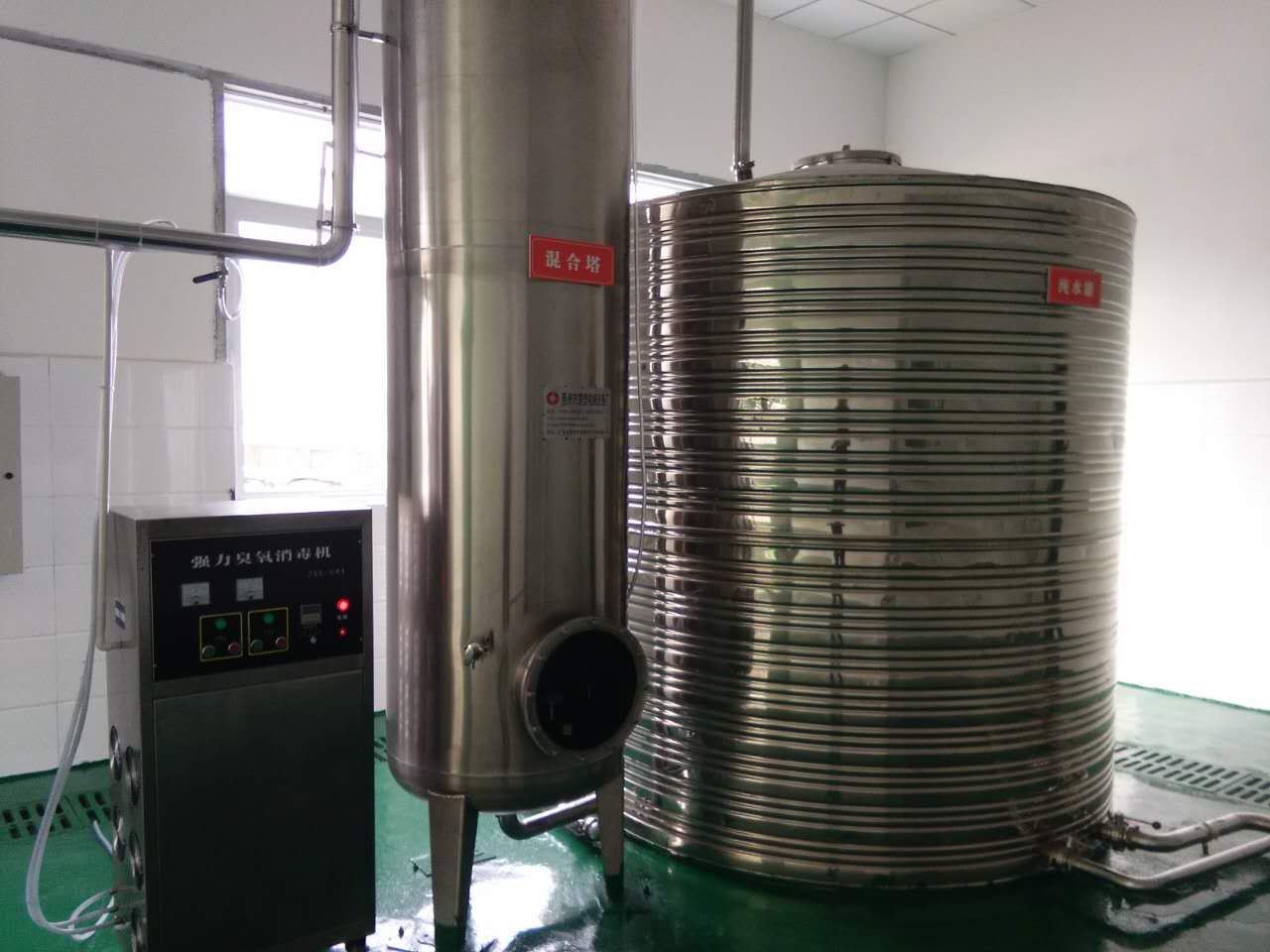
In a typical water treatment line for a bottled water filling production line, the ozone system is part of the disinfection and storage stage. The known configuration includes “ozone generator, ozone mixing device” and “finished water tank, circulation pipeline” (as seen in standard equipment lists). The mixing device ensures that the ozonated water reaches the target residual before filling, while the destruct unit treats any off-gas from the tank. Without both, the line cannot operate reliably or safely.
Key Points for Procurement and Engineering Teams
- Demand a complete system scope.*
- The quotation should include generator, mixing, contact tank, and destruct unit as a single line item or at least as a clearly defined optional upgrade.
- Verify mixing efficiency.*
- Ask for the expected ozone transfer rate (typically 85–95% for well-designed venturi systems) and whether the supplier guarantees a minimum residual.
- Check destruct unit specifications.*
- Ensure it is sized for the maximum ozone output of the generator, not just the average flow.
- Include installation costs.*
- Mixing and destruct units often require additional piping, electrical, and structural support that may not be included in the base quote.
Conclusion
A complete ozone system quotation is more than a generator price. The mixing device and off-gas destruction unit are essential for both performance and compliance. By asking the right questions and verifying the scope upfront, you can avoid budget overruns and ensure that your water treatment system operates safely and effectively from day one. When evaluating suppliers, choose a water treatment equipment manufacturer that provides transparent, itemized quotes and can explain the role of each component in your specific application.
Next Steps
If you are planning a new water treatment line or upgrading an existing ozone system, contact Chuxin Mingwei for a detailed quotation that includes all critical components—including mixing and off-gas destruction. Our engineering team can help you match the configuration to your source water quality, target standards, and facility constraints.
For a complete ozone system, the configuration must include not only the generator but also the mixing device (such as a venturi injector or static mixer) and an off-gas destruction unit (thermal or catalytic). Industry references confirm that ozone mixing devices are standard components in disinfection systems, and buyers should insist on a quotation that clearly lists all included items, as per the principle that quotations must itemize inclusions and exclusions (see FAQ-LINE-01). Without these, the system will not achieve proper mass transfer or meet safety regulations.