
Pre-Installation Checklist for Water Filling Line Commissioning
Who This Checklist Is For
This checklist is designed for procurement managers, plant engineers, and digital project leads in beverage, food, pharmaceutical, electronics, and industrial manufacturing companies planning a new bottled or barrelled water production line — especially those sourcing custom-engineered systems from Chuxin Mingwei.
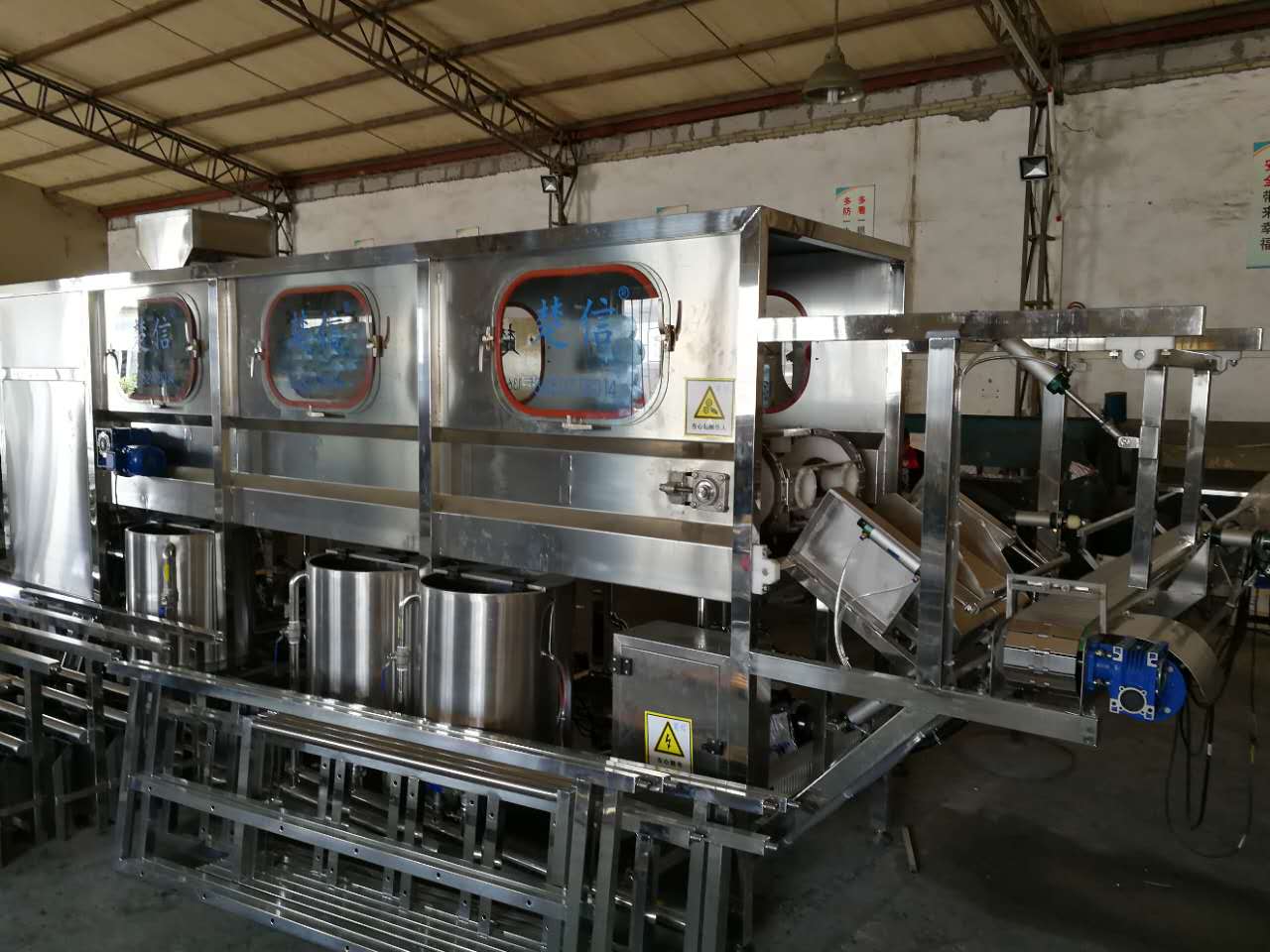
It applies specifically to fully automatic water filling lines, including spring water (NF + UF purified) and purified water (dual-stage RO + ozone/UV) configurations — such as our Bottled Spring Water Filling Production Line and Fully Automatic Bottled Purified Water Filling Line.
Why a Pre-Installation Checklist Matters
Chuxin Mingwei delivers non-standard, site-specific water treatment and filling solutions. Our lines are engineered to match your actual source water quality, target water standards (e.g., GB 19298, USP <1231>, or client-defined specifications), facility layout, and production capacity (200–2,500 bottles/hour). That means success depends not only on the equipment — but on whether your site is truly ready to receive, install, and commission it.
Without verified readiness, even a fully automated washing-filling-capping unit risks:
- Delayed installation due to unprepared foundations or missing utilities;
- Commissioning failures caused by unstable compressed air supply or insufficient drainage capacity;
- Ambiguity over responsibility when integration issues arise between water treatment, filling, and clean air systems.
---
7 Critical Pre-Installation Checks (Site-Verified Only)
- Utility Readiness Confirmation
- Compressed air: Stable supply with consistent pressure and low moisture/oil content — required for reliable valve actuation and capping performance;
- Electrical supply: Stable 380 V ±5%, 50 Hz, with dedicated grounding and surge protection;
- Drainage: Floor drains sized to handle bottle rinsing and CIP wastewater flow — capacity must align with line configuration and cleaning frequency;
- Cooling water (if applicable): Inlet temperature and thermal delta must support heat exchanger operation per system design.
- Civil & Structural Compliance
- Floor load capacity sufficient for machine footprint and integrated water tanks — confirmed via structural assessment;
- Floor levelness verified across full machine footprint — critical for alignment of conveyor transitions and filling nozzles;
- Clear height adequate for overhead conveyors and optional clean air duct routing — verified against final layout drawing.
- Water Supply Interface Alignment
- Confirmed purified water feed point(s), with pressure and flow capacity matching line demand (typically 1.2× rated output);
- Verified compatibility between your water storage tank outlet and our inlet flange — dimensions and sealing method must be coordinated;
- No shared piping with non-potable or process water circuits — physical separation required to maintain water integrity.
- Integration Boundary Documentation
- Signed handover protocol defining scope boundaries: e.g., Chuxin Mingwei supplies up to the filling machine’s purified water inlet flange; client provides upstream distribution piping and pressure regulation;
- Agreed interface points for PLC communication (Modbus TCP or Profibus DP), HMI remote access, and alarm relay outputs — documented in control architecture review.
- Cleanroom & Environmental Readiness (If Applicable)
- ISO Class 8 (100,000) cleanroom structure completed, with validated airflow patterns and pressure zoning — confirmed via third-party testing report or internal validation protocol;
- HEPA filter housings pre-installed and accessible for final mounting of filtration modules;
- Temperature/humidity control stable during commissioning window — aligned with operational requirements for packaging integrity and operator safety.
- Support Infrastructure Availability
- On-site lifting equipment (e.g., crane or forklift) with capacity sufficient for heaviest component — verified against equipment weight schedule;
- Dedicated staging area sized for unpacking, pre-assembly, and safe storage of components;
- Secure, dry, and climate-controlled storage for spare parts, electrical cabinets, and calibration tools.
- Documentation & Personnel Readiness
- Final approved P&ID, single-line electrical diagram, and civil drawing package received, reviewed, and stamped for construction;
- Designated site contact identified — with authority to approve mechanical/electrical tie-ins and sign off on commissioning milestones;
- Operator training schedule coordinated — minimum 2 days pre-commissioning for basic operation, safety protocols, and emergency response.
---
What Happens Next?
Once all 7 items are confirmed and documented, Chuxin Mingwei initiates the engineering handover phase: final layout verification, utility interface mock-up, and joint pre-commissioning briefing. Our team will not proceed to physical installation until this checklist is signed off by both parties.
Commissioning itself follows a strict sequence: mechanical completion → utility verification → dry run → wet run → performance validation (filling accuracy ≤±2 mL, capping pass rate ≥99.6%) → operator sign-off.
Key Boundary Reminder
Chuxin Mingwei’s scope includes design, manufacturing, installation, commissioning, and operator training — but does not include civil construction, utility upgrades, or third-party system integration beyond defined interfaces. Clarity on these boundaries prevents scope creep and ensures accountability.
For full transparency, review our quotation template — it explicitly lists included/excluded items per project phase.