
Pre-treatment Equipment for Small-to-Medium Carbonated Beverage Lines: Integration & Selection Criteria
Pre-treatment Equipment for Small-to-Medium Carbonated Beverage Lines: Integration & Selection Criteria
For procurement managers and operations leads in the beverage sector, designing a production line for carbonated soft drinks (CSD), sparkling water, or flavored sodas presents unique challenges compared to still water projects. The core difference lies in the sensitivity of the product to dissolved gases, chlorine residuals, and mineral imbalance, which directly impact taste, shelf life, and filling stability.
At Chuxin Mingwei, we engineer pre-treatment equipment for small-to-medium carbonated beverage lines not as a standalone utility, but as the foundational stage of a synchronized process. Based on our experience since 2008 in Huizhou, effective pre-treatment must address three specific goals: removing contaminants that react with CO₂, stabilizing water hardness to prevent scaling in mixers, and ensuring the water is ready for precise syrup blending.
Why Standard Water Treatment Is Insufficient for Carbonated Products
A common misconception in early project planning is that a standard reverse osmosis (RO) system designed for drinking water is sufficient for CSD production. While RO removes the majority of dissolved solids, carbonated beverages have stricter requirements regarding dissolved oxygen, free chlorine, and alkalinity.
- Chlorine & Flavor Scalping:*
- Even trace amounts of free chlorine (above 0.1 ppm) can react with flavor compounds, causing "off-tastes" or odor issues known as flavor scalping. Standard activated carbon filters are effective but must be sized correctly for flow rate and contact time to ensure complete removal before the water reaches the mixer.
- Dissolved Oxygen (DO):*
- High DO levels accelerate oxidation, reducing shelf life and affecting the crispness of the sparkle. Effective pre-treatment often includes vacuum degasification or nitrogen sparging stages post-RO to lower DO levels before carbonation.
- Hardness & Scaling:*
- While some minerals are desirable for taste, excessive hardness leads to scale buildup in heat exchangers, mixers, and filling valves. Unlike still water lines where slight scaling might be tolerated over long periods, CSD lines operating at high speeds require consistent water chemistry to maintain filling accuracy.
Core Components of a CSD Pre-treatment Train
When configuring a line for small-to-medium capacity (typically 2,000 to 12,000 bottles per hour), the pre-treatment train is customized based on the raw water source (municipal, well, or spring). A robust configuration typically includes:
1. Multi-Media Filtration & Activated Carbon
The first line of defense removes suspended solids and organics. For CSD, the activated carbon unit is critical. It must be designed to handle the specific flow rates of the blending system, ensuring that chlorine and chloramines are reduced to non-detectable levels.
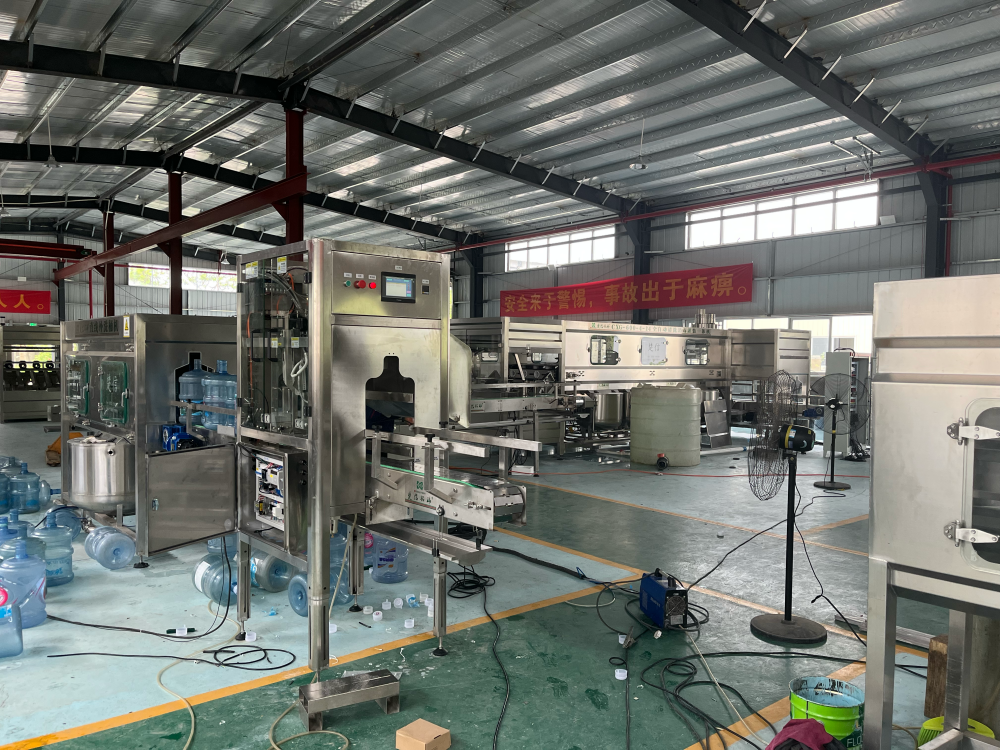
2. Softening or Partial Demineralization
Depending on the source water, a sodium ion exchange softener or a selective RO configuration is used. As noted in industry technical standards, softening is used to lower water hardness but does not equate to full desalination. The goal is to achieve a specific hardness range that supports flavor profile consistency without risking scale in the high-pressure carbonation units.
3. Precision Filtration & UV/Ozone Control
Before entering the syrup room or mixer, water passes through micron-level cartridge filters (often 1–5 microns) to catch any particulate breakthrough. While ozone is excellent for microbial control in still water lines, its application in CSD pre-treatment requires careful management. Residual ozone must be completely destroyed (usually via UV or thermal methods) before carbonation, as it can interfere with CO₂ absorption and degrade sensitive flavorings.
Integration with Downstream Filling Systems
The value of pre-treatment is realized only when it integrates seamlessly with the filling line. In a typical Chuxin Mingwei project, the water treatment output is directly linked to the blending and carbonation system.
- Flow Matching:*
- The pre-treatment system's peak output must exceed the maximum demand of the filler, including CIP (Clean-in-Place) cycles. Undersizing the pre-treatment leads to pressure drops during filling, causing inconsistent fill levels and foaming.
- Hygiene & Material Compatibility:*
- All wetted parts in the pre-treatment train, from valves to piping, must be food-grade (e.g., SS304/SS316) and compatible with the cleaning chemicals used in the CSD environment. This aligns with our broader service scope of providing clean air support systems and hygienic design principles across the entire plant.
- Automation & Monitoring:*
- Modern lines utilize PLC-based controls to monitor conductivity, pH, and chlorine levels in real-time. If pre-treatment parameters drift, the system can automatically divert water away from the filler to prevent batch contamination.
Selection Criteria & Risk Boundaries
When evaluating suppliers for pre-treatment equipment for small-to-medium carbonated beverage lines, consider the following decision factors:
- Raw Water Variability: Does the supplier account for seasonal changes in your source water (e.g., higher turbidity in rainy seasons)? A static design may fail under fluctuating conditions.
- Scalability: Can the system be expanded if you add more filling lines later? Modular designs allow for capacity upgrades without replacing the entire unit.
- Service & Support: Equipment is only as good as its maintenance. Ensure the provider offers clear SOPs, spare parts lists, and remote or on-site commissioning support. Chuxin Mingwei emphasizes delivery execution and sustained post-installation support, ensuring your team is trained to manage daily operations and troubleshooting.
Risk Boundary: Do not assume a "one-size-fits-all" solution. A system designed for pure sparkling water may not suit a complex flavored soda line requiring specific mineral dosing. Always validate the design against your specific product recipe and target shelf life.
Next Steps for Your Project
Implementing a reliable carbonated beverage line starts with accurate data. Before requesting a quote, gather your latest raw water analysis report, define your target production capacity (bottles per hour), and specify your packaging formats (PET bottle sizes, cap types).
Chuxin Mingwei specializes in tailoring these systems to your facility's constraints. From requirement confirmation and solution design to manufacturing and commissioning, we provide end-to-end engineering services.
Ready to optimize your production line? Share your water source data and capacity goals with us. We will propose a tailored pre-treatment and filling solution that balances stability, applicability, and long-term maintainability.
Contact Us for a Solution Consultation