
Purified Water Filling Machine Maintenance & Repair: A Practical Guide for Plant Operators
Who This Guide Is For
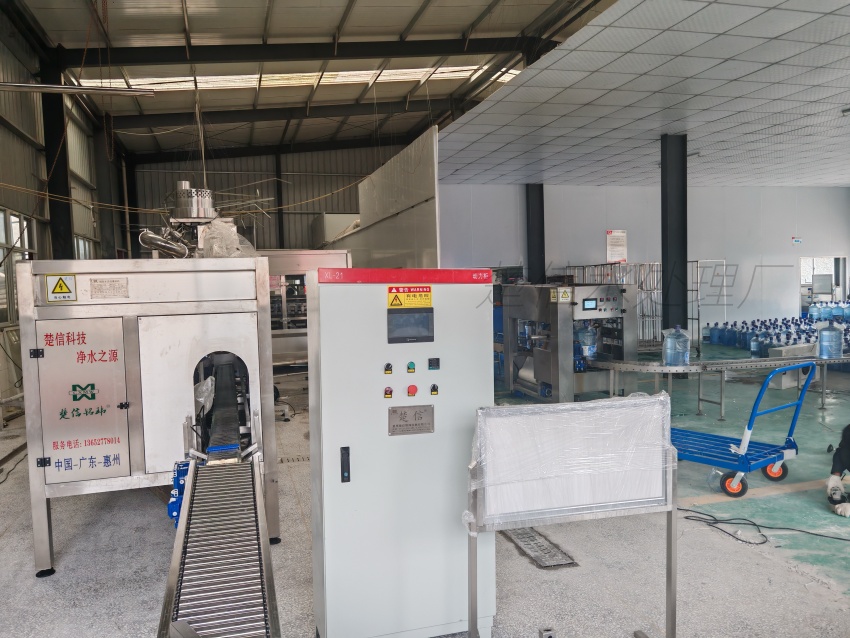
This guide is written for maintenance supervisors, plant operators, and operations leads who manage a fully automatic bottled purified water filling production line — specifically lines equipped with dual-stage RO reverse osmosis, integrated bottle washing, filling, and capping (e.g., Chuxin Mingwei's 200–2,500 bottles/hour systems).
If you are responsible for uptime, product quality, or service planning, this article will help you structure your after-sales support routine around measurable conditions rather than guesswork.
Core Principle: Maintain Based on Operating Data, Not a Fixed Calendar
A common mistake is replacing filters, membranes, or seals on a rigid schedule without verifying actual performance. As noted in our technical knowledge base, "maintenance depends on operating data, not mechanically replacing all consumables at fixed intervals."
For a purified water filling line, the following parameters should be logged daily or weekly:
- Feed and product water pressure (pre
- and post-RO membranes)
- Pressure drop across multimedia filters, carbon filters, and cartridge filters
- Permeate flow rate and conductivity (or resistivity)
- UV lamp operating hours and intensity (if applicable)
- Ozone generator output and contact time
- CIP cleaning cycle history
When these metrics deviate from baseline, action is needed — not when the calendar says "change filter."
Daily Operator Checks (Before Shift Start)
| Check Item | What to Look For | Action If Abnormal |
|---|---|---|
| Raw water pressure | Stable within equipment specs | Check feed pump and inlet valves |
| Pre-treatment pressure drop | < 0.5 bar (typical) | Backwash or replace media as needed |
| RO feed pressure | Per membrane spec | Adjust valve or clean pre-filters |
| Permeate conductivity | < 10 µS/cm (typical target) | Inspect RO membrane integrity; initiate CIP |
| Filling line capping quality | Cap pass rate ≥ 99.6% | Check cap chute, capper torque, and cap feeder |
| Bottle washing rinse water quality | No visible residue, proper disinfectant residual | Verify wash cycle temperature and chemical dosing |
Note: These thresholds are examples. Your actual parameters depend on your source water quality, target product standard, and equipment configuration. Always refer to the commissioning report for your specific line.
Service Intervals: Condition-Based Recommendations
1. Multimedia & Activated Carbon Filters
- Backwash frequency:
When pressure drop exceeds 0.5–0.8 bar or on a timer (e.g., every 8–12 hours). - Media replacement:
When backwashing no longer restores pressure drop (typically 1–3 years, depending on feed water turbidity).
2. RO Membranes
- CIP cleaning:
When normalized permeate flow drops 10–15% or salt passage increases 10%. - Replacement:
When cleaning no longer recovers performance; typical life 2–4 years under good pre-treatment.
3. UV Sterilizers
- Lamp replacement:
After 8,000–9,000 hours of operation or when intensity drops below 80% of initial value. - Quartz sleeve cleaning:
Every 3–6 months, depending on water hardness and organic content.
4. Ozone System
- Ozone generator check:
Verify output (mg/L) and air dryer condition quarterly. - Destruct unit (if installed):
Replace catalyst every 2–3 years or as recommended.
5. Filling Machine Wear Parts
- Filling nozzles and seals:
Inspect monthly for wear, cracks, or deformation. Replace when drips appear or fill volume deviates beyond ±2 mL. - Capper grippers and chucks:
Check alignment and gripping force every 500 hours; replace when cap slippage or cross-threading occurs. - Bottle washing brushes:
Inspect bristle condition; replace when cleaning efficiency declines (visible residue on bottles after wash).
6. Clean Air System (if integrated)
- HEPA filters:
Check pressure drop monthly; replace when differential > 2x initial value. - Pre-filters:
Replace every 3–6 months.
Wear-Part Management: What to Stock
Based on a typical 1,000–2,000 bottles/hour purified water line, consider keeping the following spare parts on site:
- Cartridge filters
(5 µm and 1 µm) – 3–6 months supply - RO membrane elements
– 2–4 spare elements (for partial replacement) - UV lamp and quartz sleeve
– 1 set - Filling nozzle seals, O-rings
– 1 kit per filling head - Capper gripper inserts
– 1 set per capper - Bottle washing brushes
– 1 set per machine - Common valves, sensors, and solenoid coils
– consult your equipment manual
Important: Wear-part life varies significantly with water quality, production volume, and operator care. Use your own data to adjust stock levels. Chuxin Mingwei's after-sales team can help you create a customized spare parts recommendation based on your line's operation history.
Common Troubleshooting Scenarios
| Symptom | Likely Cause | First Check |
|---|---|---|
| Fill volume inconsistent (± >2 mL) | Worn nozzle seal, pressure fluctuation, or foam | Inspect nozzle and check air pressure |
| Cap leakers or cross-threading | Capper misalignment, worn gripper, or cap defect | Check capper timing and gripper condition |
| High RO permeate conductivity | Membrane fouling, seal failure, or feed water change | Check pressure drop and run a CIP |
| Low bottle washing efficiency | Brush wear, insufficient detergent, or short cycle time | Inspect brushes and verify wash parameters |
| Ozone odor in filling area | Ozone destruct failure, poor ventilation, or over-dosing | Check destruct unit and ventilation system |
When to Call Chuxin Mingwei's Service Team
While many routine tasks can be handled by your own operators, professional support is recommended for:
- RO membrane autopsy and cleaning optimization
- Control system troubleshooting (PLC, HMI, remote diagnostics)
- Major component replacement (pumps, heat exchangers, large valves)
- Performance benchmarking and line capacity assessment
Our service engineers are based in Huizhou, Guangdong, and can provide on-site support or remote guidance. Regular service contracts are available to ensure your line stays within spec.
Conclusion
Effective maintenance of a purified water filling line is not about following a manual blindly — it's about monitoring key operating parameters, replacing wear parts based on condition, and having a structured plan for daily checks, service intervals, and spare parts management. By aligning your maintenance practices with the actual performance of your equipment, you can reduce unplanned downtime, maintain product quality, and extend the life of your investment.
Next step: Review your current maintenance logs against the guidance above. If you identify gaps or need assistance setting up a data-driven maintenance schedule, reach out to Chuxin Mingwei's after-sales support team.