
Purified Water System Cost Per Set: Real Budget Drivers for Bottled & Barrelled Lines
Purified Water System Cost Per Set: Real Budget Drivers for Bottled & Barrelled Lines
When procurement teams ask, "What is the purified water system cost per set?", they often expect a catalog price. In reality, industrial water treatment and filling lines are engineered-to-order assets. A system designed for low-TDS municipal tap water serving a 500-barrel shift costs fundamentally different from one treating high-salinity groundwater for a 2,000-bottle high-speed line.
At Chuxin Mingwei, our pricing models since 2008 have been driven by product-scenario matching rather than standard SKUs. The final investment is determined by how the equipment configuration adapts to your specific raw water chemistry, target packaging format, and facility layout. This guide details the tangible factors that shift your budget, helping you distinguish between essential engineering costs and optional upgrades.
1. Source Water Quality: The Primary Cost Variable
The most significant driver of system cost is not the brand of the pump, but the quality of your input water. The purification train must be engineered to bridge the gap between your source and the required output standard.
- Low Complexity (Municipal Tap Water):*
- If your source has low Total Dissolved Solids (TDS) and minimal hardness, a standard configuration suffices. This typically involves a multi-media + activated carbon + softening + dual-stage RO process. This setup balances capital expenditure with operational efficiency for most beverage applications.
- High Complexity (Well Water/High TDS):*
- If your source water contains high iron, manganese, or salinity, the system requires robust pre-treatment. This may include additional ultrafiltration (UF) stages, specialized chemical dosing systems, or a three-stage RO design. Skipping these steps to save upfront costs often leads to rapid membrane fouling and higher long-term operational expenses.
For example, our Fully Automatic Bottled Purified Water Filling Production Line integrates a dual-stage RO deep purification process combined with ozone and UV (254 nm) dual sterilization. While this increases the initial equipment count compared to a single-stage unit, it ensures the stable water quality required for regulatory compliance and brand consistency.
2. Container Format and Line Architecture
The physical dimensions of your product—whether 5L PET bottles, 11.3L jars, or standard 18.9L (5-gallon) PC barrels—dictate the mechanical complexity of the filling and conveying sections.
- Barrelled Water Lines:*
- Systems handling heavy, reusable containers (15L–22L) require robust rinsing stations, inverted washing mechanisms, and heavy-duty conveyors. A typical Barrelled Water Sterilization & Filling Production Line supports capacities from 500 to 5,000 barrels per 8-hour shift. The cost scales with the number of rinsing stations and the level of automation in the capping and labeling modules.
- Bottled Water Lines:*
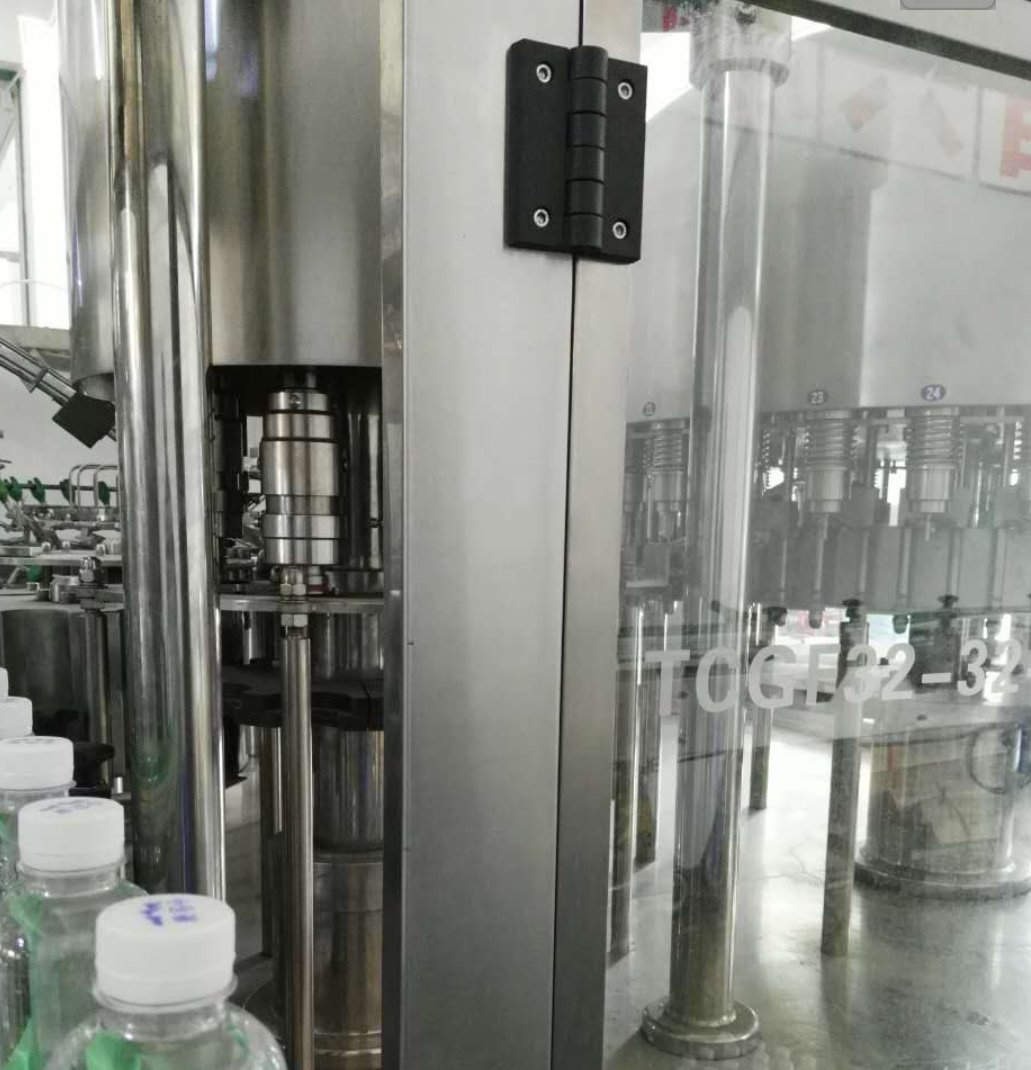
- High-speed lines for smaller formats (330mL–2L) prioritize throughput and bottle handling precision. Our Bottled Spring Water Filling Production Line features an integrated bottle washing-filling-capping unit with filling accuracy ≤ ±2 mL. The investment here is driven by the speed (200–1,800 bottles/hour) and the sophistication of the PLC-based intelligent control system required to maintain synchronization at high speeds.
Choosing a system that cannot easily switch between formats (e.g., 5L to 18.9L) without significant mechanical rework is a common budgeting error. Modular designs that allow for future capacity expansion or format changes offer better long-term value.
3. Facility Constraints and Clean Air Integration
The "cost per set" often excludes the critical interface between the equipment and your building. Ignoring facility constraints can lead to costly site modifications post-purchase.
- Cleanroom Requirements:*
- For pharmaceutical or high-end food applications, the filling zone must meet specific air cleanliness standards. Integrating ISO Class 8 (100,000) certified design air purification systems with H13 HEPA filtration is a distinct cost center. This includes custom duct routing, pressure zoning, and real-time diagnostics via PLC + HMI controls.
- Layout and Utilities:*
- A compact facility may require a vertical or L-shaped equipment layout, increasing engineering time and custom piping costs compared to a standard linear arrangement. Additionally, the distance between the water treatment skid and the filling machines affects the complexity of the hygienic loop and pumping requirements.
4. Automation Level and Operational Labor
Your budget should reflect the trade-off between capital expenditure (CAPEX) and operational expenditure (OPEX).
- Semi-Automatic:*
- Lower upfront cost but requires multiple operators for bottle loading, capping, and monitoring. Suitable for low-volume startups.
- Fully Automatic:*
- Higher initial investment but enables single-operator oversight through centralized HMI panels. Our fully integrated lines reduce manual intervention, minimizing contamination risks and improving repeatability. For a facility running two shifts, the labor savings from a fully automatic line often justify the higher equipment cost within 12–18 months.
5. Hidden Costs in the "Base Price"
Be wary of quotes that list only the mainframe equipment. A realistic budget for a purified water system per set must include:
- Commissioning and Training:*
- On-site installation, integrated trial operation, and operator training are essential for a smooth handover.
- Documentation for Compliance:*
- SC-compliant designs require full documentation, including material certifications, SOPs, and process flow diagrams.
- Spare Parts Strategy:*
- Initial kits for membranes, seals, and sensors should be factored into the launch budget to prevent downtime during the first year.
Conclusion: Building a Realistic Budget
The cost of a purified water system per set is a function of your specific operational reality. There is no universal price because there is no universal water source or factory layout. By prioritizing stability, applicability, and long-term maintainability over the lowest initial bid, you secure a production asset that supports sustainable growth.
To obtain an accurate quotation, move beyond generic inquiries. Prepare your source water analysis report, define your target capacity and container formats, and share your facility layout constraints. This allows our engineering team to propose a tailored solution that aligns with your budget and production goals.
Next Step: Share your water source data, target quality, capacity, packaging format, and facility details. We will provide a customized configuration proposal and budget estimate based on your specific project requirements.