
Residual Syrup in Juice Filler Valve After Cleaning: Troubleshooting Steps for Hot-Fill Lines
Who This Applies To
This troubleshooting path is written for operations leads and maintenance engineers running hot-fill juice, tea beverage, or sports drink production lines using integrated washing-filling-capping machines. If your line handles high-viscosity, sugar-heavy, or pulpy products, the risk of post-CIP syrup retention in filler valves is materially higher than in plain water or carbonated beverage applications.
Residual syrup in a filler valve after cleaning is not a cosmetic issue. It introduces microbial risk, affects the taste profile of the next batch, and can trigger non-conformance findings during food safety audits. The steps below assume you have already completed a standard CIP cycle and are still detecting sweetness, Brix traces, or visible residue at the valve outlet.
Step 1: Confirm the Symptom Before Escalating
Before disassembling hardware, verify that the residue is actually syrup carryover and not another contaminant.
- Swab test the valve seat and discharge tip immediately after CIP completion. Use a calibrated refractometer to check for Brix above zero.
- Run a short rinse cycle with purified water and collect the first 500 mL from each valve. Compare turbidity and Brix against your baseline.
- Check the timing: if residue appears only on the first few bottles after startup but clears after 10–15 cycles, the issue is likely flush volume, not valve design.
Checkpoint: If Brix reads above 0.5° after a full CIP and post-rinse, proceed to Step 2. If it clears after a manual flush, your CIP recipe may simply need a longer final rinse phase.
Step 2: Identify the Root Cause Category
Residual syrup in hot-fill juice valves typically traces back to one of four categories. Work through them in order.
2.1 Dead Legs and Flow Path Geometry
Hot-fill juice lines—especially those adapted from water or carbonated beverage equipment—often have filler valves originally designed for low-viscosity fluids. When syrup-based products pass through, any internal cavity, recessed seat, or non-swept port becomes a trap.
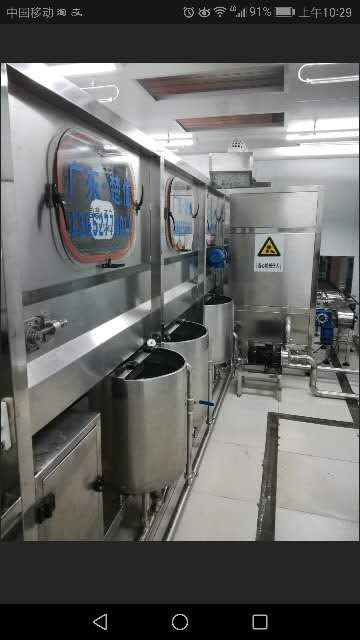
- Inspect the valve body for recessed O-ring grooves, unpolished internal surfaces, or threaded connections that create dead volume.
- Confirm that the valve is a bottom-up or diaphragm-type design suited for viscous liquids, not a gravity-fill valve intended for water.
- Cross-reference with your equipment documentation: juice and tea beverage hot-fill lines require valve materials and geometries that support full CIP coverage, typically 304/316 stainless steel with Ra ≤ 0.8 μm internal finish.
2.2 CIP Flow Velocity and Coverage
A CIP cycle only cleans surfaces it can reach at sufficient velocity. For syrup residues, the minimum recommended flow velocity inside the valve body is 1.5 m/s.
- Measure or calculate the actual flow rate through each valve during CIP. If your system uses a single CIP supply header feeding multiple valves simultaneously, individual valve flow may drop below the threshold.
- Verify that the CIP return path is not restricted. A partially blocked return line reduces differential pressure and flow velocity at the valve.
- For hot-fill lines, confirm that the CIP solution temperature matches the cleaning chemical specification—typically 75–85°C for caustic-based solutions used on sugar residues.
2.3 Temperature Mismatch Between Product and CIP
Hot-fill juice products are typically filled at 85–92°C. If the CIP solution enters a valve that has cooled significantly after production, thermal contraction can trap syrup in micro-gaps around the valve seat.
- Ensure the CIP cycle begins while the valve is still warm (above 60°C) or includes a pre-rinse at elevated temperature to re-mobilize hardened syrup.
- Check whether your line's CIP sequence includes a hot water pre-rinse before the caustic phase. Skipping this step is a common cause of incomplete syrup removal.
2.4 Valve Seal Degradation
Elastomeric seals (EPDM, Viton, or silicone) in filler valves degrade over time, especially under repeated hot-fill and CIP thermal cycling.
- Inspect seals for swelling, cracking, or permanent compression set. A deformed seal creates a micro-cavity where syrup accumulates and CIP fluid cannot penetrate.
- Track seal replacement intervals against your manufacturer's recommendation. In hot-fill juice applications, seal life is typically shorter than in ambient water filling due to thermal stress.
Step 3: Implement Corrective Actions
Based on the root cause identified above, apply the corresponding fix.
| Root Cause | Corrective Action | Verification Method |
|---|---|---|
| Dead legs in valve geometry | Replace with diaphragm or bottom-up fill valve designed for viscous products | Swab test + Brix check after next CIP |
| Insufficient CIP flow velocity | Reduce simultaneous valve count during CIP, or increase pump capacity | Flow meter reading at valve inlet ≥ 1.5 m/s |
| Temperature mismatch | Add hot water pre-rinse phase (≥ 70°C) before caustic cycle | Valve surface temp log during CIP startup |
| Seal degradation | Replace all valve seals; switch to higher-grade elastomer if thermal cycling is frequent | Visual inspection + leak test after reassembly |
Exception: If your line was originally configured for purified water or mineral water and was later repurposed for juice, the filler valve type itself may be fundamentally unsuitable. Water filling valves—such as those used in small-bottle PET washing-filling-capping machines for non-carbonated drinking water—are designed for low-viscosity, non-sugar fluids. Retrofitting them for hot-fill juice without valve replacement will produce recurring CIP failures regardless of recipe adjustments.
Step 4: Establish Ongoing Verification Boundaries
One successful CIP cycle does not confirm the problem is solved. Build a verification protocol:
- Daily: Swab test one random valve after CIP. Log Brix and visual result.
- Weekly: Run a full-valve rinse test and compare Brix across all heads. Any outlier indicates a localized blockage or seal issue.
- Monthly: Review CIP chemical concentration logs, temperature curves, and flow rate records for drift.
- Quarterly: Disassemble one representative valve for internal inspection. Document seal condition and surface finish.
Boundaries and Limitations
- This guide addresses syrup-based residue in hot-fill juice and tea beverage valves. It does not cover protein-based residues (dairy, plant protein drinks), which require enzymatic or acid-based CIP chemistry rather than caustic alone.
- If your product contains pulp, particles, or fiber, mechanical blockage in the valve orifice may mimic syrup residue. In such cases, disassembly and physical cleaning are required before CIP optimization can take effect.
- Equipment originally engineered for a different product category—such as barrelled water filling lines or carbonated beverage isobaric fillers—may require complete valve replacement, not just parameter adjustment, to handle juice reliably.
Next Steps
If your hot-fill juice line is experiencing persistent post-CIP syrup retention and internal troubleshooting has not resolved it, the issue may stem from a fundamental mismatch between your filler valve specification and your product profile. Chuxin Mingwei engineers can review your current valve configuration, CIP parameters, and product characteristics to determine whether a valve upgrade, CIP recipe redesign, or line reconfiguration is the most cost-effective path forward.
Share your product type, filling temperature, current valve model, and CIP cycle details—we will provide a targeted assessment within two business days.