How RO Water Treatment Equipment Works: Core Components, Process Logic & Real-World Application Boundaries
Who This Applies To
This explanation is written for procurement managers, plant engineers, and project leads responsible for selecting or validating RO-based water treatment systems — particularly those sourcing equipment for bottled/purified water production lines (e.g., Chuxin Mingwei’s Fully Automatic Bottled Purified Water Filling Production Line), boiler feedwater, electronics-grade rinse water, or pharmaceutical process water.
How RO Equipment Actually Works — Beyond the Textbook Definition
Reverse osmosis is a membrane separation process that uses hydraulic pressure to force water through semi-permeable membranes, rejecting dissolved salts, organics, bacteria, and colloids. But RO does not operate in isolation. Its performance, lifespan, and stability depend entirely on upstream protection and downstream handling — as confirmed by Chuxin Mingwei’s engineering practice since 2008.
Core Components & Their Functional Roles
- Pre-treatment system: Mandatory before RO. Includes multi-media filtration (to reduce turbidity), activated carbon filtration (to remove chlorine and organic matter), softening (to prevent Ca/Mg scaling), and precision cartridge filtration (to protect membrane surfaces). As documented in and , skipping or undersizing any of these increases membrane fouling risk and shortens service life.
- RO main unit: Consists of high-pressure pumps, membrane housings, RO elements (typically thin-film composite), flow/pressure instrumentation, and automated controls. Design parameters — such as number of stages (single
- or dual-stage), recovery rate, and target conductivity — are calculated from actual source water TDS, hardness, temperature, and required output quality .
- Post-treatment & storage: Includes ozone or UV sterilization (for microbial control), sterile water tanks, and circulation loops with online monitoring. For purified water filling lines, this stage ensures microbiological safety after
- RO — because RO removes contaminants but does not sterilize .
Where RO Is Technically Applicable — And Where It Isn’t
RO is ideal when:
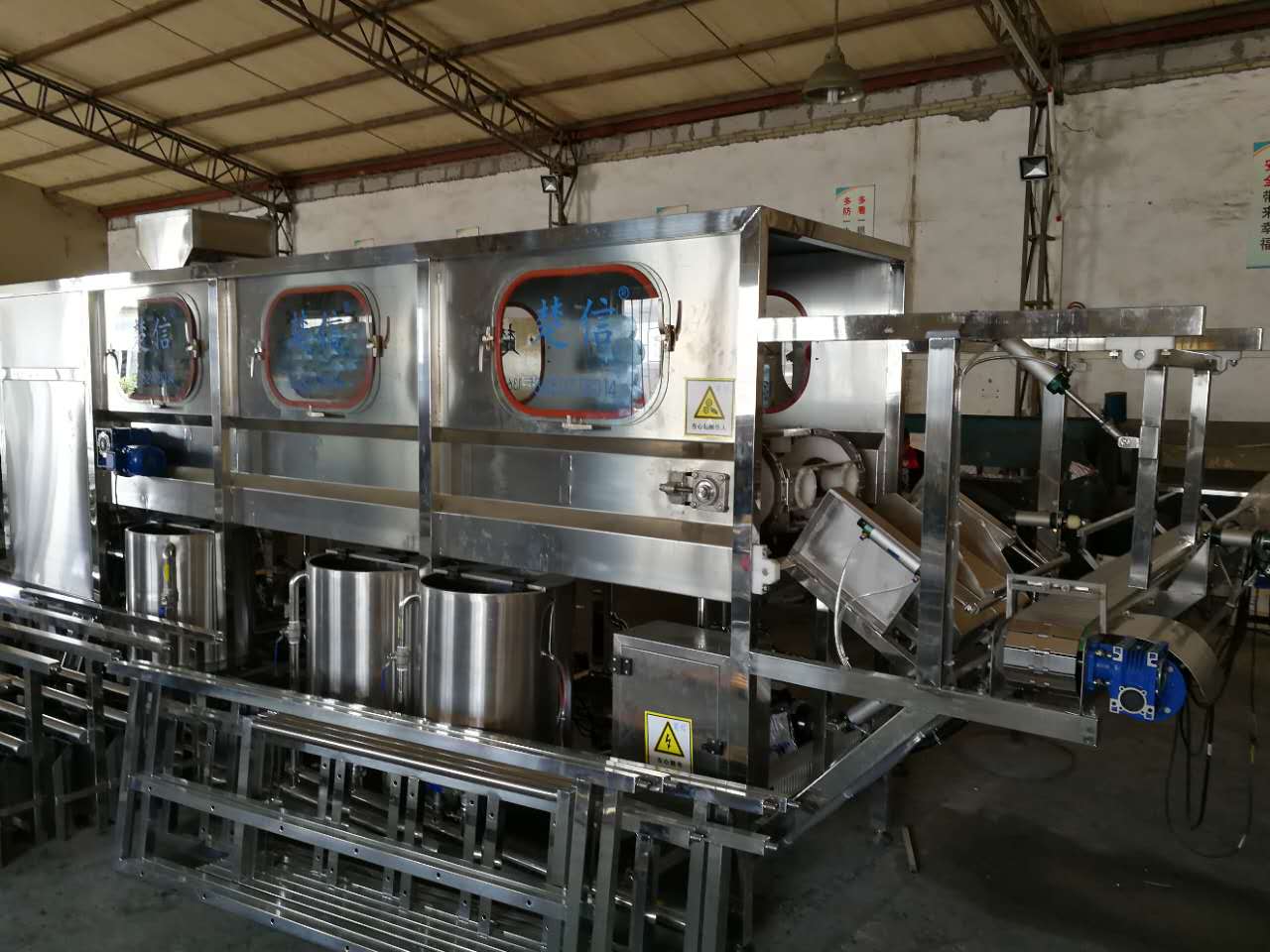
- Source water TDS exceeds 200–300 ppm and final product requires low conductivity (<10 µS/cm) — e.g., purified drinking water, electronics rinse water, or boiler makeup.
- The application demands consistent, stable water quality over time — especially where manual intervention must be minimized (e.g., fully automated bottled water lines).
- Pre-treatment feasibility is confirmed: sufficient space, drainage, chemical dosing capability, and operator training support exist .
RO is not recommended when:
- Source water contains high iron/manganese, oil, or suspended solids without adequate pre-filtration — leading to irreversible membrane fouling.
- Mineral retention is required (e.g., for natural spring or mineral water): RO removes >95% of dissolved minerals; ultrafiltration (UF) or nanofiltration (NF) may be more appropriate .
- Budget excludes long-term maintenance: RO membranes require periodic cleaning, replacement every 2–5 years, and strict monitoring of pressure differentials and flux decline .
Implementation Boundaries You Must Confirm Before Procurement
Chuxin Mingwei’s engineering workflow requires four validated inputs before RO system design begins:
- Source water test report, covering TDS, hardness, iron, manganese, SDI, and microbiology ;
- Target water standard, aligned with GB 19298 (packaged drinking water), USP <1231>, or internal process specs;
- Production capacity and duty cycle, including peak hourly demand and shift pattern;
- Facility constraints: available floor space, electrical supply (380V/50Hz standard), compressed air, drainage slope, and cleanroom class requirements (if applicable).
Without these, RO system sizing, component selection, and automation logic cannot be reliably engineered — resulting in underperformance, premature failure, or costly retrofitting.
Next Step: From Principle to Project
Understanding RO working principles is only the first step. What matters operationally is how those principles translate into your site-specific line — from raw water intake to filled bottle. Chuxin Mingwei applies this logic across its certified RO-based systems, including the Fully Automatic Bottled Purified Water Filling Production Line, where dual-stage RO is integrated with ozone/UV disinfection, PLC-controlled bottling, and SC-compliant documentation.
If you have source water data and production goals, we’ll map them to an RO configuration — including pre-treatment sizing, membrane staging, energy recovery options, and post-treatment validation points.