
RO Water Treatment System Cost Per Set: Configuration Factors & Budget Planning Guide
RO Water Treatment System Cost Per Set: Configuration Factors & Budget Planning Guide
For procurement managers and operations leads planning a new water treatment facility, the question "What is the cost per set?" rarely has a single fixed answer. Unlike off-the-shelf consumer appliances, industrial Reverse Osmosis (RO) systems are engineered solutions. The final investment depends heavily on your specific source water conditions, required output capacity, target water quality standards, and the level of automation integrated into the line.
At Chuxin Mingwei, we design non-standard, site-specific water treatment and filling solutions. This guide breaks down the critical factors that determine the cost structure of an RO system, helping you evaluate quotes and plan your budget effectively without relying on generic market averages.
Core Drivers of RO System Pricing
The price of an RO water treatment system is not defined by the membrane brand alone. It is the sum of several engineered components tailored to your project constraints.
1. Source Water Quality and Pre-treatment Complexity
The condition of your raw water is the primary variable. A system fed by municipal tap water requires significantly less pre-treatment than one processing groundwater or surface water.
- Low Complexity:*
- If source water has low turbidity and hardness, a standard multi-media filter and activated carbon filter may suffice.
- High Complexity:*
- High hardness, iron, manganese, or organic content necessitates additional steps such as water softening, specialized dosing systems, or ultrafiltration (UF) pre-treatment to protect the RO membranes. As noted in our technical guidelines, ignoring these pre-treatment needs can lead to rapid membrane fouling and increased long-term operational costs.
2. Purification Process: Single-Stage vs. Two-Stage RO
The target water quality dictates the process architecture.
- Single-Stage RO:*
- Suitable for general industrial use or specific beverage applications where moderate purity is acceptable.
- Two-Stage RO:*
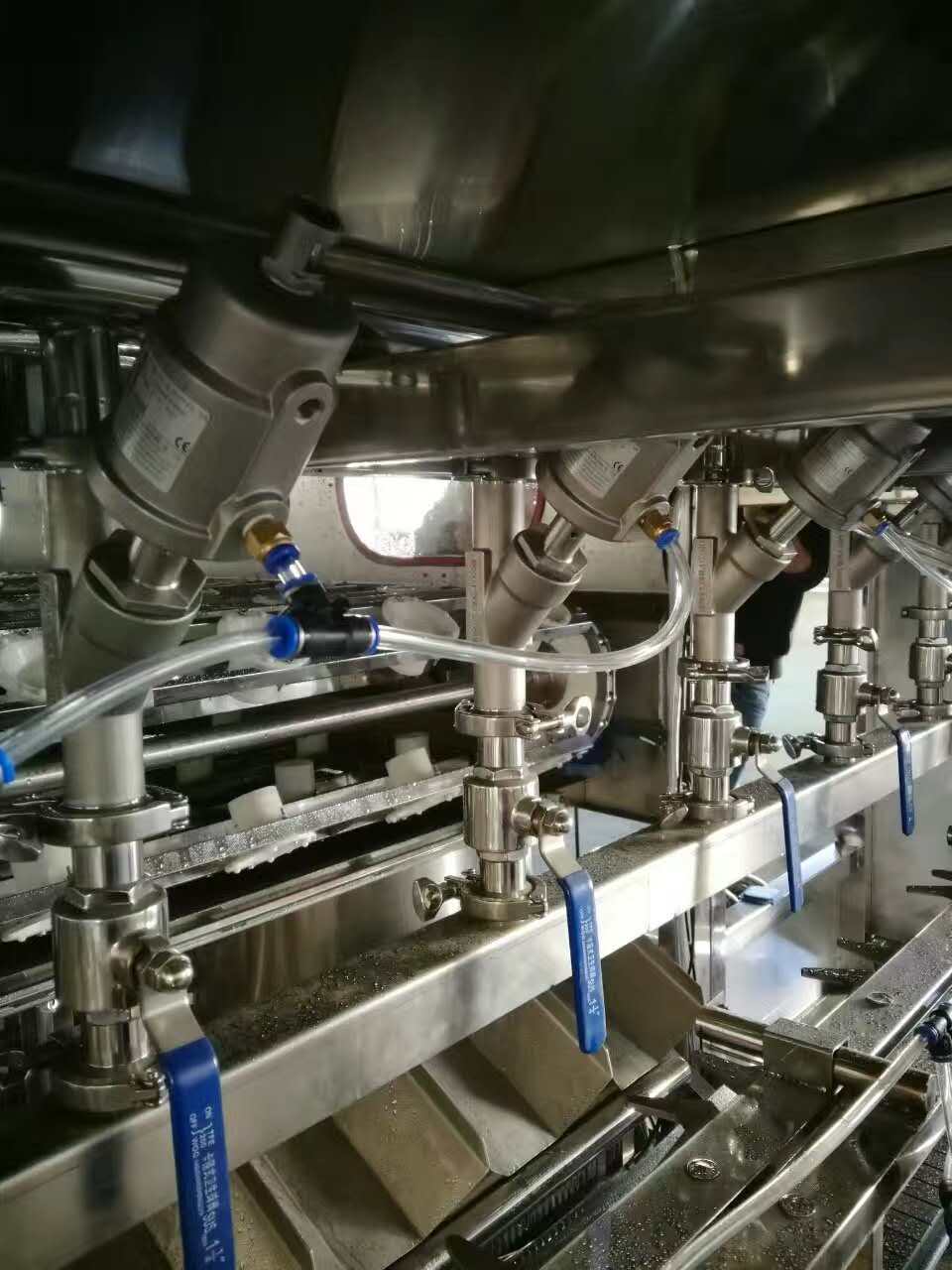
- Essential for producing high-purity drinking water or feed water for electronics and pharmaceuticals. This configuration passes the permeate from the first stage through a second set of membranes, significantly improving desalination rates and stability. For example, our Fully Automatic Bottled Purified Water Filling Production Line utilizes a dual-stage RO process combined with ozone and UV sterilization to ensure consistent compliance with drinking water standards.
3. Production Capacity and Scalability
Capacity is measured in liters per hour (L/H) or tons per hour (T/H). While larger systems have a higher upfront cost, the cost per unit of water produced often decreases due to economies of scale.
- Small Scale:*
- Systems ranging from 500 L/H to 2 T/H are common for startup bottled water plants.
- Industrial Scale:*
- Lines exceeding 5 T/H require larger high-pressure pumps, extensive piping networks, and robust PLC control systems. Our equipment supports modular capacity ranges, such as 200–2,500 bottles/hour for barrelled lines, allowing for future expansion without replacing the entire core system.
4. Material Selection and Durability
The choice of materials directly impacts both initial cost and lifecycle maintenance.
- FRP (Fiber Reinforced Plastic):*
- Common for pre-treatment tanks in cost-sensitive projects.
- Stainless Steel (SUS304/316L):*
- Required for food-grade compliance and corrosion resistance in harsh environments. Critical components like high-pressure pumps, membrane housings, and piping in pharmaceutical or high-end beverage lines often utilize SUS316L, which increases the initial investment but ensures long-term hygiene and durability.
5. Automation and Control Architecture
The level of human intervention required affects the price.
- Manual/Semi-Auto:*
- Relies on manual valve operation and basic instrumentation. Lower upfront cost but higher labor dependency.
- Fully Automatic:*
- Features PLC-based intelligent control systems with HMI touchscreens. These systems automate backwashing, chemical dosing, and fault diagnostics. Our integrated lines offer synchronized bottle washing, filling, and capping with minimal manual intervention, reducing operational errors and labor costs over time.
Hidden Costs and Scope Boundaries
When comparing quotes, it is vital to clarify what is included in the "cost per set." A low equipment price may exclude essential elements required for operation.
- Installation and Commissioning:*
- Does the quote cover on-site assembly, piping connection, and system debugging? Professional commissioning ensures the system meets design specifications.
- Spare Parts and Consumables:*
- Initial stock of membrane elements, filters, and sealing rings should be factored into the budget.
- Utility Requirements:*
- Ensure your facility can support the system's power load, water inlet pressure, and drainage needs. For instance, high-capacity RO systems require significant electrical capacity for high-pressure pumps.
- Regulatory Compliance:*
- Equipment designed for food and beverage production must adhere to specific hygiene standards (e.g., SC compliance in China). Our systems are engineered with SC-compliant designs, including full documentation for material certifications and process flow diagrams, which is a critical value add beyond mere hardware.
Practical Budgeting Steps for Procurement
To obtain an accurate quotation and avoid budget overruns, follow this structured approach:
- Conduct a Water Quality Analysis: Provide a recent water test report (TDS, hardness, pH, turbidity, iron, etc.). This is the baseline for designing the pre-treatment section.
- Define Target Capacity and Packaging: Specify your required output (e.g., 2,000 bottles/hour) and packaging format (18.9L barrels, 500mL bottles). This determines the scale of the RO unit and the matching filling line.
- Assess Facility Constraints: Measure available floor space, ceiling height, and utility access points. Site-specific engineering ensures the layout fits your workshop without costly renovations.
- Request a Detailed Configuration List: Ask vendors to itemize every component, including brand, model, material, and power rating. Compare the scope of pre-treatment, membrane count, and control system features.
- Evaluate After-Sales Support: Consider the vendor's ability to provide remote diagnostics, spare parts supply, and operator training. Long-term maintainability is often more valuable than a marginal upfront saving.
Conclusion
The cost of an RO water treatment system per set is a function of engineering precision, not just hardware volume. By focusing on source water adaptation, process stability, and lifecycle support, you can invest in a solution that delivers consistent water quality and operational efficiency.
At Chuxin Mingwei, we prioritize product-scenario matching over generic sales. Whether you need a compact unit for a startup or a fully automated line for mass production, our team provides tailored designs based on your actual water quality, capacity needs, and facility layout.
Next Steps
Ready to define your project budget? Share your source water report, target capacity, and packaging requirements with us. We will provide a preliminary configuration proposal and a transparent cost breakdown tailored to your specific production goals.
Request a Solution Consultation