
Classifying Spare Parts by Criticality: A Practical Inventory Strategy for Water Filling Lines
The Real Question Behind Spare Parts Inventory
For procurement managers and operations leads running bottled or barrelled water production lines, the spare parts dilemma is rarely about whether to stock components — it is about which parts justify shelf space and capital, and which should be ordered on demand.
A fully automatic bottled spring water filling line or a 3-gallon/5-gallon barrelled water line involves dozens of mechanical, pneumatic, and electrical components. Some fail predictably and cheaply; others fail rarely but can halt an entire shift when they do. Treating all spare parts with the same reorder logic leads to either bloated inventory or unplanned downtime — both of which erode the cost-value equation of the production line itself.
This article provides a practical classification framework for spare parts across water treatment and filling systems, grounded in the actual operational realities of beverage and food-grade production environments.
---
Why a Tiered Approach Works for Water Filling Operations
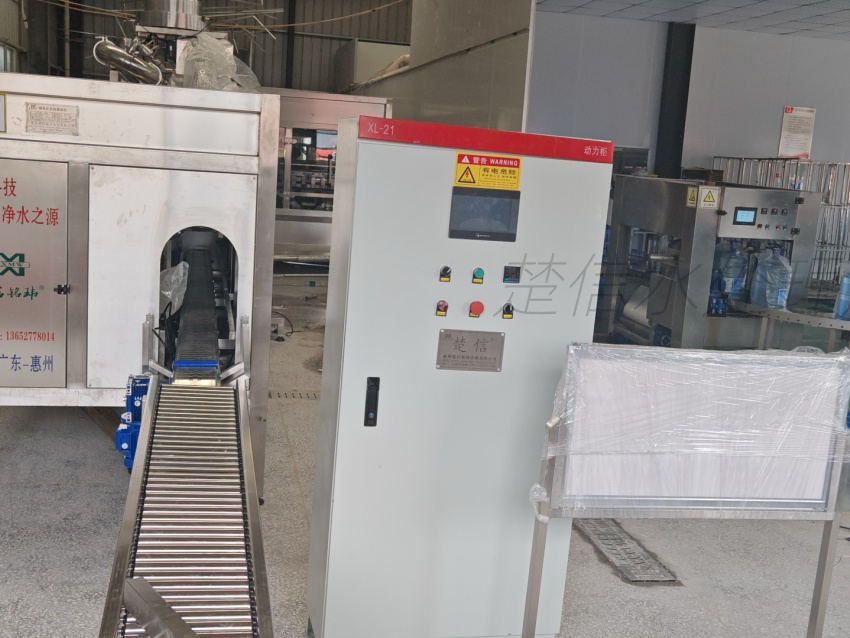
Water filling lines — whether configured for 300–1,500 mL PET bottles or 18.9 L returnable barrels — share a common architecture: pretreatment, purification (RO or NF/UF), storage, washing-filling-capping, and downstream packaging. Each stage has distinct failure modes and part consumption patterns.
A tiered classification maps each part to three variables:
- Failure impact: Does this part's failure stop the line, degrade quality, or merely reduce efficiency?
- Lead time: Can it be sourced locally within 48 hours, or does it require 4–8 weeks from the OEM?
- Consumption rate: Is it a wear item replaced on a schedule, or a rare-breakage component?
Combining these variables produces three practical inventory tiers.
---
Tier 1: Critical Spares — Stock On-Site, Always
Definition: Parts whose failure causes immediate line stoppage or product quality non-conformance, and whose replacement lead time exceeds 48 hours.
Typical examples in water filling lines:
- Filling valves and sealing gaskets
- for the washing-filling-capping monoblock. These are in continuous contact with product water and packaging surfaces. A damaged valve seal can cause fill-volume drift or contamination risk.
- PLC I/O modules and HMI interface boards. Modern lines rely on PLC-based intelligent control for synchronized bottle washing, filling, and capping. A failed module can idle the entire line until replaced.
- HEPA filter elements
- in clean air purification systems serving ISO Class 8 (100,000) cleanrooms around the filling zone. Degraded filtration efficiency compromises the microbiological environment and may trigger audit findings.
- Capping heads and torque-limiting clutches. As noted in operational FAQs, capping torque must be precisely controlled — too high damages bottle mouths or caps, too low compromises seal integrity. Worn capping heads directly affect the capping pass rate.
Inventory rule: Maintain at least one full replacement set on-site. Review stock levels quarterly against actual consumption and line runtime hours.
---
Tier 2: Insurance Spares — Regional Stock or Supplier Agreement
Definition: Parts whose failure would cause significant downtime but are either expensive to hold or have moderate lead times (1–4 weeks) through established supplier channels.
Typical examples:
- RO membrane elements
- for dual-stage reverse osmosis systems. Membranes degrade over 2–5 years depending on feed water quality and pretreatment performance. They are not daily consumables, but a sudden membrane rupture requires immediate replacement to maintain purified water output.
- Conveyor guide rails and bottle-neck hanging components
- for PET bottle conveying. These wear gradually but can cause jamming or bottle damage when they reach end-of-life.
- Barrel washing nozzles and internal brush assemblies
- for 3-gallon/5-gallon returnable barrel lines. Returnable barrels undergo multi-stage internal washing and disinfection; worn nozzles reduce cleaning effectiveness and may compromise hygiene standards.
- Ozone generator tubes and UV lamp assemblies
- (254 nm) used in dual sterilization stages. These have predictable service lives but are not always available from general industrial suppliers.
Inventory rule: Negotiate consignment stock or guaranteed lead-time agreements with your equipment supplier. For Chuxin Mingwei systems, this is typically addressed during the after-sales support planning phase of each project.
---
Tier 3: Consumables and Commodity Parts — Order On Demand
Definition: Low-cost, high-availability items with short lead times from multiple suppliers and no line-stopping impact if briefly out of stock.
Typical examples:
- Pneumatic fittings, tubing, and solenoid valves
- of standard industrial specifications.
- Standard bearings, O-rings, and fasteners
- used in non-critical positions.
- Label printer ribbons, inkjet consumables, and coding materials for downstream marking.
- General-purpose sensors
- (proximity, photoelectric) that are cross-compatible with multiple brands.
Inventory rule: Maintain a min/max reorder system tied to your procurement platform. Do not over-invest in safety stock for items available within 24–48 hours from local distributors.
---
Signals That Your Current Spare Parts Strategy Needs Adjustment
Operations leads should watch for these indicators:
| Signal | Likely Root Cause |
|---|---|
| Repeated emergency air-freight orders for the same part | Tier misclassification — the part should be Tier 1 |
| Warehouse shelves full of parts never used in 24+ months | Over-provisioning at project handover; no consumption review |
| Line stopped waiting for a part that "should be in stock" | No formal criticality mapping was done during commissioning |
| Maintenance team cannibalizing one line to keep another running | Insufficient Tier 1 stock across multiple lines |
| Procurement spending rising while downtime hours stay flat | Too many Tier 2 items held on-site instead of under supplier agreements |
---
Implementation Boundaries and Practical Constraints
A spare parts classification framework is only as effective as the data behind it. Several boundaries apply:
1. Equipment-specific part lists must come from the OEM. Generic industry lists miss proprietary components — such as custom filling nozzles matched to specific bottle diameters or barrel mouth standards. For Chuxin Mingwei filling lines, the technical agreement and commissioning documentation include a recommended spare parts list tailored to the exact configuration delivered.
2. Shared-line configurations add complexity. If a single line handles both 3-gallon and 5-gallon barrels, spare parts for changeover components (guide rails, filling heads, cap sorters) must account for both formats. As documented in project FAQs, the ability to switch formats and the specific changeover parts required should be defined in the technical agreement before installation.
3. Water source variability affects consumable lifespans. Lines treating raw spring water with NF/UF processes experience different membrane fouling rates than those running dual-stage RO on municipal feed. Spare parts intervals for pretreatment media (multi-media filters, activated carbon) and membrane elements should be calibrated to actual source water quality reports, not generic benchmarks.
4. Cleanroom components have compliance-driven replacement cycles. HEPA filters and air handling parts in ISO Class 8 filling environments may need replacement based on validation protocols rather than observed wear. Stocking decisions must align with the facility's environmental monitoring plan.
---
A Practical Next Step for Operations Teams
If your facility currently manages spare parts reactively — ordering only after failures occur — the most effective first action is a single-line criticality audit:
- Export the OEM-recommended spare parts list from your technical agreement.
- Score each part against the three variables: failure impact, lead time, consumption rate.
- Assign tiers and compare against current on-hand quantities.
- Flag gaps (Tier 1 parts not in stock) and excess (Tier 3 parts over-stocked).
- Present the gap analysis to procurement with a revised budget request tied to downtime cost avoidance.
This exercise typically takes 2–3 days for a single bottled or barrelled water line and produces immediate, actionable procurement priorities.
---
How Chuxin Mingwei Supports Post-Installation Parts Management
As a Huizhou-based manufacturer of custom water treatment systems, bottled and barrelled water filling lines, and clean air support systems, Chuxin Mingwei structures after-sales support around the actual operational profile of each delivered line. This includes:
- Project-specific spare parts lists
- issued with commissioning documentation, reflecting the exact equipment configuration, bottle/barrel formats, and water treatment process installed.
- Lead-time transparency
- for proprietary components, enabling operations teams to plan Tier 2 supplier agreements realistically.
- Operator training
- that covers routine part replacement procedures, helping maintenance teams distinguish between field-replaceable items and those requiring service engineer support.
For teams evaluating a new water filling line or optimizing an existing one, the spare parts conversation should begin during the technical proposal stage — not after the first unplanned stoppage.
---
Contact Chuxin Mingwei's engineering team to discuss spare parts planning for your specific water treatment and filling line configuration.