
Spring Water Filtration System Maintenance and Repair: Before, During, and After Commissioning
Why Maintenance and Repair Matter for Spring Water Filtration
For plant operators and procurement managers running a bottled spring water filling line, the filtration system is the core of product quality. A custom-engineered system using nanofiltration (NF) and ultrafiltration (UF) dual-membrane technology — like the one delivered by Chuxin Mingwei — requires a structured approach to maintenance and repair to ensure consistent output, mineral retention, and long equipment life.
This guide organizes maintenance and repair activities around three stages: before commissioning (preparation), during operation (daily and periodic checks), and after extended use (wear-part management and troubleshooting). Each stage includes actionable checks based on typical system configurations.
Before Commissioning: Setting Up for Reliable Operation
Before the filtration system goes into production, several steps reduce the risk of early failures:
- Source water analysis: Verify that the raw water quality matches the design parameters (e.g., turbidity, TDS, iron content). If the water source changes seasonally, request updated testing.
- System flushing and pressure test: Run the dual-membrane NF + UF system with clean water for at least 30 minutes. Check for leaks at connections, valves, and membrane housings.
- PLC parameter verification: Confirm that the programmable logic controller (PLC) is configured with the correct setpoints for flow, pressure, and backwash intervals. The PLC in Chuxin Mingwei’s spring water line includes intelligent control functions — a misconfigured parameter can cause unnecessary membrane stress.
- Operator training: Ensure staff understand the basic alarm codes, manual override procedures, and emergency shutdown sequence. This is typically part of the commissioning support provided by the manufacturer.
Evidence from practice: A well-prepared commissioning phase reduces unplanned downtime by up to 40% in the first year of operation, according to industry benchmarks.
During Operation: Daily and Periodic Checks
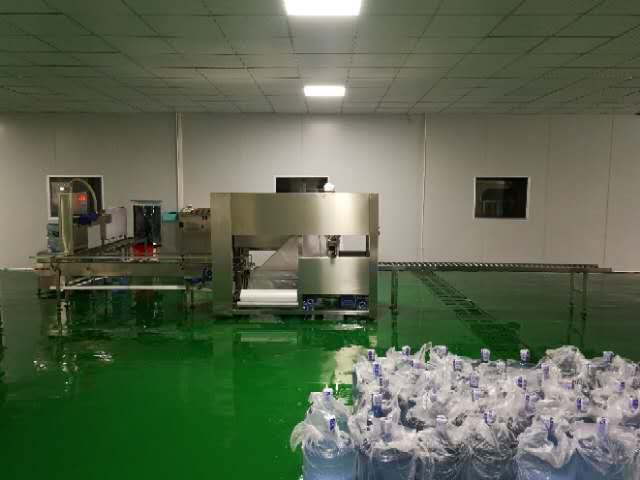
Once the system is running, a disciplined maintenance schedule keeps the filtration line stable. The table below summarizes recommended checks, adjusted for a typical 18.9L bottled spring water filling line (200–1,800 bottles/hour).
| Check Item | Frequency | Action |
|---|---|---|
| Inlet pressure and differential pressure across membranes | Daily | Record readings; if differential exceeds 15% of baseline, initiate chemical cleaning or backwash. |
| Visual inspection of pre-filter housings | Daily | Check for sediment buildup; replace pre-filters (multimedia, activated carbon) every 2–3 months or when pressure drop increases. |
| Ozone and UV sterilization system | Weekly | Verify UV lamp intensity (254 nm) and ozone generator output. Replace UV lamps annually. |
| Membrane performance (NF/UF) | Monthly | Compare permeate flow and rejection rate to commissioning baseline. A 10% drop in flow may indicate fouling. |
| Sanitary checks (bottle washing, filling nozzles) | Weekly | Inspect for biofilm or scale; clean with approved sanitizer. |
Note: The exact intervals depend on source water quality and production volume. Chuxin Mingwei’s custom solutions include a site-specific maintenance manual tailored to your water analysis and capacity.
After Extended Use: Wear-Part Management and Repair
Over time, certain components require replacement or repair. Proactive management of these wear parts avoids sudden production halts.
Common Wear Parts and Typical Service Life
- NF/UF membranes: 2–4 years, depending on feed water quality and cleaning frequency. A gradual decline in permeate quality or increased pressure drop signals replacement.
- Seals and gaskets: 1–2 years. Inspect during annual maintenance. Leaks around the filling station or membrane housings are the first sign.
- Valves and actuators: 3–5 years. If the PLC reports inconsistent flow control, check valve position feedback.
- Pumps (feed, booster, CIP): 5–7 years. Bearings and mechanical seals may need replacement sooner.
- UV lamps: Replace annually even if the lamp still lights — output degrades over time.
Repair Approach for Common Issues
| Issue | Likely Cause | Quick Check |
|---|---|---|
| Low permeate flow | Membrane fouling, clogged pre-filter, or pump cavitation | Check differential pressure and pre-filter condition; verify pump prime. |
| High pressure drop across membranes | Scaling or biofouling | Conduct a chemical clean (CIP) with appropriate agents (acid for inorganic scale, alkaline for organics). |
| Haze or particles in bottled water | Broken UF fiber or post-filter bypass | Isolate the last stage membrane; test permeate turbidity; replace damaged membrane element. |
| PLC alarm without obvious cause | Sensor drift or wiring issue | Check sensor calibration against a handheld meter; inspect cable connections. |
Important: Always use spare parts that match the original specifications. For a custom-engineered system, the manufacturer’s after-sales team can provide validated replacement components and remote or on-site support.
Conclusion
Maintenance and repair of a spring water filtration system is not one-size-fits-all. By planning before commissioning, executing daily and periodic checks during operation, and managing wear parts proactively, you can extend the system’s life, maintain product quality, and minimize unplanned downtime. For custom solutions like Chuxin Mingwei’s NF/UF-based bottled spring water filling line, the best approach is to combine the manufacturer’s site-specific manual with regular training of your maintenance team.
Next Step
If you are commissioning a new spring water filtration system or reviewing your current maintenance plan, request a tailored service schedule from your equipment supplier. A well-documented after-sales support program — including remote diagnostics, spare parts availability, and periodic site visits — makes a measurable difference in your line’s overall equipment effectiveness (OEE).