
How Two-Stage Reverse Osmosis Works: Core Components, Process Logic & Where It Applies — Technical Guide for Procurement
Who This Guide Is For
Procurement managers, plant engineers, and project leads evaluating water treatment systems for beverage, food, pharmaceutical, or electronics applications — especially those reviewing Chuxin Mingwei’s Fully Automatic Bottled Purified Water Filling Production Line or similar turnkey solutions.
Why Two-Stage RO? The Core Logic
Two-stage reverse osmosis (RO) is not a simple duplication of single-stage RO. It is a sequential, pressure-optimized process designed to achieve lower final conductivity, higher salt rejection stability, and improved long-term membrane reliability — particularly when feed water has high TDS (>500 ppm), elevated hardness, or variable quality.
In Chuxin Mingwei’s engineered purified water systems (e.g., product ID 59), the two-stage configuration follows this logic:
- First Stage: Raw or pre-treated water (after multi-media + activated carbon + softening + precision filtration) enters the primary RO array. It typically achieves 95–98% salt rejection, producing intermediate-grade permeate (~5–20 µS/cm).
- Intermediate Storage & Re-pressurization: That first-stage permeate is collected in an intermediate tank and re-pressurized by a dedicated booster pump — avoiding cross-contamination and enabling precise flow control.
- Second Stage: The intermediate permeate passes through a second RO array, often with different membrane arrangement (e.g., higher-surface-area elements or tighter tolerance membranes). This stage targets residual ions, achieving final conductivity ≤ 5 µS/cm — suitable for high-purity applications like electronics rinse water or pharmaceutical process water.
This staged approach avoids the inefficiency and fouling risk of forcing a single-stage system to meet ultra-low conductivity targets.
Key Components & Their Functional Roles
Based on Chuxin Mingwei’s standard RO system architecture , a two-stage RO unit includes:
- High-pressure pumps (stage-specific): Separate pumps for each stage ensure optimal pressure profiles — typically 12–16 bar for Stage 1, 8–12 bar for Stage 2.
- Membrane housings & elements: Stage 1 uses standard polyamide thin-film composite (TFC) membranes; Stage 2 may use low-fouling or high-rejection variants — selected per source water analysis.
- Inter-stage instrumentation: Conductivity, pressure, and flow meters between stages allow real-time monitoring of rejection efficiency and early detection of membrane degradation.
- Cleaning & CIP interface: Dedicated chemical dosing and recirculation loops for each stage — critical for maintaining consistent performance across both arrays .
Note: Chuxin Mingwei designs all RO systems around verified source water data — including TDS, hardness, silica, and SDI — never generic assumptions .
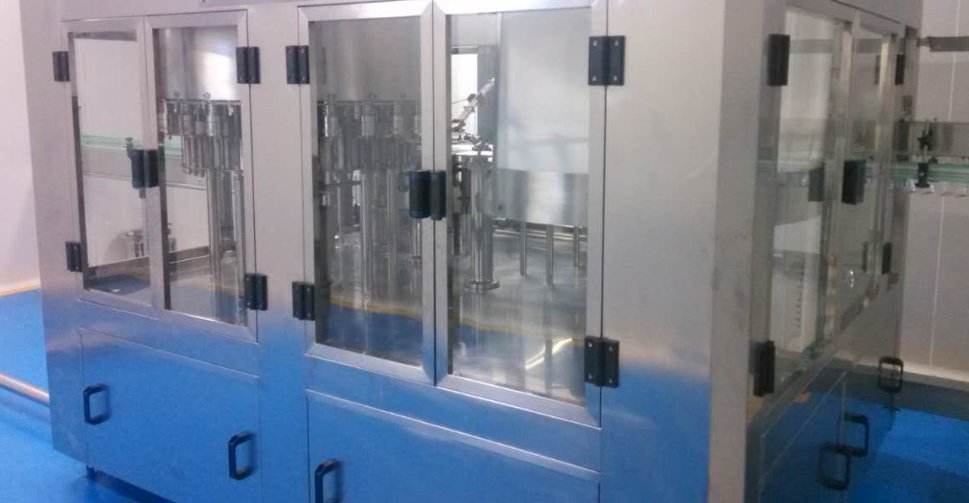
Where It Applies — And Where It Doesn’t
Two-stage RO is technically justified only when one or more of the following apply:
- Final water must meet ≤ 5 µS/cm conductivity (e.g., for electronics, lab-grade water, or SC-compliant purified water storage);
- Feed water TDS exceeds 800 ppm and single-stage RO cannot reliably sustain target rejection without excessive cleaning or premature scaling;
- Regulatory or internal QA requires documented, stable rejection rates over time — supported by inter-stage diagnostics.
It is not recommended when:
- Feed water is municipal-grade (TDS < 300 ppm) and final conductivity > 10 µS/cm is acceptable (single-stage RO suffices);
- Budget or footprint constraints prohibit intermediate tanks, dual pump skids, and added instrumentation;
- Operator capacity is limited — two-stage systems require more rigorous daily log review and preventive maintenance planning .
Chuxin Mingwei’s bottled purified water lines (ID 59) offer two-stage RO as a configurable option, not a default — aligned with its value proposition of site-specific, non-standard engineering.
Implementation Boundary: What’s Included — And What Requires Confirmation
When specifying two-stage RO with Chuxin Mingwei, the scope includes:
- Process design based on your provided raw water report (TDS, hardness, iron/manganese, microbiology);
- Equipment manufacturing, factory testing, and full documentation (P&IDs, SOPs, material certs);
- On-site installation, commissioning, and operator training on inter-stage monitoring and cleaning protocols.
What requires project-specific confirmation:
- Exact membrane type and staging ratio (e.g., 2:1 vs. 1:1 element count);
- Intermediate tank volume and material (SS304 vs. SS316);
- Integration with downstream ozone/UV sterilization and sterile storage (standard in ID 59);
- Local power supply compatibility (voltage, frequency, protection class) — per .
Next Step: Ground Your Decision in Data
Two-stage RO adds capability — but only where the water, standards, and operation justify it. Before finalizing specifications, confirm:
- Your latest raw water test report (TDS, hardness, SDI, chlorine, iron);
- Target conductivity and required daily output volume;
- Whether your facility supports dual-pump power load and intermediate tank placement.
Chuxin Mingwei does not recommend two-stage RO without these inputs — because engineering integrity starts with verified facts, not assumptions.