
Two-Stage Reverse Osmosis System Cost Per Set: Configuration Factors & Budget Planning Guide
Why "Cost Per Set" Has No Single Answer
When procurement managers ask for the "two-stage reverse osmosis system cost per set," they are often looking for a standard price tag. However, in industrial water treatment, a "set" is never standard. The final investment is determined by the gap between your specific raw water conditions and your target product quality.
At Chuxin Mingwei, we engineer every two-stage RO system based on actual source water analysis, target capacity, and facility constraints. A system designed for municipal tap water in an urban beverage plant differs fundamentally in configuration and cost from one treating high-salinity groundwater for a rural bottling facility.
Core Configuration Factors Driving Cost
To understand the budget range for a two-stage RO system, you must evaluate four primary variables. These factors directly impact the bill of materials, engineering hours, and installation complexity.
1. Raw Water Quality and Pre-Treatment Requirements
The heart of the cost variation lies in the pre-treatment stage. Before water enters the first RO membrane, it must be conditioned to prevent fouling.
- Low TDS/Municipal Water:*
- May only require multi-media filtration and activated carbon to remove chlorine and sediments.
- High Hardness/Salinity:*
- Requires additional softening units, anti-scalant dosing systems, or even ultrafiltration (UF) pre-stages.
As noted in our technical guidelines, the process route is dictated by raw water testing. If your source water has high turbidity or specific contaminants, the pre-treatment skid becomes larger and more complex, directly increasing the system cost.
2. Production Capacity and Membrane Arrangement
Capacity is not just about flow rate; it is about the number of pressure vessels and membrane elements required.
- Small Scale (e.g., 500 L/h):*
- Typically uses fewer membrane housings and smaller high-pressure pumps.
- Large Scale (e.g., 10,000 L/h+):*
- Requires multiple parallel trains, larger pumps, and sophisticated energy recovery systems.
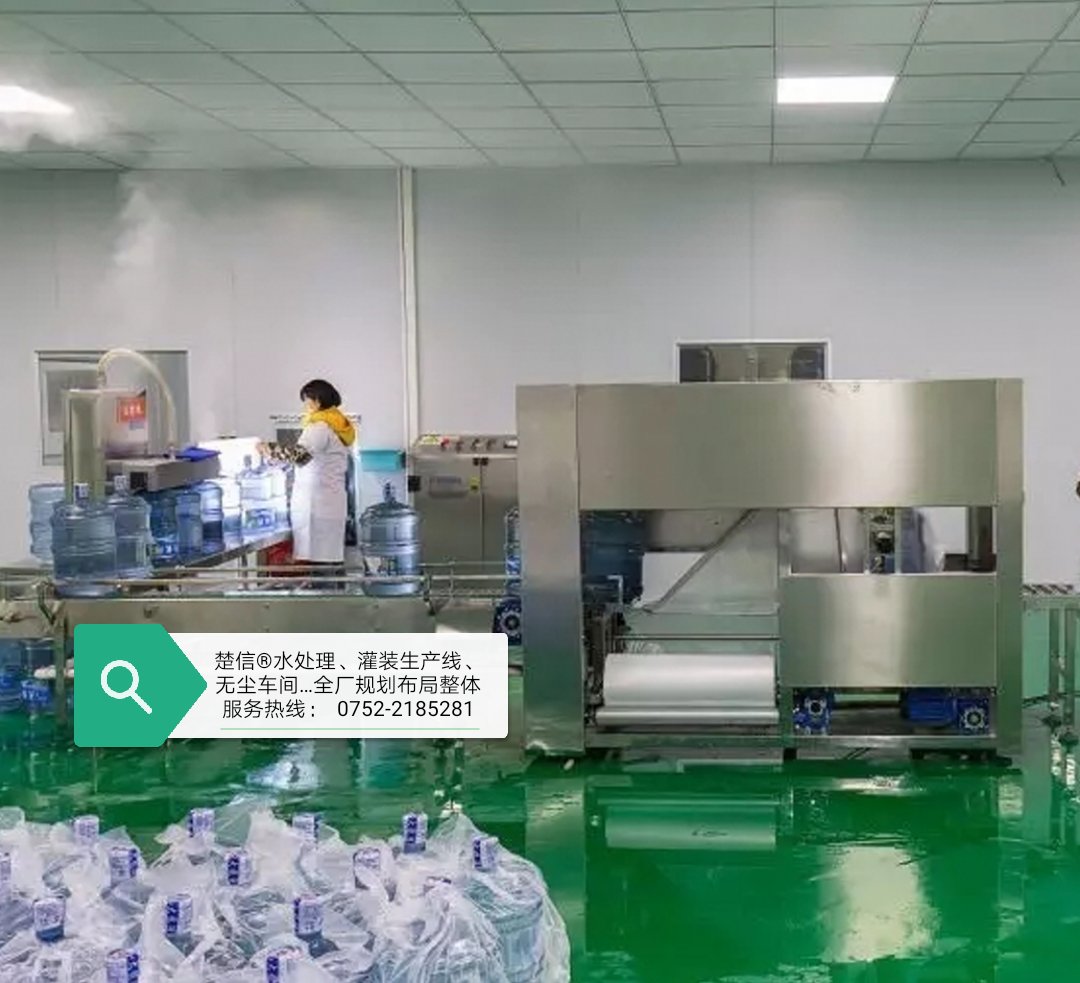
In a two-stage configuration, the concentrate (reject water) from the first stage is fed into the second stage for further purification. This increases water recovery rates but also adds complexity in piping, valve control, and inter-stage boosting pumps. Our Fully Automatic Bottled Purified Water Filling Production Line integrates this dual-stage logic, where the rated capacity (ranging from 200 to 2,500 bottles/hour for filling) dictates the upstream RO throughput.
3. Material Specifications: 304 vs. 316L Stainless Steel
The choice of material for tanks, frames, and piping is a major cost driver.
- SS304:*
- Standard for most municipal water applications and general industrial use. It offers good corrosion resistance at a competitive price point.
- SS316L:*
- Essential for highly corrosive raw water, pharmaceutical applications, or environments with strict hygiene mandates. The material cost premium is significant but necessary for longevity in aggressive conditions.
Chuxin Mingwei specifies materials based on the water chemistry report. Choosing 316L where 304 suffices wastes budget; choosing 304 where 316L is needed risks premature failure.
4. Automation and Control Architecture
The level of intelligence built into the system affects both upfront cost and long-term operational efficiency.
- Manual/Semi-Auto:*
- Relies on manual valve operation and basic pressure gauges. Lower initial cost, higher labor dependency.
- PLC + HMI Fully Automated:*
- Features touch-screen interfaces, automatic flushing, real-time conductivity monitoring, and fault diagnostics. This is the standard for our modern production lines, ensuring consistent water quality and reducing operator error.
Our systems utilize PLC-based intelligent control to manage the complex switching between Stage 1 and Stage 2, optimizing recovery rates and protecting membranes from dry running or over-pressure.
Hidden Costs and Budget Boundaries
When planning your budget, consider these often-overlooked factors that influence the total cost of ownership:
- Installation and Commissioning:*
- A "set" of equipment is not ready to run upon delivery. Professional installation, piping integration, and electrical connection are critical. Chuxin Mingwei provides end-to-end engineering services, including on-site installation and commissioning, which should be factored into the project budget.
- Spare Parts and Consumables:*
- Budget for initial sets of RO membranes, filter cartridges, and sealing elements. While not part of the hardware cost, they are essential for immediate operation.
- Facility Adaptation:*
- Does your factory have adequate floor loading, drainage, and power supply? Retrofitting a facility to accommodate a large two-stage RO system can sometimes exceed the equipment cost itself.
Decision Framework for Procurement
To get an accurate quote and avoid budget overruns, follow this preparation checklist:
- Provide a Recent Water Analysis Report: Include TDS, hardness, pH, chlorine, and turbidity. This is non-negotiable for correct sizing.
- Define Target Output: Specify liters per hour and daily operating shifts.
- Clarify End-Use Standards: Are you producing drinking water (GB standards), pharmaceutical water, or industrial process water? Different standards require different post-treatment (e.g., UV, Ozone, EDI).
- Site Constraints: Share layout drawings or photos of the intended installation area.
Conclusion
The "two-stage reverse osmosis system cost per set" is a function of your specific water challenges and production goals. There is no off-the-shelf price that guarantees performance without a proper needs analysis. By focusing on raw water quality, capacity requirements, material grades, and automation levels, you can build a realistic budget that ensures system stability and long-term maintainability.
Chuxin Mingwei has been engineering custom water treatment solutions since 2008. We prioritize matching equipment capabilities to your real-world operational context, ensuring that every dollar invested contributes to a stable, compliant, and efficient production line.